Dr. David Steensma specializes in care and research for myelodysplastic syndromes and leukemia. He and colleagues were the first to identify and understand the clinical implications of the clonal hematopoiesis of indeterminate potential (CHIP). He is an Associate Editor of the Journal of Clinical Oncology responsible for the “Art of Oncology” section and has more than 150 publications in peer-reviewed journals. Dr. Steensma currently serves as an Associate Professor of Medicine at Harvard Medical School, consulting physician at Brigham & Women’s Hospital, and a faculty member in the Adult Leukemia Program at Dana-Farber Cancer Institute in Boston.
Azra Raza, author of the forthcoming book The First Cell: And the Human Costs of Pursuing Cancer to the Last, oncologist and professor of medicine at Columbia University, and 3QD editor, decided to speak to more than 20 leading cancer investigators and ask each of them the same five questions listed below. She videotaped the interviews and over the next months we will be posting them here one at a time each Monday. Please keep in mind that Azra and the rest of us at 3QD neither endorse nor oppose any of the answers given by the researchers as part of this project. Their views are their own. One can browse all previous interviews here.
1. We were treating acute myeloid leukemia (AML) with 7+3 (7 days of the drug cytosine arabinoside and 3 days of daunomycin) in 1977. We are still doing the same in 2019. What is the best way forward to change it by 2028?
2. There are 3.5 million papers on cancer, 135,000 in 2017 alone. There is a staggering disconnect between great scientific insights and translation to improved therapy. What are we doing wrong?
3. The fact that children respond to the same treatment better than adults seems to suggest that the cancer biology is different and also that the host is different. Since most cancers increase with age, even having good therapy may not matter as the host is decrepit. Solution?
4. You have great knowledge and experience in the field. If you were given limitless resources to plan a cure for cancer, what will you do?
5. Offering patients with advanced stage non-curable cancer, palliative but toxic treatments is a service or disservice in the current therapeutic landscape?
 The terror of the unforeseen is what the science of history hides, turning a disaster into an epic. —Philip Roth, The Plot Against America
 “What is hidden is for us Westerners more ‘true’ than what is visible,” Roland Barthes proposed, in Camera Lucida, his phenomenology of the photograph, almost forty years ago. In the decades since, the internet, nanotechnology, and viral marketing have challenged his privileging of the unseen over the seen by developing a culture of total exposure, heralding the death of interiority and celebrating the cult of instant celebrity. The icon of this movement, the selfie, is now produced and displayed, in endless daily iterations, in a ritual staging of eyewitness testimony to the festival of self-fashioning.
 Late morning heat rises in waves over tall grass. It’s an hour and a half drive, sand flies buzzing, to Luwi bush camp, a seasonal camp with just four huts of thatch and grass on a still lagoon, far out into Zambia’s South Luangwa National Park, about 300 miles north of Lusaka.

 This morning I rode an Uber to JFK from my apartment in Queens. I do this regularly and normally don’t worry too much about it, but this morning, there was just something about the driver that concerned me, though I couldn’t put my finger on what. But every time his, very loud, GPS gave him a direction, in a language I couldn’t pin down, I just had this sense that he truly had no idea where he was going. And in case you’re not familiar with NYC, if you drive a car for a living, you’ve probably driven from the city to JFK more than a few times and do know where you’re going. Anyway, we arrived at JFK, I reminded him I wanted terminal 2 and I thought, “I guess my worries were for nothing”. And almost as soon as I thought that, he missed the sign for terminal 2. I mean, I guess it can happen, but it’s never happened to me before in all my many years of flying out of that airport. The signs don’t exactly creep up on you. I tell him he’s missed it; we start on a loop back around the airport and I say, “the green sign’s for terminal 2”, then he misses it again. And it turns out, the reason he kept missing it was because his GPS was telling him something contrary. I pointed out to him that I hadn’t put terminal 2 in Uber, so how would its GPS know that? The third time around the airport, I rather lost my temper and told him to stop listening to his phone and to listen to me. And third time lucky, we reached terminal 2.




 The Biophilia Effect: A Scientific and Spiritual Exploration of the Healing Bond Between Humans and Nature, by Austrian biologist Clemens G. Arvay, is a mind-expanding read. It is part of the relatively recent resurgence of interest in incorporating exposure to nature into physical and psychological healing regimens. Until recently, the notion of “taking the cure” by relaxing at a Swiss resort in a natural setting was seen as archaic, thought to have been prescribed only because medicine had not advanced to a point where a “real” treatment could be used. Not that everyone had abandoned the idea: Erich Fromm used the term “biophilia” in his 1973 work The Anatomy of Human Destructiveness to describe “the passionate love of life and of all that is alive.” American biologist Edward O. Wilson published Biophilia in 1984, positing genetic bases for humans’ tendency to gravitate to nature. Now scientists en masse are studying nature’s extraordinary healing effects. In Japan, shinrin-yoku–“taking in the forest atmosphere,” or as it is more often translated in the West, “forest bathing”– is officially recognized as a method of preventing disease as well as a supplement to treatment. In 2012, Japanese universities created an independent medical research department called Forest Medicine. Scientists around the world have begun to participate in this research.
 Two months ago I
 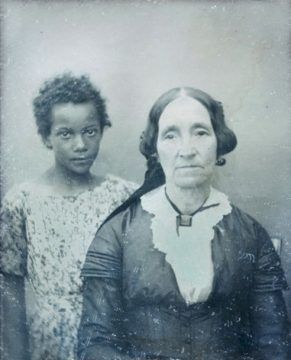 Many feminists, and indeed scholars more generally, frequently, and rightly, decry the writing of women out of history. Books such as Cathy Newman’s Bloody Brilliant Women, attempt to redress the historical omission and accord recognition to women who have made major contributions to the progress of humanity. However, while these developments are to be welcomed, it has to be acknowledged that women’s history has its darker side also: women have been complicit in the perpetration of historical wrongs. Sarah Helm’s If This Is A Woman documents the dehumanisation of female prisoners by female guards at the notorious all woman concentration camp at Ravensbrück during World War II; Laura Sjoberg and Caron E. Gentry’s Mothers, Monsters, Whores: Women’s Violence in Global Politics points out the potential of women to support and participate in acts of genocide. And, as Stephanie E. Jones-Rogers’s They Were Her Property: White Women as Slave Owners in the American South informs us, women were deeply involved in another historical wrong: slavery in the United States. Women were, as Jones-Rogers’ says, ‘co-conspirators’ in the institution of slavery in the US, and their involvement constitutes an aspect of the wider history of white supremacist organisations in the US.