Dr Robert Gallo, a biomedical researcher, is renowned for his role in the discovery of human immunodeficiency virus (HIV) as the infectious agent responsible for AIDS and in the development of HIV blood tests. He co-founded Profectus BioSciences, Inc., a biotechnology company. Profectus develops and commercializes technologies to reduce the morbidity and mortality caused by human viral diseases. He is also a co-founder and scientific director of Global Virus Network. He is the director and co-founder of the Institute of Human Virology at the University of Maryland School of Medicine. In November 2011, Dr Gallo was named the first Homer & Martha Gudelsky Distinguished Professor in Medicine.
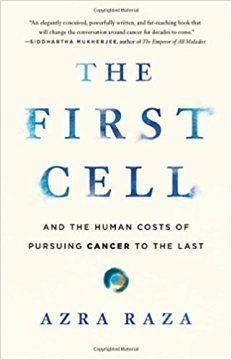
Azra Raza, author of The First Cell: And the Human Costs of Pursuing Cancer to the Last, oncologist and professor of medicine at Columbia University, and 3QD editor, decided to speak to more than 20 leading cancer investigators and ask each of them the same five questions listed below. She videotaped the interviews and over the next months we will be posting them here one at a time each Monday. Please keep in mind that Azra and the rest of us at 3QD neither endorse nor oppose any of the answers given by the researchers as part of this project. Their views are their own. One can browse all previous interviews here.
1. We were treating acute myeloid leukemia (AML) with 7+3 (7 days of the drug cytosine arabinoside and 3 days of daunomycin) in 1977. We are still doing the same in 2019. What is the best way forward to change it by 2028?
2. There are 3.5 million papers on cancer, 135,000 in 2017 alone. There is a staggering disconnect between great scientific insights and translation to improved therapy. What are we doing wrong?
3. The fact that children respond to the same treatment better than adults seems to suggest that the cancer biology is different and also that the host is different. Since most cancers increase with age, even having good therapy may not matter as the host is decrepit. Solution?
4. You have great knowledge and experience in the field. If you were given limitless resources to plan a cure for cancer, what will you do?
5. Offering patients with advanced stage non-curable cancer, palliative but toxic treatments is a service or disservice in the current therapeutic landscape?


 “I don’t like Polish people,” he says, and raises an eyebrow suggesting “How could anybody, really?”
  are suitable to it. The computer is ontologically ambiguous. Can it think, or only calculate? Is it a brain or only a machine?
 Last year we drove across the country. We had one cassette tape to listen to on the entire trip. I don’t remember what it was. —Steven Wright
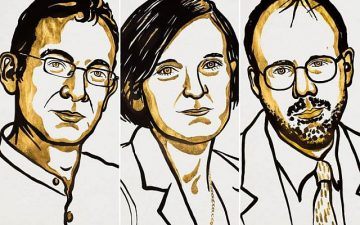 As a development economist I am celebrating, along with my co-professionals, the award of the Nobel Prize this year to three of our best development economists, Abhijit Banerjee, Esther Duflo and Michael Kremer. Even though the brilliance of these three economists has illuminated a whole range of subjects in our discipline, invariably, the write-ups in the media have referred to their great service to the cause of tackling global poverty, with their experimental approach, particularly the use of Randomized Control Trial (RCT).
 When I was a young attending surgeon on the faculty in the Division of Cardiothoracic Surgery, one of the things I got frequently called for was management of malignant pleural or pericardial effusions. Once a patient develops malignant pleural or pericardial effusion the median survival is only two months, so I would do things that would relieve the acute symptoms and perhaps try to prevent fluid from reaccumulating, but nothing drastic or major. One evening in late October, one of the nurses who had known me called to say that her father was being treated for lung cancer but had to be admitted with a large pleural effusion and that she and her father’s Oncologist would like me to manage it. I met the fine 72-year old retired banker, and while he was short of breath even as he talked, he was in a very upbeat mood. I decided to insert a chest tube to drain the pleural fluid and relieve his symptoms. As I was doing the procedure at the bedside the patient mentioned to me that his oncologist has assured him that once his fluid is out he will start him on a new regimen of chemotherapy and he should expect to live for a few more years. I was disturbed to hear the false hope he was being given.
 These energetic lines open Moon and Sun: Rumi’s Rubaiyat, Zara Houshmand’s brilliant translation of selected ruba’iyat – quatrains – by Molana Jalaluddin Rumi, and set the tone for an inspiring and exhilarating sojourn through the passions of the peerless Sage of Konya.
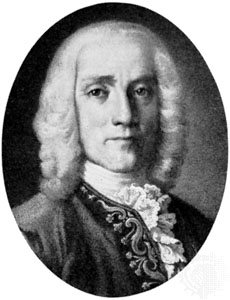 Sutcliffe views the concept of “disdain” as central to Scarlatti’s approach: the term, first applied to the composer by Italian musicologist Giorgio Pestelli, connotes a deliberate rejection of convention. Scarlatti is well-versed in, but does not fully adopt, the conventions of the
 One autumn I’m suddenly taller than my mother. The euphoria of wearing her heels and blouses will, for an instant, distract me from the loss of inhabiting the innocence of a child’s body—the hundred scents and stains of tumbling on grass, the anthills and hot powdery breath of brick-walls climbed, the textures of twigs and nodes of branches and wet doll hair and rubber bands, kite paper and tamarind-candy wrappers, the cicada-like sound of pencil sharpeners, the popping of coca cola bottle caps, of cracking pine nuts in the long winter evenings— will blunt and vanish, one by one.