
by John Schwenkler
This is the second in a series of posts discussing different ways of pursuing philosophical understanding.
My first post in this series explained how philosophy can aim to help us become articulate about things we already understand at a practical or intuitive level, much as drawing a map makes explicit the knowledge we have in being able to find our way around a certain place.
At the end of the post I considered several objections to this project, including that it is too conservative and uncritical to count as a philosophical endeavor. According to this objection, the project I envisioned is inadequate because of the way takes our ordinary ways of thinking for granted and isn’t concerned to replace our philosophical beliefs with better ones. At the end of this post I will explain again why I think this objection misfires, but first I want to discuss a different approach to philosophy that has an opposite orientation in these respects, and consequently takes a quite different stance on the value of “common sense.”
 The opening lines to the French philosopher and mathematician René Descartes’ classic philosophical text, the Meditations on First Philosophy, capture beautifully the attractiveness of this alternative philosophical project. Descartes titled his first meditation, “Of the things which may be brought within the sphere of the doubtful,” and it begins as follows:
It is now some years since I detected how many were the false beliefs that I had from my earliest youth admitted as true, and how doubtful was everything I had since constructed on this basis; and from that time I was convinced that I must once for all seriously undertake to rid myself of all the opinions which I had formerly accepted, and commence to build anew from the foundation, if I wanted to establish any firm and permanent structure in the sciences.
Many people know of the famous thought experiment that Descartes develops in the subsequent pages, in which he imagines that all his thoughts and perceptions are the product of “an evil genius … [who] has employed his whole energies in deceiving me.” For Descartes, the purpose of this thought experiment was to rein in the habits of credulity that had led him in his youth to admit false things as true ones. He was instead to adopt a skeptical attitude, believing only those things whose truth he could see for himself in a “clear and distinct” way. Read more »
 The blog post screams: “If you think 2 + 2 always equals 4, you’re a racist oppressor.”

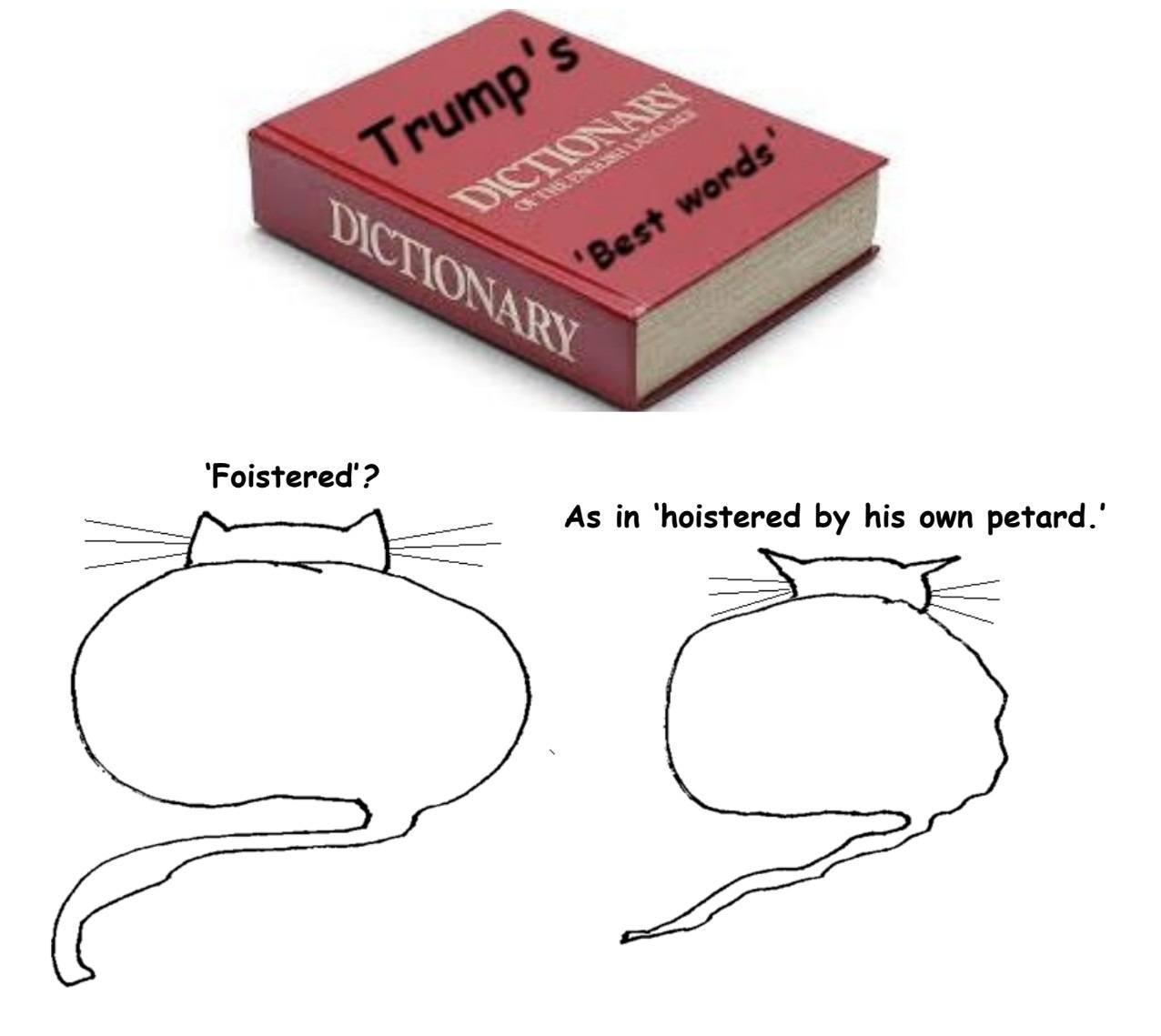
 “I don’t like Polish people,” he says, and raises an eyebrow suggesting “How could anybody, really?”
  are suitable to it. The computer is ontologically ambiguous. Can it think, or only calculate? Is it a brain or only a machine?
 Last year we drove across the country. We had one cassette tape to listen to on the entire trip. I don’t remember what it was. —Steven Wright
 As a development economist I am celebrating, along with my co-professionals, the award of the Nobel Prize this year to three of our best development economists, Abhijit Banerjee, Esther Duflo and Michael Kremer. Even though the brilliance of these three economists has illuminated a whole range of subjects in our discipline, invariably, the write-ups in the media have referred to their great service to the cause of tackling global poverty, with their experimental approach, particularly the use of Randomized Control Trial (RCT).
 When I was a young attending surgeon on the faculty in the Division of Cardiothoracic Surgery, one of the things I got frequently called for was management of malignant pleural or pericardial effusions. Once a patient develops malignant pleural or pericardial effusion the median survival is only two months, so I would do things that would relieve the acute symptoms and perhaps try to prevent fluid from reaccumulating, but nothing drastic or major. One evening in late October, one of the nurses who had known me called to say that her father was being treated for lung cancer but had to be admitted with a large pleural effusion and that she and her father’s Oncologist would like me to manage it. I met the fine 72-year old retired banker, and while he was short of breath even as he talked, he was in a very upbeat mood. I decided to insert a chest tube to drain the pleural fluid and relieve his symptoms. As I was doing the procedure at the bedside the patient mentioned to me that his oncologist has assured him that once his fluid is out he will start him on a new regimen of chemotherapy and he should expect to live for a few more years. I was disturbed to hear the false hope he was being given.
 These energetic lines open Moon and Sun: Rumi’s Rubaiyat, Zara Houshmand’s brilliant translation of selected ruba’iyat – quatrains – by Molana Jalaluddin Rumi, and set the tone for an inspiring and exhilarating sojourn through the passions of the peerless Sage of Konya.
 Sutcliffe views the concept of “disdain” as central to Scarlatti’s approach: the term, first applied to the composer by Italian musicologist Giorgio Pestelli, connotes a deliberate rejection of convention. Scarlatti is well-versed in, but does not fully adopt, the conventions of the
 One autumn I’m suddenly taller than my mother. The euphoria of wearing her heels and blouses will, for an instant, distract me from the loss of inhabiting the innocence of a child’s body—the hundred scents and stains of tumbling on grass, the anthills and hot powdery breath of brick-walls climbed, the textures of twigs and nodes of branches and wet doll hair and rubber bands, kite paper and tamarind-candy wrappers, the cicada-like sound of pencil sharpeners, the popping of coca cola bottle caps, of cracking pine nuts in the long winter evenings— will blunt and vanish, one by one.