
by Bill Murray

News from the leisure travel world is worse than grim. More than half of the 16 million travel industry jobs in the United States have been lost. On 14 April last year the TSA processed 2,208,688 air travelers. This year that number was 87,534.
It’s the same everywhere. Da Nang saw a 98.5 percent year on year drop in visitors over Vietnam’s four day Reunification Day holiday. Ninety nine point nine percent fewer foreign visitors entered Japan in April than a year earlier. Planes are parked and ships are docked.
They outfit the American cruise ship industry in a low key shipbuilding town on the Bay of Bothnia in Finland. Turku shipyards built the world’s biggest floating petri dishes, the 360 meter long ships Oasis of the Seas and Allure of the Seas, for Royal Caribbean International.
Seventy seven thousand employees, Royal Caribbean had, until a virus as unfriendly to people as plastic to the sea torpedoed its heart, soul and balance sheet in three months flat. Maybe Turku can save its shipyard jobs by building hospital ships; Royal Caribbean may tread choppy water forevermore. Read more »
 Two months ago, COVID lockdown was still new; in the US it was horrific that
  Today will mark the death of at least one hundred thousand Americans because of COVID. The science was clear. Lockdown. Stop movement. Distance. This would have stopped large numbers of people dying. In short, stopping the virus from becoming a pandemic meant pausing the profit principle.
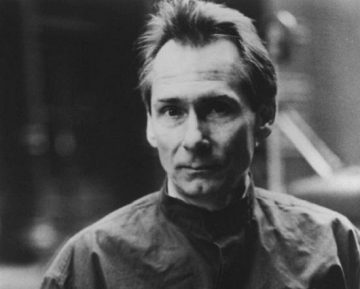 Jon Hassell is one of America’s musical treasures, and I’ve been listening to his music for forty years, so when I heard he needed help for his medical care, I decided to make a mix of his music. This mix actually grew into two mixes, so look for another one next month. This one features Jon playing with other musicians, and part two will feature other musicians whom Jon has influenced (and a bit more from Jon himself).
 Something has happened in the last forty days. The planet has gone quiet, a vast, reverberating, gesticulating global chorus suddenly muted by something wee and invisible which is borne across continents, streets and rooms by friends and strangers. Mass extinction, once the whispered woe of a distant future, suddenly sounds louder and doable in the here and now. The world is compelled to gaze at its own mortality.
 The month of Ramadan is at once a time of respite from the external— when one’s focus shifts from worldly affairs to the spiritual— and a time to deepen one’s sense of compassion and fellow-feeling via the rigors of daily fasting, prayer, reflection and generous giving. It is a time to break free from day to day concerns and to pay attention to one’s lifelong inner journey, whether it is through revitalizing the connection with the Divine or investing in human relations: personal, communal, and global.
 The COVID-19 pandemic has instigated talk of the systemic- or societal relevance of institutions and professions. Quickly, attributions of systemic relevance have become a matter of distribution of resources. In Germany, for example,
  What is worse – coronavirus itself, or the social and economic catastrophe that comes with it?
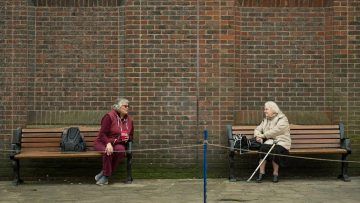 Like most people who have time to think in these stressful days, I have been thinking about life after the COVID-19 pandemic has passed – mostly at a personal level, but also a little about the world at large. This essay is an attempt to put some of these thoughts down as a time-capsule of how things appear from this perch in May of 2020, the first year of the New Plague.
 What’s the universe made up of? Most people who have read popular science would probably say “Mostly hydrogen, along with some helium.” Even people with a passing interest in science usually know that the sun and stars are powered by nuclear reactions involving the conversion of hydrogen to helium. The dominance of hydrogen in the universe is so important that in the 1960s, two physicists suggested that the best way to communicate with alien civilizations would be to broadcast radio waves at the frequency of hydrogen atoms. Today the discovery that the stars, galaxies and the great beyond are primarily made up of hydrogen stands as one of the most important discoveries in our quest for the origin of the universe. What a lot of people don’t know is that this critical fact was discovered by a woman who should have won a Nobel Prize for it, who went against all conventional wisdom questioning her discovery and who was often held back because of her gender and maverick nature. And yet, in spite of these drawbacks, Cecilia Payne-Gaposchkin achieved so many firsts: the first PhD thesis in astronomy at Harvard and one that is regarded as among the most important in science, the first woman to become a professor at Harvard and the first woman to chair a major department at the university.
 I sometimes consider becoming a skeptic, but then I’m not so sure what that entails.