
by Ashutosh Jogalekar

Progress in science often happens when two or more fields productively meet. Astrophysics got a huge boost when the tools of radio and radar met the age-old science of astronomy. From this fruitful marriage came things like the discovery of the radiation from the big bang. Another example was the union of biology with chemistry and quantum mechanics that gave rise to molecular biology. There is little doubt that some of the most important future discoveries in science in the future will similarly arise from the accidental fusion of multiple disciplines.
One such fusion sits on the horizon, largely underappreciated and unseen by the public. It is the fusion between physics, computer science and biology. More specifically, this fusion will likely see its greatest manifestation in the interplay between information theory, thermodynamics and neuroscience. My prediction is that this fusion will be every bit as important as any potential fusion of general relativity with quantum theory, and at least as important as the development of molecular biology in the mid 20th century. I also believe that this development will likely happen during my own lifetime.
The roots of this predicted marriage go back to 1867. In that year the great Scottish physicist James Clerk Maxwell proposed a thought experiment that was later called ‘Maxwell’s Demon’. Maxwell’s Demon was purportedly a way to defy the second law of thermodynamics that had been proposed a few years earlier. The second law of thermodynamics is one of the fundamental laws governing everything in the universe, from the birth of stars to the birth of babies. It basically states that left to itself, an isolated system will tend to go from a state of order to one of disorder. A good example is how a bottle of perfume wafts throughout a room with time. This order and disorder was quantified by a quantity called entropy. Read more »
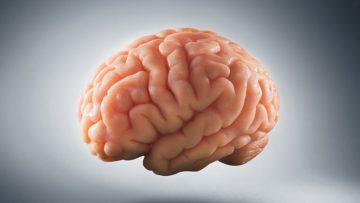 “I’ll just google it again”, said my daughter when I asked her to remember something. It was a very reasonable suggestion, but it led me down an interesting line of thought about the nature of knowing and its recent transformation. Much has been said and written about how the Internet has changed human knowledge, in both positive and negative ways. The positives are obvious. The magic of the Internet, the World-Wide Web, and utilities such as Google and Wikipedia, have put enormous knowledge at our disposal. Now any teenager with a smartphone has effortless access to far more information than the greatest minds of a century ago. Even more importantly, the Internet has opened up vast new possibilities of learning from others, and allowed people to share ideas in ways that were unimaginable until recently. Not surprisingly, all this has led to a great flowering of knowledge and creativity – though, unfortunately, not without an equally great multiplication of error and confusion.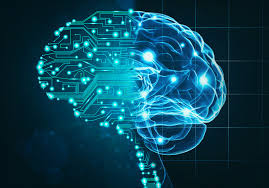
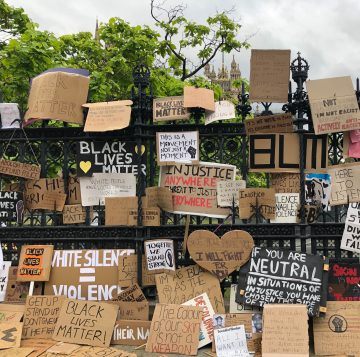
 By 2025, protective living communities (PLCs) had started to form. The earliest PLCs, such as New Promise and New New Babylon, based themselves on rationalist doctrines: decisions informed by best available science, and either utilitarian ethics or Rawlsian principles of justice (principally, respect for individual autonomy and a concern to improve the lives of those most disadvantaged). Membership in these communities was exclusive and tightly guarded, and they had the advantage of the relatively higher levels of wealth controlled by their members.



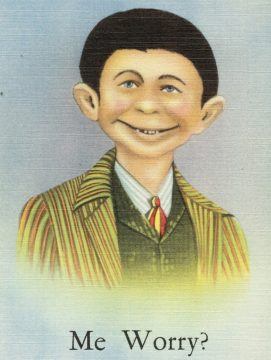 It’s a bountiful feast for discriminating worriers like myself. Every day brings a tantalizing re-ordering of fears and dangers; the mutation of reliable sources of doom, the emergence of new wild-card contenders. Like an improbably long-lived heroin addict, the solution is not to stop. That’s no longer an option, if it ever was. It is, instead, to master and manage my obsessive consumption of hope-crushing information. I must become the Keith Richards of apocalyptic depression, perfecting the method and the dose.
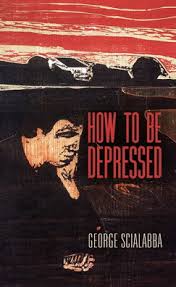 Because I have a lot of experience with depression, I approached George Scialabba’s How to Be Depressed with an almost professional curiosity. Scialabba takes a creative approach to the depression memoir, blending personal essay, interview, and his own medical records, specifically, a selection of notes written by various therapists and psychiatrists who treated him for depression between 1970 and 2016. I don’t know if I could bear to see the records kept by those who have treated me for depression, assuming they still exist, and I wasn’t sure what it would be like to read another person’s medical history.
 Some people claim that the prominent display of statues to controversial events or people, such as confederate generals in the southern United States, merely memorialises historical facts that unfortunately make some people uncomfortable. This is false. Firstly, such statues have nothing to do with history or facts and everything to do with projecting an illiberal political domination into the future. Secondly, upsetting a certain group of people is not an accident but exactly what they are supposed to do.
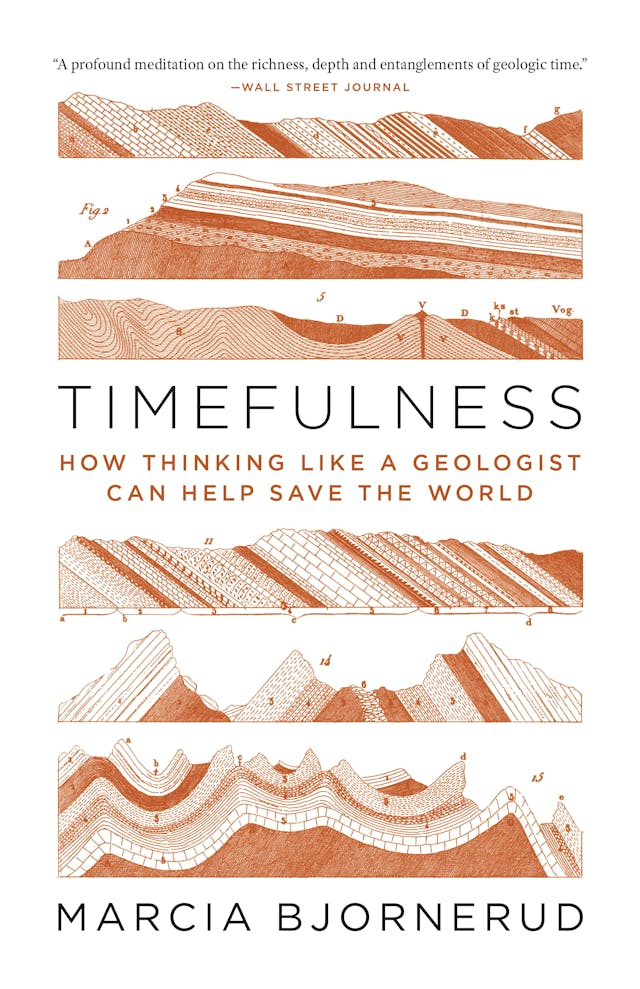 by Paul Braterman