by Joan Harvey
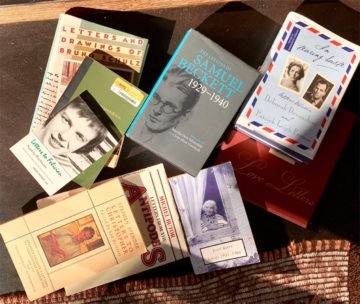 Ariana Reines and Terry Tempest Williams, writers one would never expect to be buddies, but who bonded at Harvard Divinity School, are having a public Zoom discussion in order to sell books. It’s a lovely, friendly discussion, but I’m shocked, shocked to hear that they send each other AUDIO letters. Audio letters? When they are so good at writing? When they have the chance to write to each other? Though, okay, why not? Henry James famously dictated his novels. Reines is amazingly articulate talking off the top of her head. Still, how is the pleasure the same? Williams does mention loving to actually write letters, so perhaps I shouldn’t judge.
I think it extraordinary that letters are called letters, the name of that small denomination with which we build our words.
Mary Ruefle (in a lecture on letters that she first wrote, then spoke, and finally published in written form).
Of course there exist letters that talk of letters:
Many thanks for both letters, which arrived two days running, a tremendous treat for Kalamata, a town nobody writes to. I think people are subconsciously repelled by the letter K. It’s the reverse of the letter X, which always goes to people’s heads. Perhaps if sex were spelt seks or segs there wouldn’t be half so much fuss about it: nothing very glamorous about seks kittens or seksual intercourse but write ‘sex killer slays six’ and you’re in business.
Patrick Leigh Fermor, to his former mistress, Ricki Huston. So probably he was thinking of sex (or seks).
Most writers like to write letters. Or used to. Possibly not today. I too have been lured by texting’s immediacy. But for many of us older folks, there is still something seductive about addressing a particular person and sensibility on the other end whom you try to entertain and yet remain yourself as often as possible, and doing this at some length. And then, of course, the pleasure of getting something different but similar in return. Reciprocity. Response. There is also something enticing about the way you can put everything in, including the kitchen sink, and the clog in it, and the dog, and okay, maybe the Trogs. As well as the wind and the snow, and the election, and wish you were here. You can even complain about your bills and your health, as long as your complaining doesn’t have a demand. Read more »

 Well, I’ve looked at David Goodhart’s book (The Road to Somewhere – The New Tribes Shaping British Politics: 2017) and I’m obviously an Anywhere. [All quotes are from the Kindle edition]. “They tend to do well at school [Well, reasonably], then usually move from home to a residential university in their late teens [Yes] and on to a career in the professions [Teaching] that might take them to London or even abroad [Yes, indeed] for a year or two [or eighteen!]. Such people have portable ‘achieved’ identities, based on educational and career success which makes them generally comfortable and confident with new places and people [Generally!].”

 One of the strangest books to come out of Europe in the sixteenth century – and that is saying a lot – is John Dee’s
 Michele Morano’s first collection of essays, Grammar Lessons: Translating a Life in Spain, is a classic of travel literature that I have taught several times, to the great pleasure of over a decade’s worth of students. Now she has bested the power of that excellent book with a new collection of essays,
 If you go to Kashmir today this is what you will see. As you drive away from Srinagar’s Hum Hama airport, a large green billboard with white lettering proclaims, Welcome to Paradise.
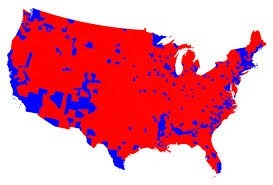 Like millions of others, my reaction to the result of the US presidential election was primarily relief. Relief at the prospect of an end to the ghastly display of narcissism, dishonesty, callousness, corruption, and general moral indecency (a.k.a. Donald Trump) that has dominated media attention in the US for the past four years. Also, relief that American democracy, very imperfect though it is, appears to be coming off the ventilator after what many consider a near death experience. The reaction of Trump and the Republicans, trying every conceivable gambit to thwart the will of the people, indicates just how uninterested they are in upholding democratic norms and how contentious things would have become had everything hinged on the outcome in one state, as it did in the 2000 election.
 The United States is undergoing a long-overdue reckoning, in the highest echelons of government, with the problem of systemic racism. The new Biden-Harris administration has