by Hari Balasubramanian
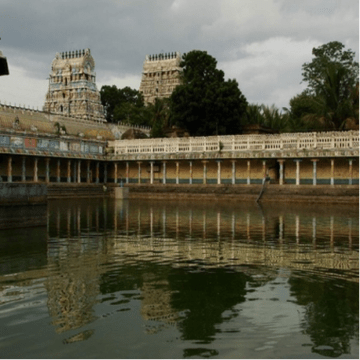
This year marks two decades since I moved from India to the United States. I look back at how it all began in Arizona.
 In the summer of 2000, after completing my bachelor’s degree in engineering, I had to decide where to go next. I could either take up a job offer at a motorcycle manufacturing plant in south India, or I could, like many of my college friends, head to a university in the United States. Most of my friends had assistantships and tuition waivers. I had been admitted to a couple of state universities but did not have any financial support. Out a feeling that if I stayed back in India, I’d be ‘left behind’ – whatever that meant: it was only a trick of the mind, left unexamined – I took a risk, and decided to try graduate school at Arizona State University. I hoped that funding would work out somehow.
So in August 2000, I found myself traveling across continents to this powerful country that I knew little about. It was my first ever time outside India and my first ever flight. From Chennai, I flew to Kuala Lumpur, then, after an eight-hour layover which I didn’t mind at all, to Los Angeles and finally, after the worry of a missed connection, to Phoenix, Arizona. The gleaming, modern airports, the meals and the movies, the turbulence and the clouds: it was all very exciting, a glimpse of an elite world that had once seemed inaccessible.
At the Phoenix airport, someone from the Indian Students Association at ASU came to pick me up. After what seemed like a recklessly fast drive – in fact it was normal: it’s just that I’d never experienced a 70-miles-an-hour ride on a highway before – he dropped me off at an apartment shared by three Indian grad students. One of them, my host until I found an apartment, wore a veshti, the wraparound skirt common in south India. He spoke Tamil fluently; he spoke it so well that I could well have been in my home state. I had a nagging suspicion at the time that people might change as soon as they landed in a foreign country – that they might change their attire, even forget their mother tongue. It was reassuring to know that wasn’t true. At the heart of such doubts, I see now, was a fear that I would quickly surrender my Indianness. Read more »
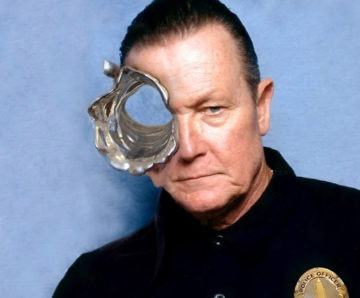 One of the most interesting and memorable characters in sci-fi films is the


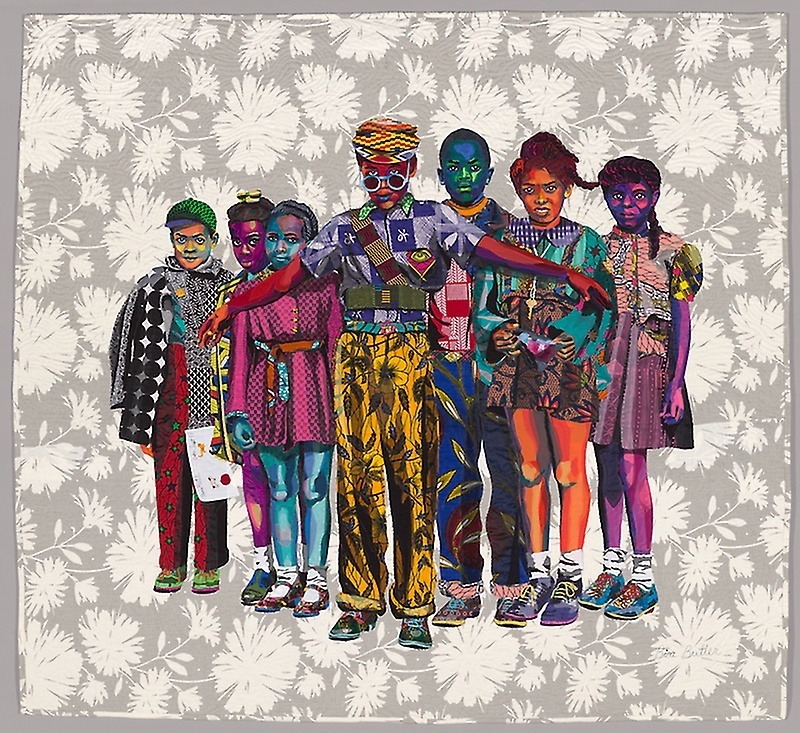 Bisa Butler. The Safety Patrol. 2018.
 On 9 October 1990, President George H.W. Bush held a news conference about Iraqi-occupied Kuwait as the US was building an international coalition to liberate the emirate. He said: “I am very much concerned, not just about the physical dismantling but about some of the tales of brutality. It’s just unbelievable, some of the things. I mean, people on a dialysis machine cut off; babies heaved out of incubators and the incubators sent to Baghdad … It’s sickening.”

 Escape. When I was a child, I read at every opportunity. If I could, I’d read on the playground; at one point, I was allowed to spend recess in the library and read there. Overall, teachers seemed unenthusiastic about the idea of a kid reading during recess. My mother, a great reader herself, used to tell me that reading was a treat, to be saved for the end of the day when all the work was done. When I was reading, I wasn’t playing with the other kids or helping out with the housework, as I should have been. But I was one of those people described by Penelope Lively, people who are “built by books, for whom books are an essential foodstuff, who could starve without.”
 Christmas is traditionally a time for stories – happy ones, about peace, love and birth. In this essay I’m looking at three Christmas stories, exploring what they tell us about Christmas: the First World War Christmas Truce,