
by Mark Harvey
Censorship is the strongest drive in human nature; sex is a weak second. –Phil Kerby
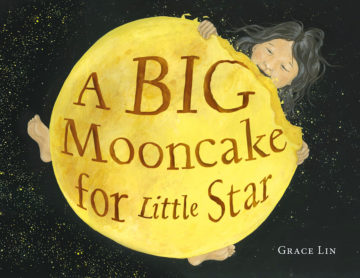
Here’s a book that could really harm your child: A Big Mooncake for Little Star. The title itself promises dark political theories of socialism, sexual deviance, and a character-corroding leitmotif. Thank goodness some astute parents saw the danger of the book and got it on a banned-books list.
Here’s the summary of the book’s plot: Little Star, who is a cute little girl, has a mother who likes to bake. She bakes a big moon cake and puts it into the night sky to cool. She asks Little Star not to eat the cake while it cools. The cake looks like the moon and Little Star can’t resist its deliciousness. So night after night, despite her best intentions to leave the cake alone, she tiptoes into the night sky and nibbles away at the cake. The cake shrinks like a waning moon—from full circle to thin crescent–until there are only crumbs left. The mother discovers that her daughter ate the big mooncake and gently admonishes her. Then the two decide to make another cake together.
That’s the entirety of the book. It’s beautifully illustrated and won the Caldecott Medal, one of the most prestigious awards for children’s books. Full disclosure, I had to know what happened to the mooncake and couldn’t put the book down. But it’s definitely something children should not be exposed to. I’m not exactly sure why but if the book was banned, it was banned for a good reason and would surely set children on a dangerous life course. Mooncake is probably shorthand for moonbeam and moonbeam has a vague reference to hippy culture so maybe that’s it. Read the book to your five-year-old and the next thing you know she’s out on the road selling marijuana! Read more »




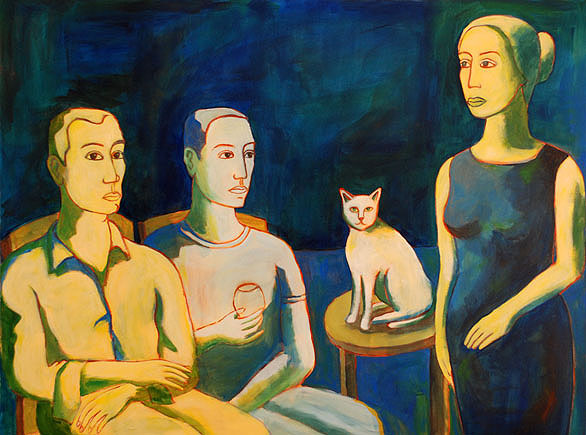 Moeen Faruqi. Chamber Dialogue, 2016.

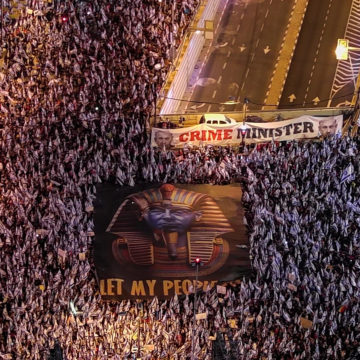 The state of Israel is on the brink of deliquescence. A corrupt multi-indicted prime minister has handed the reins of government to extremist (read: blood-thirsty) right-wing (read: populist imperialist) religious (read: obscurantist) coalition parties whose alliance is based on a net refusal to heed the Israeli Supreme Court and a pact to instil a theocratic regime where there has been, since the state’s creation in 1948, a democracy. Both these goals are to be achieved by changing the law, giving parliament (the Israeli knesset) the right to dictate the terms of justice to the courts of justice. It is a situation the philosopher Plato had staged at the start of his Republic, back in the 4th century BC.
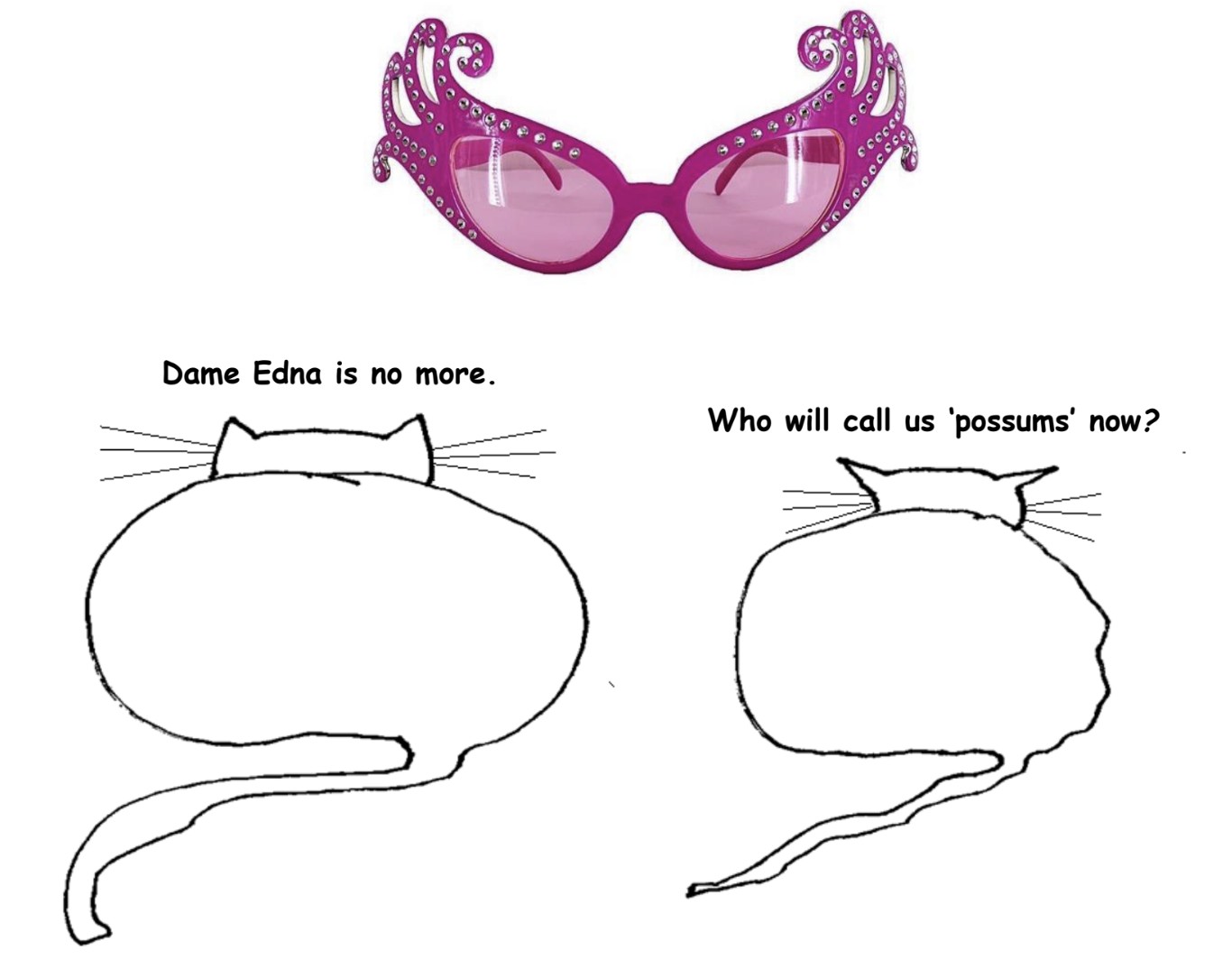
 School Boards across the country have become radicalized, energized, weaponized. They have become the new political battleground where extremist right-wing ideologues test the political waters. The plan is to infiltrate the schools, use them as the megaphone to broadcast the GOP’s agenda, with lots of soapboxing and grandstanding thrown in.

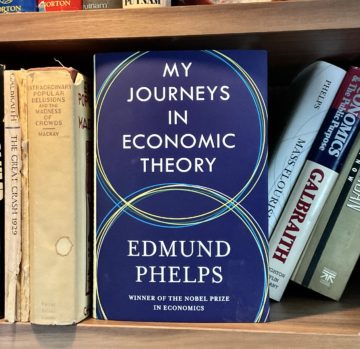 On page 184 of Edmund Phelps’ new book, My Journeys In Economic Theory, he tells the story of a lunch party with friends, at which, presumably after the plates were cleared (but not the glasses), the then 80-something-year-old 2006 Nobel Prize winner in Economics belted out “Garden Grow.”
 Last month I saw the Whitney exhibit “no existe un mundo poshuracán: Puerto Rican Art in the Wake of Hurricane Maria.” As you might remember, Maria was a Category 4 storm that hit Puerto Rico September 20, 2017. According to Harvard University’s T.H. Chan School of Public Health, 4,645 Puerto Ricans died as a result of the storm, but according to the Puerto Rican government, only 64 died. The Whitney’s museum label stated that the smaller number “not only insulted the populace with its miscalculation but also undercounted at-risk sectors that experienced increased deaths from accidents, cardiac conditions, diabetes, suicide, and even leptospirosis—a usually rare, potentially deadly, yet preventable bacterial infection spread by rats that grew prevalent in the months following the storm due to contaminated water.” A year after the hurricane, an impromptu installation of over 3,000 pairs of shoes was placed in front of Puerto Rican government buildings to memorialize the actual number of dead..
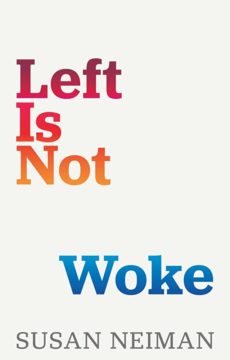 At the core of Susan Neiman’s new book Left is not Woke, which is an attempt to sever what she sees as reactionary intellectual tendencies from admirable progressive goals, is the idea that for progressive values to be sustainable, their roots in the philosophy of the European Enlightenment need to be recognized and nourished. “If we continue to misconstrue the Enlightenment”, she says, “we can hardly appeal to its resources.”