
by Charlie Huenemann
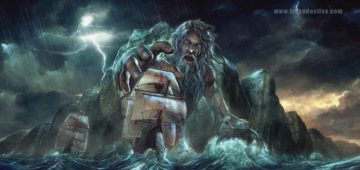
Vasco da Gama was the first person we can name who successfully commandeered a voyage around Africa’s southernmost point, the Cape of Good Hope. It is a treacherous passage, where warm currents from the southern part of the Indian Ocean clash against the icy currents of the south Atlantic, leading to dangerous waves that have swallowed many ships. (Indeed, at the time it was known as “the Cape of Storms”.) Da Gama gave the cape wide berth, sailing far the sight of land, before turning northward and poking his way along the eastern coast of Africa, where many hijinks ensued.
This was in 1497, and Europeans were keen to find some route to Indian spices that didn’t involve crossing lands controlled by some sultan or other. Da Gama showed everyone the way, and the Dutch and the English rushed through and established colonies along the coasts of the Indian Ocean. Da Gama’s fellow Portuguese established colonies as well, of course, but not with equal success. Part of the reason was that Portuguese sailors as a whole were not very interested in following da Gama’s Cape Route because they knew damned well there was a monster down there that ate ships like snacks.
Sailors spend their lives and meet their deaths in the middle of huge and violent systems they don’t understand and can’t control (well now, who doesn’t?) and so they make up stories to pretend to make sense of them. Unsurprisingly, many of these stories feature ill-tempered monsters with gaping mouths. The nautical disasters clustered around the Cape of Good Hope was pretty clear evidence of some beastly demon, and in 1572 the great Portuguese epic poet Luís de Camões gave the dreadful beast a name: Adamastor. Read more »
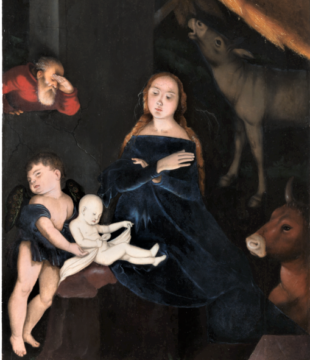
 In 1995, I made two Christmas mixtapes that I labeled A Very Mary Christmas. I had recently gone through a period of wondering whether it made sense to go on celebrating Christmas, given that I’d stopped believing in the Christian story years earlier. In particular, I’d thought about whether I wanted to go on listening to Christmas music—especially the old traditional carols I love, many of which have explicitly religious lyrics. In the end, I decided that there were other good reasons to celebrate the time around the winter solstice. I made the mixtapes in a spirit of enjoying winter and celebrating both the darkness and the light to be found in family and friends. I kept some of the traditional carols (some only in instrumental versions) and religious music—Handel’s Messiah, for example. In addition, I included music that’s not traditionally considered Christmas music or even winter music; hence the now mildly embarrassing substitution of Mary for Merry.


 When people take to the street to protest this is often supposed to be a sign of democracy in action. People who believe that their concerns about the climate change, Covid lockdowns, racism and so on are not being adequately addressed by the political system make a public display of how many of them care a lot about it so that we are all forced to hear about their complaint and our government is put under pressure to address it.
 Carl Weinberg, in his excellent
 Loriel Beltran. P.S.W. 2007-2017




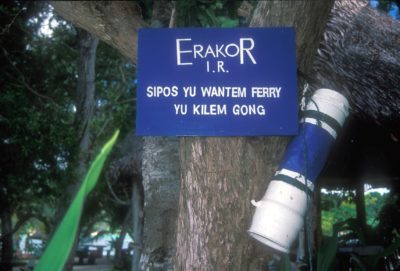 It’s 6:15 on the Erakor Lagoon in Vanuatu. Women in bright print skirts paddle canoes from villages into town. Yellow-billed birds call from the grass by the water’s edge, roosters crow from somewhere, and the low rumble of the surf hurling itself against the reef is felt as much as heard.