
Dustin Illingworth at The Paris Review:
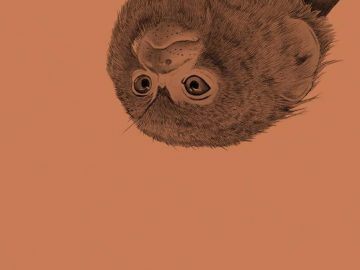
For all the High Modern sophistication of the writers who made up the Bloomsbury set in England in the early 1900s, there remains something creaturely about the collective. It is as if, beneath the frocks and tweeds, a simian itch lingered. To begin with, there were the names they gave one another, curious and whiskery terms of endearment: Virginia Woolf and her husband Leonard called each other Mandrill and Mongoose; Vanessa Bell referred to her sister as Singe (ape in French) or Goat, while Vanessa herself was known as Dolphin; Virginia’s friend and sometime lover Vita Sackville-West gave her the private name of Potto, a kind of lemur; and several members of the group referred to T. S. Eliot in private letters as Old Toad. The impulse would occasionally manifest in their art. Take, for instance, Flush: A Biography, Woolf’s imaginative consideration of the poet Elizabeth Barrett Browning’s cocker spaniel.
The fictions of Sigrid Nunez are often similarly attuned to animals, though they serve different ends here. They are not, as in Woolf, an uncharted tributary into the river of animal consciousness. Instead, they act as a conduit for the unpredictable weight of self-knowledge.
more here.
 A Britain without the South Asian British is now almost unthinkable. With a few exceptions – farming, fishing and the armed forces spring to mind – there are few sectors of UK life where the descendants of South Asian immigrants are not prominent. Kavita Puri, for example, author of the harrowing Partition Voices, is a distinguished broadcaster whose father, Ravi, relocated from Delhi to Middlesbrough in 1959. The Puri family had lived originally in Lahore. But while the Puris were Hindu, the majority of Lahoris were Muslim. Under the terms of the 1947 partition plan, Lahore became part of Pakistan. The Puri family, in order to survive the carnage that ensued, had to flee across the border to the new Indian state, ending up in Delhi.
 It matters that the first patients were identical twins. Nancy and Barbara Lowry were six years old, dark-eyed and dark-haired, with eyebrow-skimming bangs. Sometime in the spring of 1960, Nancy fell ill. Her blood counts began to fall; her pediatricians noted that she was anemic. A biopsy revealed that she had a condition called aplastic anemia, a form of bone-marrow failure. The marrow produces blood cells, which need regular replenishing, and Nancy’s was rapidly shutting down. The origins of this illness are often mysterious, but in its typical form the spaces where young blood cells are supposed to be formed gradually fill up with globules of white fat. Barbara, just as mysteriously, was completely healthy. The Lowrys lived in Tacoma, a leafy, rain-slicked city near Seattle. At Seattle’s University of Washington hospital, where Nancy was being treated, the doctors had no clue what to do next. So they called a physician-scientist named E. Donnall Thomas, at the hospital in Cooperstown, New York, asking for help.
 Kary Mullis, whose invention of the polymerase chain reaction technique earned him the Nobel Prize in Chemistry in 1993, died of pneumonia on August 7, according to
  Climate scientists’ worst-case scenarios back in 2007, the first year the Northwest Passage became navigable without an icebreaker (today, you can book a cruise through it), have all been overtaken by the unforeseen acceleration of events. No one imagined that twelve years later the United Nations would report that we have just twelve years left to avert global catastrophe, which would involve cutting fossil-fuel use nearly by half. Since 2007, the UN now says, we’ve done everything wrong. New coal plants built since the 2015 Paris climate agreement have already doubled the equivalent coal-energy output of Russia and Japan, and 260 more are underway.
 The recent revolutions in Algeria and Sudan remind us that bottom-up movements of people power can create sweeping political transformations. They did this in part by mobilizing huge numbers of active protestors—
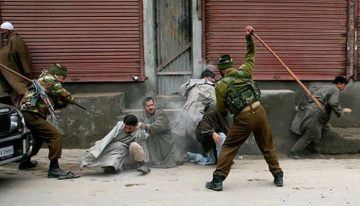 The Hindu-supremacist government of
  Writers have their pet themes, favorite words, stubborn obsessions. But their signature, the essence of their style, is felt someplace deeper — at the level of pulse. Style is first felt in rhythm and cadence, from how sentences build and bend, sag or snap. Style, I’d argue, is 90 percent punctuation.
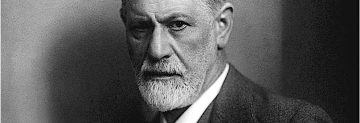 One of the explanations for the rise of populist nationalist myths today goes back to the complicated dynamics between the individual and society, and between reason and fantasy. The thinker who might help us understand our current political storms is no other than Sigmund Freud. Freud is best known for his more controversial theories on sexuality. But we need not buy Freudian mechanics or his clinical theories. Enough of value remains without Oedipus. Freudian theory explores the tension between unconscious desires and the controlling ego, whose rational faculties, while fallible, may be marshalled to scrutinise our emotional drives. On this account, the freedom that humans possess rests solely in recognising and controlling fantasies and the passions that accompany them. With such awareness we are, at least, in a better position to judge and direct our actions – mitigating those that are destructive and strengthening the beneficial. This isn’t a new idea for western philosophy, and it goes at least as far back as Plato and Aristotle.
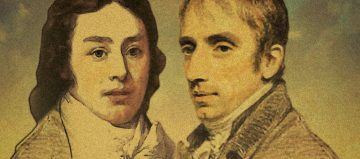 In Footsteps: Adventures of a Romantic Biographer, Richard Holmes described how, aged 18, he followed the route taken by Robert Louis Stevenson and his donkey almost 100 years earlier as they walked through the Massif Central in France. Sleeping, as Stevenson did, beneath the stars, bathing in rivers, and feeling half mad on the excess of liberty, Holmes learned that his vocation was to live like a ghost crab in another man’s shell. No one has described better the strange and obsessive nature of biographical pursuit, and the business of “footstepping” has since become associated with the Holmesian style of method-biography, in which the biographical subject returns from the dead with a palpable physical presence.
 Marshall Sahlins in Counterpunch:
 The late Anges Heller in Public Seminar:
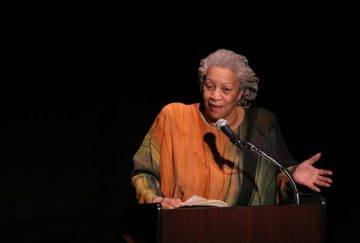 Joy James in Boston Review:
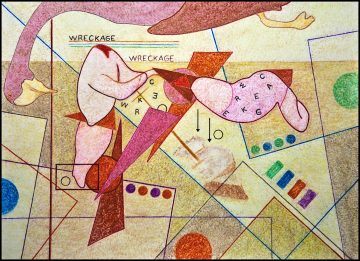 Andreas Huyssen in n+1: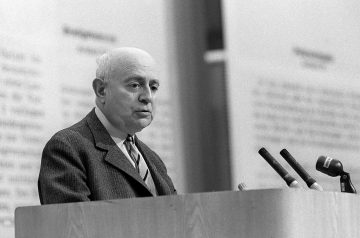
 However, it was an invention seven years earlier that restructured not just how language appears, but indeed the very rhythm of sentences; for, in 1496, Manutius introduced a novel bit of punctuation, a jaunty little man with leg splayed to the left as if he was pausing to hold open a door for the reader before they entered the next room, the odd mark at the caesura of this byzantine sentence that is known to posterity as the semicolon. Punctuation exists not in the wild; it is not a function of how we hear the word, but rather of how we write the Word. What the theorist Walter Ong described in his classic