
Eduardo Halfon at the NYRB:
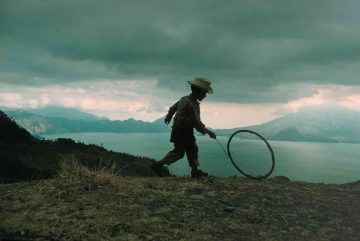 We called it El Lago. The Lake. As kids, growing up in the Guatemala of the 1970s, we probably never even knew its name—Lake Amatitlán. Nor did we care. It was only a winding, half-hour drive from the city to my grandparent’s vacation chalet on its shore. We spent most weekends and holidays of my childhood there, jumping off the wooden dock, learning to swim in the icy blue water, digging out old Mayan pots and relics from the muddy bottom, paddling out on long surfboards while little black fish jumped up through the surface and sometimes even landed on the acrylic board. Gently, we’d nudge them back in.
One early morning, we all woke up to find two indigenous men floating face down by the wooden dock. They were naked and bloated. Guerrilleros, my father said, his tone far from compassionate or even sympathetic. Guerrilla fighters, probably from one of the surrounding villages. I was still too young to understand that the military used to dispose of some of their enemies there, dumping the dead and tortured bodies into the water. A few weeks later, my grandparents sold the chalet.
more here.
 Seventy years after partition, the annexation of Kashmir by India is the endgame of Devraj, the Hindu nationalist businessman protagonist of my 2017 novel
 Helen Clapp, a professor of theoretical physics at MIT, recounted the biggest news of 21st century physics, the detection of gravitational waves by the Laser Interferometer Gravitational-Wave Observatory (LIGO), an international collaboration of scientists, resulting from the collision of two black holes more than a billion years ago. Einstein posited the existence of gravitational waves in 1915, Clapp said. “People describe these waves as ‘ripples in spacetime,’ with analogies about bowling balls on trampolines and people rolling around on mattresses, and these are probably as good as we’re going to get. The problem with all of the analogies, though, is that they’re three-dimensional; it’s almost impossible for human beings to add a fourth dimension, and visualize how objects with enormous gravity—black holes or dead stars—might bend not only space, but time.”
 Amitava Kumar’s recent novel, Immigrant, Montana, tells the story of Kailash, an Indian graduate student who has immigrated to the US to study at Columbia University, and his education in love as well as in academe. The novel was a New York Times Notable Book of 2018, and it has been compared to the autofiction of Teju Cole and Ben Lerner. In this interview, Kumar talks about how the novel is and is not autobiographical.
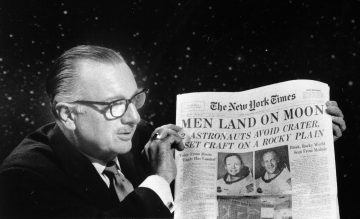 In 1969, W.H. Auden wrote a skeptical poem about the moon landing after he had declined a request to write a celebratory one.
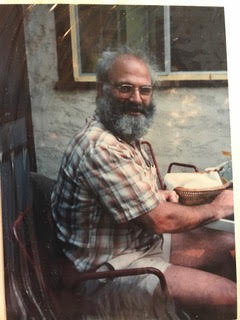 I had just turned twenty-nine and he was forty-eight when we first met out there on City Island, but I quickly realized that he would make a wonderful subject for one of those multi-part profiles the magazine was famous for in those days, and across the next four years, I took on the role of a sort of beanpole Sancho to his capacious Quixote, traipsing about with him on his various rounds and travels, chronicling his in those days floridly neurotic ramblings, indeed, filling up over fifteen notebooks full of them, interviewing his friends and patients and earlier associates, and off to the side, trying to help him through that epic blockage, which, curiously, took the form of graphomania: he’d generated millions of words, just not the right ones, and, for his editors and me, most of the at times Sisyphean work consisted in pruning the damn thing back and then preventing him from mischiefing it yet further.
 In the years before Transition House existed, violence at home was considered a private matter between husband and wife. In the early sixties, Janet, an undergraduate at a Seven Sisters college, had just married Jonathan, who was in law school. (Both names are pseudonyms.) Jonathan had started beating her up almost daily; each time, he was filled with remorse, but he blamed Janet for provoking him. Janet had not known any violence growing up, so she found the situation disturbing and bizarre and kept it a secret from most people she knew. She explained her black eyes with the usual stories about bumping into things.
 We have been friends, Ági and I, since 1969. I was much younger than she, having been born in the last year of the War in 1944. For a moment perhaps, we might have been, my mother and I, and Ági, in one of the same houses of the international ghetto, under Swedish, Swiss or Vatican weak protection. She was 14 or 15 back then, and her dramatic survival — by jumping into the Danube in front of an Arrow Cross Firing squad — has been often recounted.
 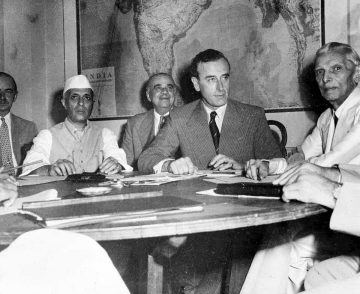 The bloodbath of partition also left the two nations that were borne out of it –
  I think a lot about Toni Morrison’s 1993 Nobel Prize lecture. Morrison, who died last week at the age of 88, was one of the nation’s most revered novelists and thinkers, and has left behind an immense opus that has generated renewed interest. Her acceptance
  For the first time, researchers have teleported a qutrit, a tripartite unit of quantum information. The independent results from two teams are an important advance for the field of quantum teleportation, which has long been limited to qubits—units of quantum information akin to the binary “bits” used in classical computing. These proof-of-concept experiments demonstrate that qutrits, which can carry more information and have greater resistance to noise than qubits, may be used in future quantum networks. Chinese physicist Guang-Can Guo and his colleagues at the University of Science and Technology of China (USTC)
 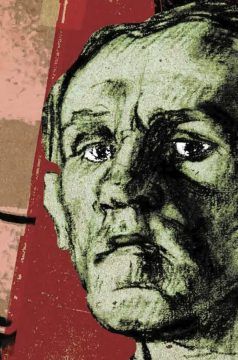 The life of the Polish Jewish author Bruno Schulz was, by pedestrian measures, a small one. It ended prematurely in 1942, when he was murdered in the street at the age of 50 by a Gestapo officer, and it was almost entirely confined to his provincial hometown of Drohobycz. Schulz drew compulsively, and in his brooding sketches crammed big-headed figures into cramped frames and rooms with low, clutching ceilings. Schulz himself was short and hunched. In photographs, he glowers. “He was small, strange, chimerical, focused, intense, almost feverish,” a friend, the Polish novelist Witold Gombrowicz, recalled in a diary entry. His fiction, too, was small and strange. Schulz’s surviving output consists of just two collections of short fiction, some letters, a few essays, and a handful of stray stories. His longest work spans about 150 pages.
 Compared to humans, whales and elephants can have hundreds of times the number of cells — and have similarly long natural lifespans — but their cells mutate, become cancerous, and kill them less frequently. This quirk of nature, which the ACE team is studying, is called Peto’s Paradox, named for
 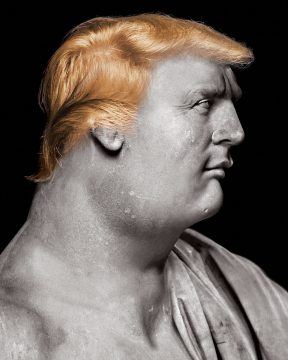 Well, we now have a solid record of what Trump has said and done. And it fits few modern templates exactly. He is no Pinochet nor Hitler, no Nixon nor Clinton. His emergence as a
 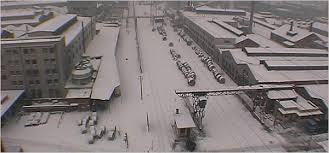 The current champion of heavyweight cinema, who vacillates between gallery and traditional cinematic presentation, must be the Chinese documentarian Wang Bing, who broke out internationally with his first film Tie Xi Qu: West of the Tracks (2003) and has subsequently produced the fourteen-hour Crude Oil (2008)—premiered as an installation at the 2008 International Film Festival Rotterdam—as well as the nearly nine-hour Dead Souls (2018). Andrew Chan, writing for Film Comment in 2016, distilled the role of duration in Wang’s work, writing, “Wang’s durational extremes do not just carry with them the weight of history and the inertia of the present; they also suggest that we as viewers might repay the gift of his subjects’ nakedness with our own sustained submission.” Chan is writing specifically about Wang’s 2013 ‘Til Madness Do Us Part, a nearly four-hour film that takes place almost entirely inside a dismal, crumbling mental institution doing double-duty as a lock-up for political undesirables. “Time in these films does not embrace, it provokes,” Chan continues, with further reference to West of the Tracks. “It’s felt as sacrifice and labor. And the aim is to make us earn, as if such a thing were possible, the right to lay eyes on humiliations that are at once collectively borne and unbearably private.”