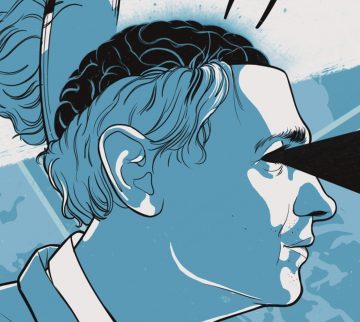
Social Democracy at Death’s Door

 (Photo by Sean Gallup/Getty Images)

Loren Balhorn in Jacobin:

The Social Democratic Party (SPD) went into last week’s European elections with some bold, albeit vague campaign slogans: “Come together and make Europe strong” was one. “Europe is the answer” was another. Given the party’s humiliating performance, taking in a new historic low of just over 15 percent, one has to wonder whether they were asking the right questions.

The Social Democrats lean hard on “more Europe” as the solution to Germany’s problems, and are far more likely to praise French president Emmanuel Macron than defend the leader of their British sister party, Jeremy Corbyn. They banked on selling themselves as a stable, mildly progressive bulwark against creeping right-wing populism but seem to have lost this role to the Greens, who broke 20 percent in a nationwide election for the first time. The looks on the faces of party chairwoman Andrea Nahles and “wholeheartedly European” top candidate Katarina Barley Sunday night were ones of defeat, out of luck and bereft of ideas for what to do next.

Catastrophic as the election may have been, it was anything but unexpected. The Social Democrats have been lumbering from one defeat to the next for nearly two decades, their toxic brand of what Oliver Nachtwey calls “politics without politics” costing them hundreds of thousands of members and millions of voters. The European elections were merely the latest confirmation of a seemingly unstoppable downward spiral for what was once the proudest, strongest socialist party on earth.

More here.

Europe’s democracies are in trouble. To understand why, look to the past

Henry Farrell interviews Sheri Berman over at the Washington Post:

H.F. — Why is it difficult to construct well-functioning liberal democracy?

S.B. — Another theme of “Democracy and Dictatorship” is that liberal democracy is so rare and difficult because it requires not only transforming political institutions, but also overcoming the anti-democratic and illiberal economic and social legacies of the old order. And this often requires violence, even war, to achieve.

This was true, for example, of the modern era’s first political revolution — the French — which did away with the political and legal infrastructure of the ancien régime in France. “Democracy and Dictatorship” then analyzes how the First World War permanently eliminated the old order’s political infrastructure — monarchical dictatorships and continental empires — from the rest of Europe, but it took fascism, national socialism and the Second World War to eradicate most of its remaining social and economic legacies.

This was particularly clear and particularly consequential in Germany. The Nazi regime finally pushed aside conservative Junker elites and established civilian control over the military. The regime also broke down the rigid status hierarchies that had long defined German society. The war’s aftermath then forced ethnic Germans from their traditional homelands in Eastern and Central Europe, eliminating a long-standing cause of conflict from the region, and making borders and peoples coincide across it more than they ever had before. Germany and Austria, in particular, became the home of essentially all of Europe’s Germans after 1945, finally fulfilling the goal proclaimed by German nationalists in 1848.

More here.

Give Up on Work-Life Balance

Woman working away on business in hotel room, computer on dressing table, biting toast as she gets ready for work

Olga Khazan in The Atlantic:

I’ve timed calls from PR people to coincide with my commute home, since that’s the only “free” time I had to talk. On a recent cross-country trip to see my parents, I spent a day doing my work expenses. Constant pressure in my profession has made me go to great lengths to minimize how much labor I perform outside of work. I once made my boyfriend pay me for the hours I spent booking flights and hotels for our vacation.

The reasons behind this “madness,” as Schulte put it, are familiar, and they’re not specific to journalism. American workers—especially those in white-collar professions—are working longer hours. Women are often the default chore-doers and child-tenders, even in relationships that strive for egalitarianism. The solution from career gurus has historically been to try to squeeze both work and life into the overpacked Tupperware that is your day. Check emails during the kids’ swim meet, they say, or pick up a hobby to “take your mind off work”—and take up even more time you don’t have.

Busy workers have been trying and failing at these types of hacks for decades. This fruitless cycle suggests that work-life balance is not independently achievable for most overworked people, if not outright impossible.

More here.

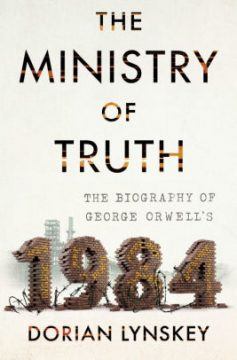
A Biography of George Orwell’s 1984

Alwyn W. Turner at Literary Review:

What a difference a decade makes. In 1940 George Orwell published his eighth book, the essay collection Inside the Whale, but when the Nazis in the same year drew up a list of Britons to be arrested after the planned invasion, his name wasn’t included. It was, observes Dorian Lynskey in his superb new book, ‘a kind of snub’. By the time Orwell died in January 1950, however, he was being acclaimed around the Western world as one of the great defenders of democracy and liberty, and had just been adjudged, for the first time, worthy of an entry in Who’s Who.
Much of the acclaim then was in recognition of his novel Animal Farm, but in the years since, Orwell’s popularity has increasingly rested on his final work, Nineteen Eighty-Four, published the summer before he died. It was an instant hit, selling a quarter of a million copies in its first six months, and it’s never gone away. Current estimates say worldwide sales exceed thirty million, and it has returned periodically to the top of the bestseller lists here and in America, most recently following the election of Donald Trump.

more here.

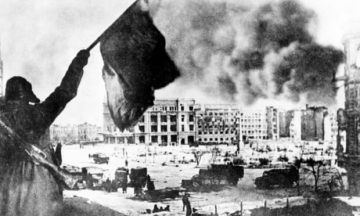
Stalingrad by Vasily Grossman

Marcel Theroux at The Guardian:

Although it was first published in English in 1985, it’s only in the last 10 years or so that Vasily Grossman’s novel Life and Fate has been widely acclaimed as a masterpiece. The publication of Robert Chandler’s revised translation in 2006 was a tipping point for the book’s reputation in the UK. It began to receive huge praise – “World War II’s War and Peace”, “equal to anything in the great canon of Russian literature”, “it took me three weeks to read and three weeks to recover from the experience” (Niall Ferguson, Gillian Slovo and Linda Grant, respectively). In 2011, an eight-hour BBC adaptation was broadcast on Radio 4. This won a new audience for the book, though the actual number of people who made it through the 850-page volume is another question.

I confess I resisted Life and Fate for a long time. I’m suspicious of gigantic novels and mindful of the critical tendency to overpraise them. I also recall with mixed feelings many hours spent wading through Virgin Soil Upturnedby Mikhail Sholokhov, a Russian Emmerdale, and Children of the Arbat, Anatoly Rybakov’s epic tetralogy about life under the Stalinist terror.

more here.

Climate Change’s Lost Ground

Tim Flannery at The New Statesman:

Forty years ago, Nathaniel Rich tells us in Losing Earth, global warming was better understood by the general public and US politicians than at any time since. Moreover, the opportunity to broker a global treaty to reduce emissions of greenhouse gases had presented itself, and the political will existed for the US to lead on the issue. Had action been taken, we could have stopped climate change in its tracks, much as we halted ozone depletion with the 1989 Montreal Protocol to phase out chlorofluorocarbons (CFCs).

The history of what went wrong is a sorry tale, and Rich chooses to tell it through the eyes of two of the most enduring climate campaigners, Rafe Pomerance and James Hansen. Pomerance’s engagement with climate change began in 1979. He was working in the Washington office of Friends of the Earth when he read a technical report on coal that mentioned that in a few decades coal-burning might bring about “significant and damaging” changes to the atmosphere.

more here.

Nancy Pelosi and the Democratic Debate About the Best Way to Get Donald Trump Out of Office

Amy Sorkin in The New Yorker:

As Speaker of the House Nancy Pelosi roamed Normandy on Thursday (she had brought along a contingent of dozens of members of Congress for the official commemoration of the seventy-fifth anniversary of D Day, including veterans from both sides of the aisle), her party was debating what it meant to want someone behind bars. Was it too tough, or not tough enough? Politico had reported that, in a meeting of “top Democrats,” on Tuesday night, Representative Jerrold Nadler, of New York, had argued in favor of having the Judiciary Committee, which he chairs, begin proceedings for the impeachment of President Donald Trump. Politico cited “multiple Democratic sources familiar with the meeting” who said that Pelosi demurred, telling Nadler, “I don’t want to see him impeached. I want to see him in prison.”

How did “lock him up” become a motto for forbearance and patience? The logic here is that it is constitutionally complicated to indict a sitting President. Indeed, Robert Mueller, the special counsel whose investigation of Russian meddling in the election and related matters is now closed, believed that Justice Department guidance precluded him from making such a move. (If he had done so, the crime would almost certainly have concerned obstruction of justice, rather than collusion.) The calculation would be different, obviously, if Trump were not President. And, as it happens, there is an election next year, which could lead, fairly quickly, to his exit from the White House. In other words, the way to hold him to account criminally is to first hold him to account electorally.

But, others in the Democratic Party say, impeachment is also a way to remove a President from office. That is, indeed, the means to do so that the Constitution gives to Congress. The Democrats view Pelosi as overly cautious. Trump, being a bully, has begun insulting Pelosi in terms that he apparently thinks will get those close to her to turn against her.

More here.

Saturday Poem

This is not a small voice

This is not a small voice
you hear               this is a large
voice coming out of these cities.
This is the voice of LaTanya.
Kadesha. Shaniqua. This
is the voice of Antoine.
Darryl. Shaquille.
Running over waters
navigating the hallways
of our schools spilling out
on the corners of our cities and
no epitaphs spill out of their river mouths.

This is not a small love
you hear               this is a large
love, a passion for kissing learning
on its face.
This is a love that crowns the feet with hands
that nourishes, conceives, feels the water sails
mends the children,
folds them inside our history where they
toast more than the flesh
where they suck the bones of the alphabet
and spit out closed vowels.
This is a love colored with iron and lace.
This is a love initialed Black Genius.

This is not a small voice
you hear.

by Sonia Sanchez
from
Wounded in the House of a Friend
Beacon Press, 1995

The Unseen Worlds Beneath Us: Places of Beauty, Danger and Wisdom

Terry Tempest Williams in The New York Times:

You know a book has entered your bloodstream when the ground beneath your feet, once viewed as bedrock, suddenly becomes a roof to unknown worlds below. The British writer Robert Macfarlane has written such a book. “Underland: A Deep Time Journey” is an epic exploration and examination of darkness and the caverns underground that have captured our imaginations, pulled us downward, housed our dead and allowed us to bury our most violent secrets. It is also a descent into the beauty where dark wisdom is located. Macfarlane divides his explorations into three sections, or “chambers,” devoted to “Seeing,” “Hiding” and “Haunting.” As he moves through them, he will take us to ancient barrows in Britain’s Mendip Hills, the understory of the Epping Forest and a physics lab investigating “dark matter” from deep within a coastal Yorkshire mine. He will guide us through underground rivers in Italy and show us the pictographs known as “the red dancers” found in Norwegian sea caves.

Macfarlane homes in on “something seemingly paradoxical: that darkness might be a medium of vision, and that descent may be a movement toward revelation rather than deprivation.” Night vision becomes an essential strategy for survival in the Anthropocene, the new epoch we find ourselves in, which registers the human press on the planet as a geologic force. “For more than 15 years now,” Macfarlane explains, “I have been writing about the relationships between landscape and the human heart. What began as a wish to solve a personal mystery — why I was so drawn to mountains as a young man that I was, at times, ready to die for love of them — has unfolded into a project of deep-mapping.”

More here.

Friday, June 7, 2019

The Canterbury Tales: A Reading List by Marion Turner

Stephanie Kelley in Five Books:

Today we’re going to discuss the Canterbury Tales. You’ve just written a biography of Geoffrey Chaucer. What would someone learn from your biography about Chaucer that they might not have known before?
Marion Turner: People who know a bit about Chaucer tend to think of him as the father of English literature—there’s a famous picture of him as an old patriarch, pointing with a rosary—or they think of him as a genial, middle-aged man telling slightly risqué stories in a pub. That’s the popular image of Chaucer. But really, that image came about after his death. In his lifetime, no one thought of him in that way. He wasn’t staid; he wasn’t patriarchal. He had an extraordinary life. That life involved, for instance, being a prisoner of war in France; it involved traveling multiple times to Italy; it involved going to Spain. He was multilingual, and he lived in all kinds of different environments. Chaucer was a great internationalist and a cosmopolitan poet.

More here.

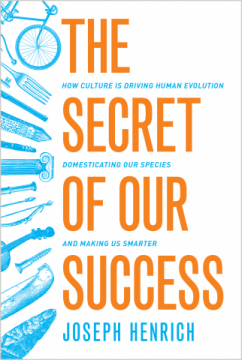
The Secret of Our Success

Scott Alexander in Slate Star Codex:

“Culture is the secret of humanity’s success” sounds like the most vapid possible thesis. The Secret Of Our Success by anthropologist Joseph Henrich manages to be an amazing book anyway.
Henrich wants to debunk (or at least clarify) a popular view where humans succeeded because of our raw intelligence. In this view, we are smart enough to invent neat tools that help us survive and adapt to unfamiliar environments.

Against such theories: we cannot actually do this. Henrich walks the reader through many stories about European explorers marooned in unfamiliar environments. These explorers usually starved to death. They starved to death in the middle of endless plenty. Some of them were in Arctic lands that the Inuit considered among their richest hunting grounds. Others were in jungles, surrounded by edible plants and animals. One particularly unfortunate group was in Alabama, and would have perished entirely if they hadn’t been captured and enslaved by local Indians first.

These explorers had many advantages over our hominid ancestors. For one thing, their exploration parties were made up entirely of strong young men in their prime, with no need to support women, children, or the elderly. They were often selected for their education and intelligence.

More here.

This Picture Tells a Tragic Story of What Happened to Women After D-Day

Ann Mah in Time:

They called it the épuration sauvage, the wild purge, because it was spontaneous and unofficial. But, yes, it was savage, too. In the weeks and months following the D-Day landings of June 6, 1944, Allied troops and the resistance swept across France liberating towns and villages, and unleashing a flood of collective euphoria, relief and hope. And then the punishments began.
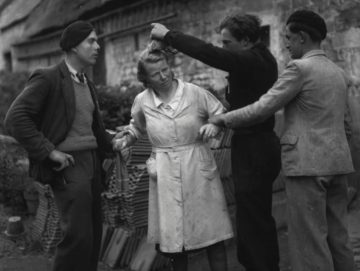
The victims were among the most vulnerable members of the community: Women. Accused of “horizontal collaboration” — sleeping with the enemy — they were targeted by vigilantes and publicly humiliated. Their heads were shaved, they were stripped half-naked, smeared with tar, paraded through towns and taunted, stoned, kicked, beaten, spat upon and sometimes even killed.

One photograph from the era shows a woman standing in a village as two men forcibly restrain her wrists; a third man grabs a hank of her blonde hair, his scissors poised to hack it away. Just as the punished were almost always women, their punishers were usually men, who acted with no legal mandate or court-given authority.

More here.  [Thanks to Ram Manikkalingam.]

A Few Unanswerable Questions Regarding Moses Mendelssohn

Gurmeet Singh at 3:AM Magazine:

Mendelssohn’s Wiki page says his grave has been reconstructed. Not surprising: grand historical narratives are everywhere legible in Berlin’s built environment. The Jewish cemetery where he’s buried became part of East Berlin after the war, falling into even further disrepair after the Nazi years. His grave, as well as many others, was only reconstructed in the 2000s.
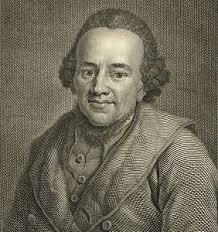
Born in 1729 in Dessau, then in the Principality of Anhalt, Mendelssohn moved to Berlin in his teens. His entry into the city marked his entry into history: in the 19th century, it was common knowledge that the philosophical genius Moses Mendelssohn had entered Berlin via the Rosenthal Gate—a gate reserved for cattle and Jews.

After his death in 1786, not only was his work considered vital by cultured Europeans, his life seemed a perfect demonstration of the educative power of the Enlightenment, and a living example of a successfully-achieved bildung. So why is he not more widely known today?

more here.

How to Lose a Language

Kaya Genç at The Point:

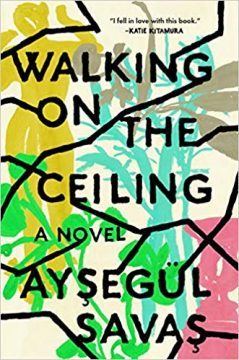
In a 2017 essay for the magazine Fare, Ayşegül Savaş described a game she played as a high school student in Istanbul. She and a friend strapped on backpacks and pretended to be foreigners in Istanbul’s tourist quarter. The purpose of “the tourist game,” Savaş remembered, “was to talk to people in English of varying accents, throwing in a handful of mispronounced Turkish words.” They asked locals for directions to Istanbul landmarks, had their pictures taken in front of palaces and felt “overjoyed when our identities were not revealed, all the more if anyone showed an interest in us and asked where we were from.” The game, Savaş explained, “made us feel like we were in control while giving us the freedom to explore as we pleased; our city took on new wonder when viewed from the imaginary foreign gaze.”

In Walking on the Ceiling, Nunu fears silence more than anything else, and as the novel chronicles her reckoning with the silence of her parents, Savaş invents a different kind of game to explore an equally heavy silence associated with the author’s mother tongue.

more here.

Modernism’s Debt to Black Women

Cody Delistraty at The Paris Review:

For a long time, and even very recently, artworks with black models—or by black artists—were collected sparingly by museums, in part because they weren’t considered to fit into any standard art-historical narratives. Between 2008 and 2018, for instance, only 2.4 percent of purchases and donations in thirty of the best-known American museums were works by African American artists, according to an analysis by In Other Words and ARTNews. Only 7.6 percent of exhibitions concerned African American artists. From Modernism through postwar Abstract Expressionism, work by black painters still represented a catch-22: they were either too much about the black experience and thus didn’t seem to fit into the European timeline of art history, or they were too reliant on the abstract when the few museums that did collect black artists wanted figurative works that represented “the black experience.” “It’s pretty hard to explain by any other means than to say there was an actual, pretty systemic overlooking of this kind of work,” said Ann Temkin, the curator of painting and sculpture at the Museum of Modern Art in New York, in a recent interview.

more here.

Building a Silicon Brain

Sandeep Ravindran in The Scientist:

If scientists want to simulate a brain that can match human intelligence, let alone eclipse it, they may have to start with better building blocks—computer chips inspired by our brains. So-called neuromorphic chips replicate the architecture of the brain—that is, they talk to each other using “neuronal spikes” akin to a neuron’s action potential. This spiking behavior allows the chips to consume very little power and remain power-efficient even when tiled together into very large-scale systems. “The biggest advantage in my mind is scalability,” says Chris Eliasmith, a theoretical neuroscientist at the University of Waterloo in Ontario. In his book How to Build a Brain, Eliasmith describes a large-scale model of the functioning brain that he created and named Spaun.1 When Eliasmith ran Spaun’s initial version, with 2.5 million “neurons,” it ran 20 times slower than biological neurons even when the model was run on the best conventional chips. “Every time we add a couple of million neurons, it gets that much slower,” he says. When Eliasmith ran some of his simulations on digital neuromorphic hardware, he found that they were not only much faster but also about 50 times more power-efficient. Even better, the neuromorphic platform became more efficient as Eliasmith simulated more neurons. That’s one of the ways in which neuromorphic chips aim to replicate nature, where brains seem to increase in power and efficiency as they scale up from, say, 300 neurons in a worm brain to the 85 billion or so of the human brain.

Neuromorphic chips’ ability to perform complex computational tasks while consuming very little power has caught the attention of the tech industry. The potential commercial applications of neuromorphic chips include power-efficient supercomputers, low-power sensors, and self-learning robots. But biologists have a different application in mind: building a fully functioning replica of the human brain.

…It’s still early days, and truly unlocking the potential of neuromorphic chips will take the combined efforts of theoretical, experimental, and computational neuroscientists, as well as computer scientists and engineers. But the end goal is a grand one—nothing less than figuring out how the components of the brain work together to create thoughts, feelings, and even consciousness.

More here.

Friday Poem

LETTER TO GOD

The dogs were tired and bewildered,
stunned by the ways they’d been treated
by men—yelled at, kicked around, left unfed
in the cold and the rain. Not to mention

the usual predations of time and illness:
cold creak of the hips, tumor and clouded eye,
ears that ceased to help at all …
What could they do,

To whom might they appeal?
The wisest among them
—that was his reputation—
suggested that a letter be drafted to God;

only by appeal to a higher authority
might their plight be considered.
But once the questions were written,
who would carry it? Who knew how

to imagine the way?
The ablest was chosen—a retriever,
he could walk for days,
nearly incapable of flagging,
and his entire being knew the imperative,

to carry. But how will you carry it,
they asked? In my mouth. No, they cried,
you’ll drop it every time you bark.
And then the wisest made this plan:

they’d roll their plea into a scroll,
tightly, and their hero would open
his legs, and lift his tail, and carry
the missive inside him,

where he was sure to keep it
until he reached the gates of paradise.
And off he trotted, head high, and tail,
only a slight delicacy in his walk

betraying discomfort, into the fields
with their blonde grasses, upstream,
off toward the border of the world.
Do I need to tell you he never returned?

Why Lord, the letter read, did you put
a wicked clockspring in our bellies?
Our eyes glaze, our old hips refuse
a step, we can’t even lift a leg

to mark a trail. Why given these indignities
are we further subject to the harrowing
of men, we who stand before them
all expectation, why are we met with blows,

or worse? In every town of this world
you’ve given us, in pen and shelter,
in cellar and alley and hole in the dirt,
we your children await your reply.

Therefore, when each dog meets a stranger,
it’s necessary to sniff beneath the tail:
perhaps, this time, this is the returning messenger;
it’s still possible a reply might reach them.

by Mark Doty
from School of the Arts
Harper Collins, 2005

Thursday, June 6, 2019

Considering the Male Disposability Hypothesis

Maria Kouloglou in Quillette:

“Male disposability” describes the tendency to be less concerned about the safety and well-being of men than of women. This night sound surprising given the emphasis in contemporary Western discourse on the oppression of women by men. How is it possible that societies built by men have come to consider their well-being as less important? But embedded in this kind of question are simplistic assumptions that flatten a good deal of complexity.

2016 study published in Social Psychological and Personality Science found that people are more willing to sacrifice men than women in a time of crisis and that they are more willing to inflict harm on men than on women. In 2017, an attempt to replicate the Milgram experiment in Poland provided some (inconclusive) evidence that people are more willing to deliver severe electric shocks to men than to women:

“It is worth remarking,” write the authors, “that although the number of people refusing to carry out the commands of the experimenter was three times greater when the student [the person receiving the “shock”] was a woman, the small sample size does not allow us to draw strong conclusions.”

2000 study found that among vehicular homicides, drivers who kill women tend to receive longer sentences than drivers who kill men. Another study found that, in Texas in 1991, offenders who victimized females received longer sentences than those who victimized males. There is at least some evidence that “women and children first” is a principle still employed during rescue efforts in natural disaster zones.

More here.

Neuroscience Readies for a Showdown Over Consciousness Ideas

Philip Ball in Quanta:

The question of what kinds of physical systems are conscious “is one of the deepest, most fascinating problems in all of science,” wrote the computer scientist Scott Aaronson of the University of Texas at Austin. “I don’t know of any philosophical reason why [it] should be inherently unsolvable” — but “humans seem nowhere close to solving it.”

Now a new project currently under review hopes to close in on some answers. It proposes to draw up a suite of experiments that will expose theories of consciousness to a merciless spotlight, in the hope of ruling out at least some of them.

If all is approved and goes according to plan, the experiments could start this autumn. The initial aim is for the advocates of two leading theories to agree on a protocol that would put predictions of their ideas to the test. Similar scrutiny of other theories will then follow.

More here.