
Category: Recommended Reading
Einstein in Athens
Benjamin Liebeskind at The New Atlantis:
 The answer is that the last century of science has partially recapitulated Aristotle’s teachings on nature, for the most part unwittingly. Since roughly the turn of the twentieth century, the scientific enterprise has focused not only on the elemental, but increasingly also on large-scale phenomena: solids, fluids, organisms, ecosystems, human behavior, and computing machines. Scientists have often maintained that these systems cannot be understood solely in terms of action at the lowest levels of organization. Thus one hears of “systems theory” or “the theory of complex systems,” of “holism,” “irreducibility,” “downward causation,” “information theory,” and other musings from scientists that assert, to quote the physicist Philip Anderson, that “more is different” — that “the ability to reduce everything to simple fundamental laws does not imply the ability to start from those laws and reconstruct the universe.”
These challenges have unknowingly echoed Aristotle. For Aristotle’s science was concerned primarily with the difficulties that arise when we try to discern the causes of beings, of wholes. A return to his ideas, then, is no mere conceit of the fusty halls of academic philosophy, but a clamor coming from science itself. Seen in this light, the claims in Neo-Aristotelian Perspectives on Contemporary Science do not seem quite so radical. Indeed, one could claim that the authors are attempting to make more explicit what many scientists have been dancing around for a century.
more here.
Bill Traylor Deserves to Be Exalted
Jerry Saltz at New York Magazine:
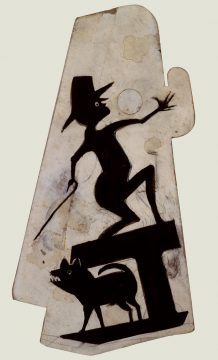 The art of Bill Traylor comes to us with the ghosts of slave ships, lynchings, chain gangs, Jim Crow, justice denied — an American night-story without end. Born in Alabama in 1853, Traylor was 9 years old when Lincoln signed the Emancipation Proclamation and 12 when slavery was abolished with the 13th Amendment. He bore his owner’s name for life and resided for 55 years near the plantation where he was born; then he moved to nearby Montgomery County, where he remained until his death in 1949. In 1927 or 1928, he moved alone to the city of Montgomery, and in 1929, his son was killed by police. Ten years later, when Traylor was 85 and essentially homeless, he began to draw and paint on the streets of Montgomery, and a massive arc of art as powerful and profound as any in the 20th century shot out of him. His drawings and paintings in ink, pencil, and gouache were made on found cardboard, candy-box tops, and other odds and ends. Today, only four years of his output remain, yet we have about 1,200 works.
more here.
A History of Mescaline
Emily Witt at the LRB:
 In the early 20th century, peyote and mescaline were embraced by mystics, who saw them as a way to stave off the alienation of modernity and what Jay calls ‘the loss of the sacred’ and ‘the tyranny of reason’. Aleister Crowley used peyote in his séances. Frederick Madison Smith, the grandson of Joseph Smith, the founder of the Mormon religion, explored it as a possible means of achieving religious ecstasy. Smith also lobbied against the prohibition of the peyote religion, which had grown since the 1890s and was now attracting opposition. After a bill to prohibit peyote was narrowly voted down in the Senate, representatives of the Cheyenne, Oto, Ponca, Comanche, Kiowa and Apache tribes gathered to sign the charter of incorporation of the Native American Church in 1918, which they hoped would give the peyote religion First Amendment protections. Despite repeated attempts at state and federal prosecution in the decades that followed, the church successfully defended itself until a Supreme Court case in the 1990s rescinded its rights. A backlash to the court’s decision resulted in the 1994 amendment to the American Indian Religious Freedom Act, which protects the church’s right to peyote in federal law, though attempts at local bans have continued.
more here.
Dickinson
Julia Alexander in The Verge:
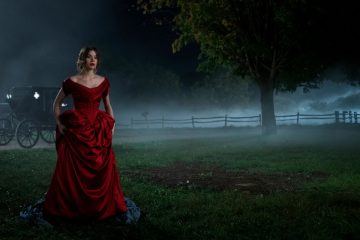 Emily Dickinson’s poems are obsessed with youthful themes: fame, popularity, intense bouts of emotion and, of course, a fetishization of death. Her work isn’t changed in Dickinson. The stanzas are true to the source material. Modernizing the way characters speak to each other, but keeping the poems consistent, allows Dickinson’s words to feel more approachable for an audience that came into their own by way of Lil Peep Instagram live-streams and SoundCloud emo rap. Most brilliantly, Dickinson isn’t trying to be a teen show. That’s precisely why it works as one. It kind of stumbles into itself, finding its footing along the way. There isn’t any clear direction or structure to help it stay on the same path. Dickinson doesn’t shy away from ludicrousness, but leans into it unabashedly. It’s an “unapologetic, crying on the floor at two in the morning, flirting with the fetishization of death even when floating on the undeniable highness of life” type of disaster.
That’s especially true when it comes to Emily’s forbidden relationship with Sue. Steinfeld and Hunt charm whenever they’re on-screen together, excellent at playing up grandeur expressions of their love for each other while putting just as much importance into the small gestures that cement their relationship. They’re giddy when with each other, full of sneaky kisses and uncontrollable giggles that define first loves. Although their relationship is forbidden, made harder by Sue’s engagement to Emily’s brother, Austin (Adrian Enscoe), it’s never tragic. Their obsession with each other is all-encompassing. Everything is carefree and in the moment. It’s not fraught with drama or cocooned in sadness the way other queer relationships on TV can be, especially with younger characters. Emily is upset by Sue’s engagement, but even that isn’t enough to drive them apart. They simply exist, together, now.
Dickinson is so unafraid of being itself that I found myself enamored by it, flaws and all, by the middle of the first episode.
More here.
Photography: Best of the decade
Susan Goldberg in The National Geographic:
SAY THE WORDS “National Geographic,” and the first thing that comes to mind is photography.
We are known, and have been for most of the past 130 years, for taking people on visual journeys into every corner of the Earth—from the highest mountains to the deepest oceans, from jungles to deserts, from the biggest metropolises to the most remote countrysides. In the past 10 years alone, our photographers have taken 21,613,329 images in the quest to document life on this planet for our print and digital platforms. More than 21.6 million images! That’s an amazing number—and a bit terrifying if you try to narrow it down to some kind of “best” or “favorites” list.
…“Reverence,” photographer Lynn Johnson says, remembering the moment when she and medical staff crowded around the human face laid carefully on the operating room table before them. Just the face, a living thing, clipped away from an organ donor, not yet attached to its next recipient. “It made one question everything we know and think about identity,” Johnson says.

More here. (Note: Take a minute to see all the stunning images.)
Sunday, December 29, 2019
Quine: Beginning in the middle of things
Gary Kemp at the TLS:
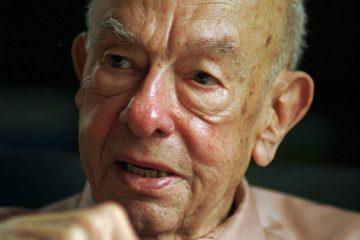 Willard Van Orman Quine is well known to the average analytic philosopher. True, he disdained much of the Pandora’s box of conceptual playthings often thought necessary for serious work in analytic philosophy nowadays, and his doctrines are thought to have been largely superseded. But he is treated by many – along with the earlier thinkers Gottlob Frege and Bertrand Russell – as an important intellectual ancestor, who developed many of the puzzles, paradoxes and paradigms that have dominated hardcore analytic philosophy for decades from the 1950s and 1960s.
Certain Quinean doctrines do continue to come up frequently: the untenability of the traditional “Analytic–Synthetic” distinction (a distinction between statements the truth or falsity of which depends only on its words, as in “No bachelor is married”, and those that depend also on particular facts, as in “the cat is hungry” – a distinction that was thought by many to be the key to various problems in the theory of knowledge); the “web of belief” metaphor (non-metaphorically: that no statement, not even apparent certainties such as 2+2=4, is in principle immune to revision); the unavoidability of the assumption that in addition to tables and trees there really are abstract objects such as numbers (on pain of hamstringing science); the Indeterminacy of Translation (that in principle one correct translation of a sentence – any sentence, say one of Czech – might conflict with another correct translation of that same sentence, and they might even say the opposite of the other); that there is “no entity without identity” (that a scientific use of a term for a kind of thing requires a means of settling whether one of them is the same as another); that science has no serious need of modal logic (the logic of necessity and possibility); that “to be is to be the value of a bound variable” (which is rather too complicated to go into here).
More here.
Humans Are Driving the Evolution of Urban Rats
Jonathan Richardson in Undark:
 It took only a few seconds to spot one. Then another. As I walked into the small park around noon, dozens of rats could be seen scurrying in every direction. They dashed in and out of burrows scattered around the planting beds. They scampered between the safety of shrub cover and the trash bins containing a smorgasbord for them to feed on. They leaped on and off the unoccupied benches encircling the park. The rats of Churchill Square had returned.
I study urban rats, but this tiny park in New York City — at the intersection of Bleecker Street and 6th Avenue in the Greenwich Village section of lower Manhattan — has been a side curiosity of mine. The first time I visited the square, I was just looking for a place to sit for a few minutes during a family excursion.
But an urban ecologist is never really off the clock in the city. I had never seen so many rats in such a small area. Rats are generally nocturnal, so the high activity during daylight probably meant the infestation was severe, which increases the risk of disease transmission to people, damages urban infrastructure, and even takes a toll on the mental health of residents. The health, economic, and social impacts of rat infestation can be significant.
More here.
Edward Said: Remembering a Palestinian Patriot
César Chelala in The Times of Israel:
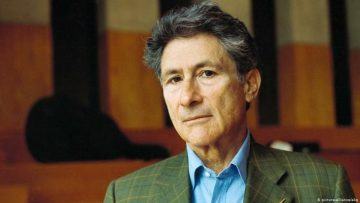
The 2019 Memorial Lecture at Columbia University in New York honoring Edward W. Said, “Out of Place: Refugees, Immigrants, and Storytelling” couldn’t have come at a more appropriate moment. And the main speaker for that event, Viet Thanh Nguyen, was the right person for the job. Viet Thanh Nguyen, the author of the novel The Sympathizer, shares with Said two qualities: his political concerns, and the widespread recognition for his work. He also shares with Said a feeling of displacement; him as a refugee, Said as an immigrant.
Edward Said was perhaps one of the most profound analysts of the Palestinian situation, and one of the most vocal critics of the Israeli government policies towards them. To his credit, he is equally critical of both.
Following the Six-Day War (5-10 June 1967,) Said worked hard to dispel the stereotyped misrepresentations of Arabs in the U.S. media, which had no bases in the political and historical realities of the Middle East. In that war, the combined armies of Egypt (known at the time as the United Arab Republic,) Jordan and Syria were crippled by Israel, which had in the United States a most powerful ally.
More here.
Empathy Is Tearing Us Apart
Robert Wright in Wired:
 There are people who believe that the political polarization now afflicting the United States might finally start to subside if Americans of both parties could somehow become more empathetic. If you’re one of these people, the American Political Science Review has sobering news for you.
Last week APSR—one of the alpha journals in political science—published a study which found that “empathic concern does not reduce partisan animosity in the electorate and in some respects even exacerbates it.”
The study had two parts. In the first part, Americans who scored high on an empathy scale showed higher levels of “affective polarization”—defined as the difference between the favorability rating they gave their political party and the rating they gave the opposing party. In the second part, undergraduates were shown a news story about a controversial speaker from the opposing party visiting a college campus. Students who had scored higher on the empathy scale were more likely to applaud efforts to deny the speaker a platform.
It gets worse.
More here.
Astonishing stabilized time-lapse showing the Earth’s rotation from the ground
[From Boing Boing.]
Meeting a prodigious memory
Stafan Zweig (writing in 1929, Vienna) in Lapham’s Quarterly:
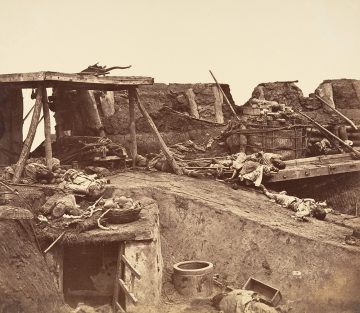
I reiterated my object in consulting him: to get a list of all the early works on animal magnetism, and of contemporary and subsequent books and pamphlets for and against Mesmer. When I had said my say, Mendel closed his left eye for an instant, as if excluding a grain of dust. This was, with him, a sign of concentrated attention. Then, as though reading from an invisible catalogue, he reeled out the names of two or three dozen titles, giving in each case place and date of publication and approximate price. I was amazed, though Schmidt had warned me what to expect. His vanity was tickled by my surprise, for he went on to strum the keyboard of his marvelous memory, and to produce the most astounding bibliographic marginal notes. Did I want to know about sleepwalkers, Perkins’ metallic tractors, early experiments in hypnotism, Braid, Gassner, attempts to conjure up the devil, Christian Science, theosophy, Madame Blavatsky? In connection with each item, there was a hailstorm of book names, dates, and appropriate details. I was beginning to understand that Jacob Mendel was a living lexicon, something like the general catalogue of the British Museum Reading Room, but able to walk about on two legs.
…True, this memory owed its infallibility to the man’s limitations, to his extraordinary power of concentration. Apart from books, he knew nothing of the world. The phenomena of existence did not begin to become real for him until they had been set in type, arranged upon a composing stick, collected, and, so to say, sterilized in a book. Nor did he read books for their meaning, to extract their spiritual or narrative substance. What aroused his passionate interest, what fixed his attention, was the name, the price, the format, the title page. Though in the last analysis unproductive and uncreative, this specifically antiquarian memory of Jacob Mendel, since it was not a printed book catalogue but was stamped upon the gray matter of a mammalian brain, was, in its unique perfection, no less remarkable a phenomenon than Napoleon’s gift for physiognomy, Mezzofanti’s talent for languages, Lasker’s skill at chess openings, Busoni’s musical genius. When someday there arises a great psychologist who shall classify the types of that magical power we term memory as effectively as Buffon classified the genera and species of animals, a man competent to give a detailed description of all the varieties, he will have to find a pigeonhole for Jacob Mendel, forgotten master of the lore of book prices and book titles, the ambulatory catalogue alike of incunabula and the modern commonplace.
More here.
London Falling: The dying empire state of mind
Rafia Zakaria in The Baffler:
 IT IS A TRUTH universally accepted that any columnist who travels to a foreign country to write will be, eventually, in search of a cab. If the entire Middle East has been made intelligible to New York Times readers by the inveterate interviewer of taxi drivers Thomas Friedman, then so too with the fate of Near-Brexit Britain. It follows that when I got to London on Election Day (December 12) I immediately got into the taxi line at Heathrow airport. Soon, I figured, an insightful and expert cab driver who I would dub Niles or Julian in my ensuing column, would deliver me the gems that make for good punditry. It was, predictably, a rainy and blustery day in London, and I scurried to the cab to which I had been pointed as fast as I could. The driver, however, was not so inclined; not, in fact, inclined at all. A white man, he sat in his black cab and looked straight ahead. I kept banging at the door until finally the attendant sidled over and said “Take the next one.” I did and as I did, I saw from the corner of my eye a white woman who had stood behind me in line get into the cab that had been unavailable to me. The cab driver so immoveable to my entreaties readily got out and loaded her suitcases for her.
I did get into the next cab, whose driver, thankfully, was an elderly Jamaican-British man. Then it sunk in: I was a brown person in London on a day when there was a reckoning, in some significant part, on the acceptability of brown and black others. My new cab-driver expert affirmed this. “It’s all about the immigrants,” he said as the cab sped past surly London suburbs, rain soaked and wan. “All the jobs here are done by the immigrants but the British don’t want us,” he expounded. “Get rid of the immigrants they say,” he went on as we slipped under a graffiti-sprayed bridge; in the whorls and words I could read an angrily scrawled “Out.” When we got to my budget hotel my cab driver sent me off with “Boris Johnson is going to win.”
Boris Johnson did win and the results were as anti-climactic as election results can be.
More here.
Sunday Poem
An iPoem
You must hold your quiet center,
where you do what only you can do.
If others call you a maniac or a fool,
just let them wag their tongues.
If some praise your perseverance,
don’t feel too happy about it—
only solitude is your lasting friend.
You must hold your distant center.
Don’t move even if earth and heaven quake.
If others think you are insignificant,
that’s because you haven’t held on long enough.
As long as you stay put year after year,
someday you will find a world
beginning to revolve around you.
by by Ha Jin
from The Distant Center
Copper Canyon Press, 2018
Saturday, December 28, 2019
The Fight Over the 1619 Project Is Not About the Facts
Adam Serwer in The Atlantic:
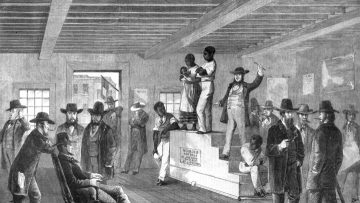
U.S. history is often taught and popularly understood through the eyes of its great men, who are seen as either heroic or tragic figures in a global struggle for human freedom. The 1619 Project, named for the date of the first arrival of Africans on American soil, sought to place “the consequences of slavery and the contributions of black Americans at the very center of our national narrative.” Viewed from the perspective of those historically denied the rights enumerated in America’s founding documents, the story of the country’s great men necessarily looks very different.
The reaction to the project was not universally enthusiastic. Several weeks ago, the Princeton historian Sean Wilentz, who had criticized the 1619 Project’s “cynicism” in a lecture in November, began quietly circulating a letter objecting to the project, and some of Hannah-Jones’s work in particular. The letter acquired four signatories—James McPherson, Gordon Wood, Victoria Bynum, and James Oakes, all leading scholars in their field. They sent their letter to three top Times editors and the publisher, A. G. Sulzberger, on December 4. A version of that letter was published on Friday, along with a detailed rebuttal from Jake Silverstein, the editor of the Times Magazine.
More here.
The Democratic People’s Republic of U.S. Monetary Policy
Leah Downey in Foreign Policy:
In a post-Great Recession world, monetary policy just looks different. For one thing, central bank independence is dead—but the U.S. Congress doesn’t know it yet. We could argue for hours, or days, about whether it ever really existed or when exactly it died, but suffice to say that the moment quantitative easing started, the Federal Reserve stepped out of its well-defined monetary box, and independence was no more. Central bankers know it: In a recent survey, 61 percent of former central bankers surveyed from around the world predicted that central banks would be less independent in the future.
The U.S. Congress has not acknowledged this reality. Members of Congress depend on the doctrine of central bank independence to keep the dirty business of monetary policy off their hands. The question is whether Congress will continue to ignore reality and let the Fed take on more power—and increasingly fiscal rather than just monetary—over the economy or whether it will choose to step in, reassert its political power, and get more involved. Most important of all is a question no one seems willing to ask: What might the answer to this question say about the state of U.S. democracy?
More here.
The Radical James Baldwin
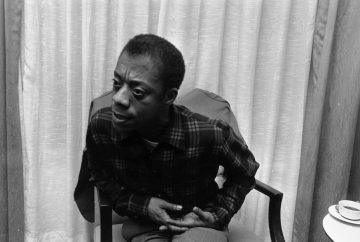 Laura Tanenbaum in Jacobin:
Living in Fire, Bill Mullen’s new biography of James Baldwin is many things: a short, accessible introduction to Baldwin’s life and work drawing on his letters and unpublished writings; an argument for his place among left artists and writers; and an overview of his less well-known writings on queer identity and anti-imperialism, including their relation to Palestine. It’s also a great advertisement for the New York City public schools.
Baldwin grew up as the oldest of nine children. His father was a storefront preacher who worked at a soda bottling plant, making $27.50 a week. His childhood took place largely during the Great Depression, when black unemployment reached 50 percent, but Baldwin’s teacher, Orilla Miller, nonetheless called the poverty of Baldwin’s house among the worst she had seen. Taking a liking to Baldwin, Miller brought him along to the movies, an experience he would recount many years later in The Devil Finds Work, his book-length essay about American films; her husband took Baldwin to the May Day parade, where he got his first taste of what he later described as “the universal and inevitable ferment which explodes into what is called a revolution.”
More here.
We Are Witnessing a Rediscovery of India’s Republic
 Rohit De and Surabhi Ranganathan in NYT:
As India’s new citizenship law seeks to create a stratified citizenship based on religion, a large number of Indians opposing it are emerging as a people of one book, the country’s Constitution, which came into force on Jan. 26, 1950.
In the past two weeks, diverse crowds across the country have responded to the discriminatory Citizenship Amendment Act, referred to as the C.A.A., passed by Prime Minister Narendra Modi’s Hindu nationalist government by chanting the preamble to the Constitution of India, with its promises of social, political and economic justice, freedom of thought, expression and belief, equality and fraternity.
Student protesters being herded into police vans, opposition leaders standing outside the Indian Parliament and ebullient crowds of tens of thousands in Hyderabad, Delhi, Kolkata, Mumbai and Chennai have read aloud the preamble and held aloft copies of the Constitution and portraits of B.R. Ambedkar, its chief draftsman.
The C.A.A. offers an accelerated pathway to citizenship for Hindu, Sikh, Zoroastrian, Buddhist and Christian migrants from Pakistan, Bangladesh and Afghanistan but excludes Muslims. It effectively creates a hierarchical system of citizenship determined by an individual’s religion, reminiscent of Myanmar’s 1982 Citizenship Law, which privileged citizenship for “indigenous races,” excluded the Rohingya and paved the ground for the genocidal violence against them.
More here.
What It Would Take for Evangelicals to Turn on President Trump
Michael Luo in The New Yorker:
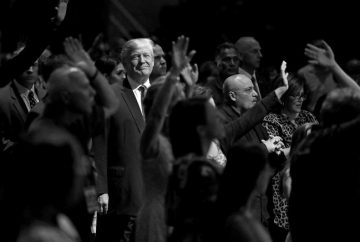 One night in 1953, the Reverend Billy Graham awoke at two in the morning, went to his study, and started writing down ideas for the creation of a new religious journal. Graham, then in his mid-thirties, was an internationally renowned evangelist who held revival meetings that were attended by tens of thousands, in stadiums around the world. He had also become the leader of a cohort of pastors, theologians, and other Protestant luminaries who aspired to create a new Christian movement in the United States that avoided the cultural separatism of fundamentalism and the theological liberalism of mainline Protestantism. Harold Ockenga, a prominent minister and another key figure in the movement, called this more culturally engaged vision of conservative Christianity “new evangelicalism.” Graham believed a serious periodical could serve as the flagship for the movement. The idea for the publication, as he later wrote, was to “plant the Evangelical flag in the middle of the road, taking a conservative theological position but a definite liberal approach to social problems.” The magazine would be called Christianity Today.
During the next several decades, Graham’s movement became the dominant force in American religious life, and perhaps the country’s most influential political faction. From the late nineteen-seventies through the mid-eighties, evangelicals became increasingly aligned with the Republican Party, progressively shifting its priorities to culture-war issues like abortion. Today, evangelical Protestants account for approximately a quarter of the U.S. population and represent the political base of the G.O.P. Despite President Trump’s much publicized moral shortcomings, more than eighty per cent of evangelicals supported him in the 2016 election. Last week, however, Mark Galli, the ninth editor to lead Christianity Today since its founding, in 1956, published an editorial calling for President Trump’s impeachment and removal from office. “The president of the United States attempted to use his political power to coerce a foreign leader to harass and discredit one of the president’s political opponents,” Galli writes. “That is not only a violation of the Constitution; more importantly, it is profoundly immoral.” Galli, who will retire from his post early in the new year, implores evangelicals who continue to stand by Trump to “remember who you are and whom you serve. Consider how your justification of Mr. Trump influences your witness to your Lord and Savior.”
Galli and other contributors to the magazine have been critical of Trump in the past, but the forcefulness of the editorial took many by surprise. The piece became a sensation, trending online and receiving widespread media coverage.
More here.
Ralph Ellison’s Letters Reveal a Complex Philosopher of Black Expression
Saidiya Hartman in The New York Times:
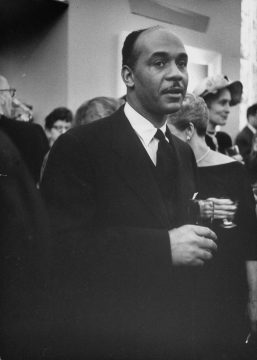 “Complexity” was the term that Ralph Ellison deployed most often to describe black life and culture. And it is the term best suited to convey the character of this brilliant, often disapproving and unsparing man. Decades before Toni Morrison’s “Beloved” and “Song of Solomon,” “Invisible Man” (1952) singularly defined the meaning of literary achievement. As a critic, Ellison was no less significant a thinker and stylist. Always, he was a philosopher of black expressive form and an astute cultural analyst.
I first encountered Ellison through the scrim of Larry Neal’s 1970 essay “Ellison’s Zoot Suit,” so I knew what I needed to read for — the invaluable critical propositions about African-American culture, the dazzling enactment of blues vernacular in modernist prose, artistic achievement steeped in reference to the music and an eye capable of discerning what Zora Neale Hurston described as the distinctive asymmetry and angularity that were the most striking manifestations of black style and the will to adorn. I also knew what I had to read past — the cult of the masculine hero and an aesthetic project that “restores to man his full complexity” and to the native son truth and revelation, while abandoning the daughter to the chaos of the underworld.
More here.