Are We Overestimating How Much Trees Will Help Fight Climate Change?

Jan Ellen Spiegel in Undark:

Bob Marra navigated his way to the back of a dusty barn in Hamden, Connecticut, belonging to the state’s Agricultural Experiment Station. There, past piles of empty beehives, on a wall of metal shelves, were stacks of wooden disks — all that remains of 39 trees taken down in 2014 from Great Mountain Forest in the northwest corner of the state.

These cross-sections of tree trunks, known as stem disks — or more informally as cookies — are telling a potentially worrisome tale about the ability of forests to be critical hedges against accelerating climate change. As anyone following the fires burning in the Amazon rainforest knows by now, trees play an important role in helping to offset global warming by storing carbon from atmospheric carbon dioxide — a major contributor to rising temperatures — in their wood, leaves, and roots. The worldwide level of CO2 is currently averaging more than 400 parts per million — the highest amount by far in the last 800,000 years.

But Marra, a forest pathologist at the Experiment Station with a Ph.D. in plant pathology from Cornell University, has documented from studying his fallen trees that internal decay has the capacity to significantly reduce the amount of carbon stored within.

More here.

The Rights of Guns

Gary Wills in the New York Review of Books:

“Gun rights,” as used by devotees of an absolutist Second Amendment, means their right to own guns. But as used in real American life these days (or real American deaths), it means the rights of guns. Guns themselves possess even more rights than persons do.

If a person were found to have shown up regularly in so many places where so many crimes had been committed by so many people, how could that person not be called to account for such suspicious behavior? He would clearly be investigated for being present with such persistence at crime scenes. Did he facilitate them, making them easier by his mere presence? What could induce any innocent person to be so energetically omnipresent at so many varied crime scenes? What excuse could relieve him from the charge of being an accessory? A person with such skill and dogged effort would be considered a national menace, no matter how many excuses he could concoct for such weird conduct.

But guns can do all of those things and profess an entire non-involvement.

More here.

Sean Carroll: Even Physicists Don’t Understand Quantum Mechanics

Sean Carroll in the New York Times:

“I think I can safely say that nobody really understands quantum mechanics,” observed the physicist and Nobel laureate Richard Feynman. That’s not surprising, as far as it goes. Science makes progress by confronting our lack of understanding, and quantum mechanics has a reputation for being especially mysterious.

What’s surprising is that physicists seem to be O.K. with not understanding the most important theory they have.

Quantum mechanics, assembled gradually by a group of brilliant minds over the first decades of the 20th century, is an incredibly successful theory. We need it to account for how atoms decay, why stars shine, how transistors and lasers work and, for that matter, why tables and chairs are solid rather than immediately collapsing onto the floor.

Scientists can use quantum mechanics with perfect confidence. But it’s a black box. We can set up a physical situation, and make predictions about what will happen next that are verified to spectacular accuracy. What we don’t do is claim to understand quantum mechanics. Physicists don’t understand their own theory any better than a typical smartphone user understands what’s going on inside the device.

More here.

India rising: Can a giant democracy become an economic colossus?

Howard LaFranchi in The Christian Science Monitor:

The sleek blue-glass building of the Infosys corporation sits like an intruding spaceship amid the unpaved side streets and half-completed residential structures that surround it. Its giant porthole windows offer a peek into a Jetsons-esque world of workers gliding between floors on elevated moving sidewalks. For now, 19-year-old Nishank Nachappaa toils in the shadows of Infosys and the other high-tech companies that, like him, call the Electronic City section of Bangalore home. The high school graduate helps out at two dormitories for tech workers – one for young men, the other for young women – that his parents manage. His father maintains the buildings and his mother prepares meals for the 120 male and 30 female residents. Walk a block or two from the dorms and other corporate structures loom with multinational names such as Emerson and Yokogawa, Altametrics and Hewlett Packard.

…The country has addressed much of the abject destitution that vast numbers of Indians lived in 25 years ago. As a result, it appears ready to join not just China but also South Korea, Indonesia, Vietnam, and other Asian neighbors that have either made the leap to middle-income prosperity or are well on their way. Along with its world-class space program, assertive foreign policy, and global cultural presence, India is trying to leverage its economic clout and privileged relationship with the United States into a more prominent role among world powers.

And yet, the country that will soon be the planet’s most populous – India is on track to surpass China in 2027– and is perhaps the world’s most culturally and linguistically diverse, also faces a number of key challenges that could yet stifle its rise. Among them: a huge, underproductive rural population and economically inactive female population; a heavy state footprint in the economy that discourages private enterprise and foreign investment; rising political divides and religious tensions; and a lingering post-independence mindset of reliance on the state. It’s a daunting list – one that echoes the period, more than a decade ago, when a first wave of “India’s time has come” declarations coursed through the country.

More here.

“You’ll know her by her foot”

Adam Kosan in Nautilus:

Point Pinole Regional Shoreline, Richmond, California

Emily Dickinson spent most of her life in Amherst, Massachusetts. Despite the geographic limits of her experience, she perceived an abundant, entrancing and confounding natural world of life and death all around her. Among her many aspects as a poet, she comes down to us as a fascinating observer of birds.

Scott Edwards is an ornithologist who studies the evolutionary biology of birdsPoetry in America director Elisa New recently invited Edwards to join her at Harvard University’s Arnold Arboretum in Boston to listen to birdsong and read some of Emily Dickinson’s bird poems. As their conversation makes clear in the video below, you can approach these poems on different levels. There is, on the one hand, Dickinson’s perspective as a naturalist, keen to record patterns of nature, and on the other, her perspective as a poet, finding the raw materials of metaphor in those natural patterns. How do these modes complement or diverge from each other? New and Edwards begin by looking at the nature of robin song, memorably conjured in the poem “You’ll know her by her foot.” Their conversation then proceeds to cover a range of questions about poetic vocabulary and scientific knowledge.

More here.

Sunday Poem

The Buddha’s Last Instruction

“Make of yourself a light,”
said the Buddha,
before he died.
I think of this every morning
as the east begins
to tear off its many clouds
of darkness, to send up the first
signal—a white fan
streaked with pink and violet,
even green.
An old man, he lay down
between two sala trees,
and he might have said anything,
knowing it was his final hour.
The light burns upward,
it thickens and settles over the fields.

by Mary Oliver
from
House of Light
Beacon Press, Boston

Saturday, September 7, 2019

While other countries let corporate interests plunder their oil, Norway strong-armed the CEOs into giving its citizens a windfall

Mitch Anderson in Reasons to be Cheerful:

Like many other nations, Canada is blessed with enormous resource wealth. We are the 7th largest oil-producing nation in the world (Norway is the 15th), with vast forests, mineral deposits and prime farming land. The Canadian province of Alberta legally controls almost 80 percent of the country’s fossil fuel production, has a similar population to Norway yet somehow managed to end up with a $62 billion debt and another $260 billion in unsecured environmental liabilities. Other nations like Nigeria, Venezuela, and Saudi Arabia have become even more wretched examples of resource mismanagement, with deplorable human rights records, dysfunctional economies and rampant graft.

Norway is different. Unlike many countries endowed with natural abundance, Norway has somehow avoided the so-called resource curse—where outside interests make off with most of the money and leave behind corrupt and enfeebled institutions.

I had journeyed to Norway to learn how this small country had managed to capture and save over $1 trillion of resource revenue in the largest sovereign wealth fund in the world. Norway regularly tops global rankings on happiness, human rights and the best country to be a mother. They also outright own over half of their oil production, they tax oil profits at close to 80 percent and are still rated as one of the most desirable jurisdictions for international investment.

More here.

New documents show that the M.I.T. Media Lab was aware of Jeffrey Epstein’s status as a convicted sex offender, and that Epstein directed contributions far exceeding the amounts M.I.T. has publicly admitted

Ronan Farrow in The New Yorker:

The M.I.T. Media Lab, which has been embroiled in a scandal over accepting donations from the financier and convicted sex offender Jeffrey Epstein, had a deeper fund-raising relationship with Epstein than it has previously acknowledged, and it attempted to conceal the extent of its contacts with him. Dozens of pages of e-mails and other documents obtained by The New Yorker reveal that, although Epstein was listed as “disqualified” in M.I.T.’s official donor database, the Media Lab continued to accept gifts from him, consulted him about the use of the funds, and, by marking his contributions as anonymous, avoided disclosing their full extent, both publicly and within the university. Perhaps most notably, Epstein appeared to serve as an intermediary between the lab and other wealthy donors, soliciting millions of dollars in donations from individuals and organizations, including the technologist and philanthropist Bill Gates and the investor Leon Black. According to the records obtained by The New Yorker and accounts from current and former faculty and staff of the media lab, Epstein was credited with securing at least $7.5 million in donations for the lab, including two million dollars from Gates and $5.5 million from Black, gifts the e-mails describe as “directed” by Epstein or made at his behest. The effort to conceal the lab’s contact with Epstein was so widely known that some staff in the office of the lab’s director, Joi Ito, referred to Epstein as Voldemort or “he who must not be named.”

More here.

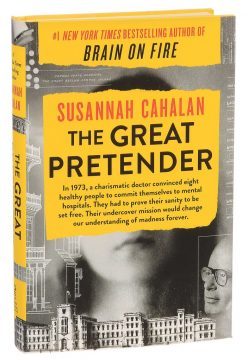
Are Super Responders Special?

Bennett McIntosh in Harvard Magazine:

AS A MEDICAL STUDENT in the 1980s, Isaac “Zak” Kohane heard stories—from patients, mentors, and colleagues—of nearly miraculous recoveries from cancer. A patient given weeks to live instead survives for years. An experimental drug works exceptionally well—in only one patient. Or, most controversially, a patient rejects chemotherapy, radiation, and surgery, and somehow lives. As a trainee, Kohane found many such stories quite literally unbelievable. “Frankly,” he says, “I assumed that they didn’t really have a cancer.” Now Nelson professor of biomedical informatics at Harvard Medical School (see “Toward Precision Medicine,” May-June 2015, page 17), Kohane not only believes these stories, he’s seeking them out. A year ago, he began a project to find “exceptional responders” to cancer treatment—those who have beaten the cancer odds many times over—in order to figure out what makes them special.

He was inspired initially by a very different group of patients. Since 2014, Kohane has coordinated a nationwide program to study and aid patients whose affliction with rare, undiagnosed diseases mark them as statistical outliers. “Outliers, by definition, are interesting,” he explains, because they are different from everybody else, “so there are things to be learned. By finding these outliers, we have been able to make breakthroughs both for the patient but also scientifically,” diagnosing more than 300 patients suffering from newly discovered genetic diseases in five years.

More here.

The Truth Teller

George Packer in The Atlantic:

The Wise Men were high-born WASPs of the past century who went to the best schools and joined the most exclusive clubs and assumed top positions in law, banking, and government as naturally as if power were their birthright. They assisted in the creation of NATO, the international monetary system, the Cold War, and the war in Vietnam. Even out of government, they had the ear of presidents of both parties. They achieved great things and made colossal mistakes. Among them were a compulsive philanderer, an anti-Semite, and a crook. In other words, though they cultivated an air of nonpartisan and disinterested wisdom as Ciceros of the American century, they were human.

Leslie Gelb, who died last Saturday at the age of 82, was a wise man for a different era. He was a poor Jewish kid with bad eyesight from New Rochelle, New York, who studied international relations at Harvard so that he wouldn’t have to spend his life working seven days a week in his parents’ deli, a claustrophobic fate out of Bernard Malamud’s The Assistant. Gelb’s spectacularly unpromising origins gave him a lifelong aversion to pretense and fakery. One of his essential words was bullshit, which he dispensed to anyone guilty of peddling the stuff, no matter the person’s station. He never made a pile of money; he was a fixture of no social scene. If he cultivated any air, it was that of a no-nonsense joker. He was the wise man as wise guy.

More here.

Karl Kraus and the Birth of Fake News

Ted Mann in Tablet:

Kraus loved paradoxes and published a magazine, Die Fackel, full of them. “An aphorism can never be the whole truth; it is either a half truth or a truth-and-a-half,” he wrote. Kraus also gave popular stage performances, in which he played piano, read Shakespeare’s sonnets, and acted out parts from his monumental masterpiece, the 800-page play, Die letzten Tage der Menschheit, usually translated as The Last Days of Mankind.

The Last Days was conceived as a play in the early weeks of World War I, from the perspective of Vienna, then the capital of the Austro-Hungarian Empire. The play begins with Vienna newsagents crying the headlines, “Archduke Ferdinand assassinated in Sarajevo! Murd-ra’s a Serb!” (“Thank God, not a Jew,” remarks a passerby to his wife, who immediately drags him offstage.) The play ends with the voice of God intoning, as Kaiser Wilhelm did in the aftermath of the war, “This is not what I intended.”

Kraus wrote his play “live” throughout the war in response to events reported or observed. As he says in his introduction, “The most improbable actions reported here really occurred … the most implausible conversations are reported verbatim, as spoken, word for word; the shrillest fantasies direct quotations. Sentences whose insanity is indelibly imprinted on the ear are grown into the music of time.”

Patriot: For example, the civilized language we use, even when speaking of the enemy, who are, after all, the greatest scum on God’s earth.

Subscriber: And above all, unlike them, we are always humane. For example, the editorial in the Presse even talked about the good times ahead for the fish and crustacea in the Adriatic, with so many Italian corpses to feed on …

In part, Kraus seems to have invented the form of a living play in response to the collapse of the Austrian press during wartime. “The truth is that the newspaper is not a statement of contents but the contents themselves; more than that, it is an instigator,” said Kraus in a remarkable speech, “In These Great Times,” made in 1914 as WWI commenced. “It would be far less shameful to be paid for committing atrocities than for fabricating them.”

More here.

Green and White Nationalism

Elizabeth Chatterjee in the LRB:

A few minutes before 22 people were murdered in a Walmart in El Paso on 3 August, in a now-familiar ritual of American gun violence, a manifesto was uploaded to the fringe online forum 8chan (tagline: ‘Embrace infamy’). For the most part, the four-page screed parroted standard white supremacist themes, warning of a ‘Hispanic invasion’ while fretting that the 8chan community might find its contents a little ‘meh’. Yet the manifesto’s title, ‘The Inconvenient Truth’, suggested a second fixation. Its opening lines praised the lengthy statement published on the same forum five months earlier by the New Zealand mosque attacker – a self-proclaimed ‘eco-fascist’ – and it name-checked an unexpected source: Dr Seuss’s 1971 environmentalist children’s fable The Lorax.

The link between environmentalism and racism isn’t new. Romantic advocates of pristine ‘wilderness’ often sought to exclude poor and native populations. Madison Grant, who helped to found the Bronx Zoo, Glacier National Park and the Save the Redwoods League, was also the author of the eugenicist tract The Passing of the Great Race (1916). Hitler called the book his ‘bible’. A green wing of the Nazi movement saw vegetarianism, organic farming and nature worship as the natural corollary of the party’s racial obsessions. Oswald Mosley’s British Union of Fascists advocated a return to the land. After the war, the BUF’s agrarian adviser, Jorian Jenks, was one of the founders of the Soil Association.

More here.

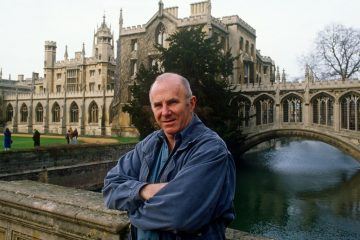
A mini revolution in brain science

Clive Cookson in the FT:

Madeline Lancaster opens the door of a fridge-sized incubator in her lab at the University of Cambridge’s biomedical campus. On its gently gyrating shelves sit glass dishes containing a pinkish liquid. She takes one of them out to show what lies inside. Sitting in the nutrient fluid are half a dozen lumpy white blobs, roughly the size of large lentils.

“These are cerebral organoids, or mini-brains for short,” says Lancaster in a soft American voice. “They are three-dimensional neural tissues generated from human stem cells which allow us to model human brain development.”

“They are self-organising,” she adds. “We’re allowing these cells to develop on their own in a 3D conformation, which is the way the brain develops naturally.” Viewing an organoid through Lancaster’s high-powered microscope, its million or so neurons look like an entangled cellular web very similar to an embryonic human brain.

Lancaster pioneered the cerebral organoids field, making the world’s first mini-brains in 2011 while working as a postdoctoral researcher at IMBA, Austria’s Institute of Molecular Biotechnology in Vienna. She moved in 2015 to set up her own lab in Cambridge at the Medical Research Council’s Laboratory of Molecular Biology (LMB).

More here.

Friday, September 6, 2019

How the untimely death of RG Collingwood changed the course of philosophy forever

Ray Monk in Prospect:

In the 20th century an unfortunate gulf opened up in philosophy between the “continental” and “analytic” schools. Even if you’ve never studied the subject, you might well have heard of this one split. But as the British moral philosopher Bernard Williams once pointed out, the very characterisation of this gulf is odd—one school being characterised by its qualities, the other geographically, like dividing cars between four-wheel drive models and those made in Japan.

Unsurprisingly, no one has come up with a satisfactory way of drawing the line between them. Broadly speaking, however, one can say that the continental school has its roots in the phenomenology of Edmund Husserl, and encompasses a range of diverse traditions, including the existentialism of Jean-Paul Sartre, the structuralism of Ferdinand de Saussure, the postmodernism of Jean-François Lyotard and the deconstructionism of Jacques Derrida. The analytic school, meanwhile, has its roots in the work of Gottlob Frege, Bertrand Russell and Ludwig Wittgenstein and has been until fairly recently much more narrowly focused, concentrating mainly on logic and language.

The divide is certainly strange and arguably arbitrary, but it none the less cut deep. For decades, it was possible to do a degree in philosophy at a major university in the UK or the US without once encountering any of the continental philosophers mentioned.

This splintering of the discipline would have appalled many philosophical greats from earlier ages. And—just possibly—the great schism would never have set in at all, had RG Collingwood, one of the most remarkable, open and eclectic minds of the 20th century, not died prematurely in 1943. But as it was, his Oxford chair was filled by Gilbert Ryle, a man in whose image British philosophy was soon remade. And a man who did more than his fair share to entrench the gulf.

More here.

Christopher Lydon speaks to Mark Blyth

Christopher Lydon at Radio Open Source:

Mark Blyth

Mark Blyth is that noisy wise-guy on speed in our portable Glasgow pub, and he’s locating our anxieties about a world at sea. Where we’re at, he is sputtering loud and clear, is between populisms right and left, both in a rage around the same sinking center. We’re ten years late in letting go of a failed order of money, power, and privilege. The crisis, led by the climate breakdown, is ten years ahead of our readiness to fix it. But count on Mark Blyth for positive thinking, too. We’d be awash in next-generation jobs, he says, if we went all-out for clean energy. And we could pay for a whole new power grid with government credit—remember? The same way George Bush paid for his awful war in Iraq.

Blyth is the butcher’s kid from Dundee who became a famous professor in the US, hung onto his Scots accent and his working-class biases. He drops back into the pub now and then to explain world history unfolding before us. If you don’t believe Mark Blyth has all the answers, just ask him: he saw the Brexit revolt coming, and the Trump hostile takeover, because (he says) he’d seen a collapse of faith in the dying political order that had just delivered the War in Iraq and the Wall Street breakdown of ’08.

Listen here.

J.M. Coetzee: Australia’s Shame

J.M. Coetzee in the New York Review of Books:

An Australian-run camp where asylum-seekers who try to reach Australia by boat are detained, Manus Island, Papua New Guinea, November 2016

Let us suppose that I am the heir of an enormous estate. Stories about my generosity abound. And let us suppose that you are a young man, ambitious but in trouble with the authorities in your native land. You make a momentous decision: you will set out on a voyage across the ocean that will bring you to my doorstep, where you will say, I am here—feed me, give me a home, let me make a new life!

Unbeknown to you, however, I have grown tired of strangers arriving on my doorstep saying I am here, take me in—so tired, so exasperated that I say to myself: Enough! No longer will I allow my generosity to be exploited! Therefore, instead of welcoming you and taking you in, I consign you to a desert island and broadcast a message to the world: Behold the fate of those who presume upon my generosity by arriving on my doorstep unannounced!

This is, more or less, what happened to Behrouz Boochani. Targeted by the Iranian regime for his advocacy of Kurdish independence, Boochani fled the country in 2013, found his way to Indonesia, and was rescued at the last minute from the unseaworthy boat in which he was trying to reach Australia. Instead of being given a home, he was flown to one of the prisons in the remote Pacific run by the Commonwealth of Australia, where he remains to this day.

Boochani is not alone.

More here.

On Charles S. Wright’s 1960s Novels of Societal Rejects

Ishmael Reed at Literary Hub:

Charles Wright refused to audition as a hatchet man contestant in the Manhattan token wars in which only one Black writer is left standing during a given era. When I asked George Schuyler, author of the classic novel Black No More, why he, at the time, hadn’t received more recognition, he said he wasn’t a member of The Clique. Tokenism deprives readers of access to a variety of Black writers and smothers the efforts of individual geniuses like Elizabeth Nunez, J. J. Phillips, Charles Wright, and William Demby, whose final novel, King Comus, I published.

In the 1960s, when literary-minded editors influenced publishing, such a rejection by a master would have been thought unthinkable. A woman acquaintance advised Charles Wright to be more sociable. You know, network. Every attempt to take him “uptown,” the image of cultural success, was rebuffed by the author. His bad manners sent an interviewer from a prominent women’s magazine scurrying after he decided to urinate in public. He despised the elite and their mannerisms. He called members of the Black middle class “cocksuckers.”

more here.

Agnès Varda: The Beach on the Pavement

Bonnie Johnson at The Believer:

One of the most wonderful things about Varda and her camera was the way she circled back, again and again, to previous sites and subjects of her films. Among others, she maintained bonds with the fishermen of La pointe courte, in 2008 performing an anniversary tribute to honor their part in the film. She captured the scene in The Beaches of Agnès, and mutual gratitude hangs in the salt air. Around Demy’s 1990 death from AIDS, Varda not only filmed his childhood memories; she also returned to Rochefort with the cast of a film Demy shot there, making The Young Girls Turn 25 to honor The Young Girls of Rochefort. Through her returns, Varda gave these stories rich new layers. The reciprocal vulnerability between the artist and her subjects extends to viewers when, at the end of Faces Places, we see our bowl cut-rocking cat lady auteur weep in disappointment when Godard isn’t home to receive the pastries she brought him. When has a visionary drawn us in this close?

more here.