
David Thurston in Nucomintern:
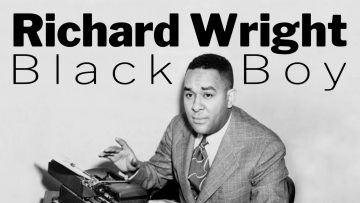 Wright was born near Natchez, Mississipi a century ago in 1908. Early in life, while living in Memphis, Wright’s father abandoned the family. Soon afterward, his mother suffered a severe stroke, leaving her disabled, and leaving Richard Wright and his brother Leon to live at the mercy of a their extended family. Wright’s early life is powerfully recounted in many biographies, but the most vivid source is Black Boy, his own autobiography, published in 1946.
In Black Boy, hunger serves as a powerful running metaphor, a literal description of Wright’s condition for much of his childhood, but also a way of describing his own desire to live beyond the boundaries proscribed by Jim Crow segregation in the South.
He writes:
Hunger stole upon me so slowly that at first I was not aware of what hunger really meant. Hunger had always been more or less at my elbow when I played, but now I began to wake up at night to find hunger standing at my bedside, staring at me gauntly… Whenever I begged for food now my mother would pour me a cup of tea which would still the clamor in my stomach for a moment or two; but a little later I would feel hunger nudging my ribs, twisting my empty guts until they ached. (BB: 14-15)
As Wright grew older, he came to love reading and desperately sought whatever literary material he could find. This was quite controversial in the household of his grandmother, who viewed any secular reading as the work of the devil. Wright links his physical hunger to the hunger for knowledge in this moving passage:
School opened and I began the seventh grade. My old hunger was still with me and I lived on what I did not eat. Perhaps the sunshine, the fresh air, and the pot liquor from the greens kept me going. Of an evening I would sit in my room reading, and suddenly I would become aware of the smelling meat frying in a neighbor’s kitchen and I would wonder what it was like to eat as much meat as one wanted. My mind would drift into a fantasy and I would imagine myself a son in a family that had meat on the table at each meal; then I would become disgruntled with my futile daydreams and would rise and shut the window to bar the torturing scent of meat. (BB: 137)
Throughout Wright’s years in the South, the threat of brutal racist violence cast a pall across his life.
More here. (Note: Throughout February, at least one post will honor The Black History Month. This year’s theme is “African Americans and the Vote.” Readers are encouraged to send in their suggestions)
 ‘What insults my soul’,
  IT’S AN APPROXIMATELY
 One way to lose a popularity contest in the United States is to mention in polite company — who may be chatting about, say, the impeachment or the Mueller investigation — the numerous ways the United States has meddled in the affairs of other countries throughout many years.
 Writing in The New York Times in June 2003, less than two years after the events of September 11 shattered the complacency with which many Americans conducted their lives,
  Of all the mantles that have been foisted on Toni Morrison’s shoulders, the heaviest has to be “the conscience of America”. It’s both absurd-sounding and true. For almost half a century her subject has been racial prejudice in the United States, a story that she has told and retold with a steadiness of rage and compassion. Her latest novel, God Help the Child, is her 11th and when I arrive at her apartment in Tribeca, Lower Manhattan, America’s Conscience is having her eyebrows drawn on. “For the photographer,” she explains with a chuckle.
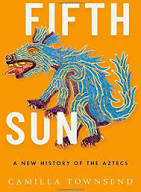 It is to Townsend’s credit that she does not attempt to be comprehensive. The cosmology of the Aztecs, their calendar, gods and myths, get only glancing treatment here. This is a brief history, and one told subtly and well, primarily through the lives of individuals. First among them is the woman baptised by the Spanish as Marina and known in Nahuatl as Malintzin, re-hispanicised as Malinche – a name that would become a synonym for traitor. Born to a noble lineage of a people unhappily subject to Aztec rule, she was offered as a tribute payment to the Mexica and then sold to the Chontal Maya on the Yucatán coast, one of the first communities to encounter Cortés’s ships. Given away again to the Spaniards, she survived by making herself indispensable, serving as Cortés’s concubine and interpreter as he tortured and slaughtered his way around the continent. Townsend has elsewhere devoted an entire book, Matlintzin’s Choices, to her resurrection. She emerges here as a complex and sympathetic figure, able – as indigenous Mexicans would be for generations to come – to hold many worlds within herself at once.
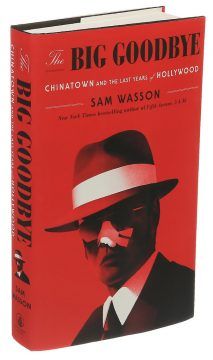 The film “Chinatown” was meticulously designed to capture a precise moment in Los Angeles’s history. Everything about its look and feel says 1937, not 1936 or 1938. In the same way, “The Big Goodbye,” Sam Wasson’s deep dig into the making of the film, is a work of exquisite precision. It’s about much more than a movie. It’s about the glorious lost Hollywood in which that 1974 movie was born.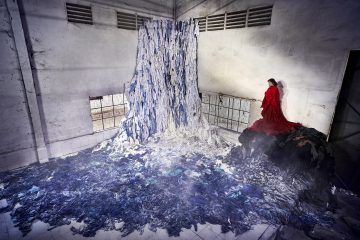
 Christian List in the Boston Review:
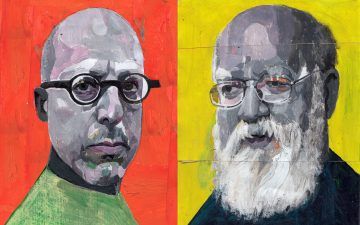 Daniel C Dennett and Gregg D Caruso debate free will in Aeon:
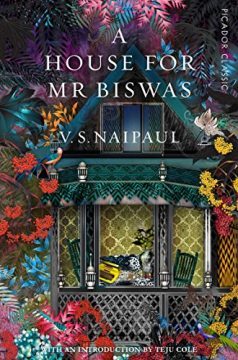 V.S. Naipaul in the New York Review of Books:
 Matthew Yglesias in Vox:
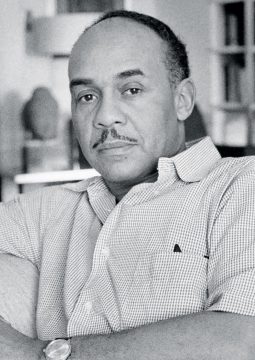 ANY OPPORTUNITY TO READ A GREAT WRITER’S MAIL should be embraced in these days when a serial Instagram feed is about as ambitious as correspondence gets. Granted, at roughly a thousand pages, The Selected Letters of Ralph Ellison may be asking a lot, at the outset, of even the most committed scholar of twentieth-century American literature, to say nothing of the waves of readers who continue to come away from Invisible Man convinced that it’s the Great American Novel.