
Brian Gallagher in Nautilus:
Last year news came that Indian billionaire Gautam Adani was set to exploit Australian coal reserves. The deal, The New York Times reported, was the result of a successful campaign by the Adani Group, a vast conglomerate with diverse interests, to capture the hearts and minds of Queenslanders, who occupy Australia’s second-largest state. It’s a project that will, in the short term, help power development in India and Bangladesh, where renewable sources of energy can be too costly to implement. India, unlike the United States and Western Europe, “doesn’t have a choice” about whether to use coal, Adani told the Times. In the long run, relying on coal will exacerbate efforts to stem global heating, as burning coal is one of the main drivers of climate change. One billionaire’s endeavor, in other words, represents a social dilemma of global proportions. India’s reliance on coal threatens to destroy public goods—clean air, favorable weather patterns, national security—and upend cooperation efforts to develop and implement renewable energy.
Christian Hilbe, a mathematician, directs a group at the Max Planck Institute for Evolutionary Biology, in Germany, where he studies the conditions under which people cooperate. His group builds predictive models inspired by social dilemmas like climate change, which involve cooperation dynamics too complex to model realistically. “We want to distill the essence or the logic of this problem, make it as simple as possible, and then understand this very simple model,” Hilbe told me in a recent interview. “We are all aware that by solving the simple model, we don’t solve the climate change problem. But still we want to understand some of the strategic calibrations taking place in the whole game.” I caught up with Hilbe shortly after he published results of his explorations in the journal Nature. In his paper, “Social dilemmas among unequals,” Hilbe—along with his co-authors from the University of Exeter Business School, the Institute for Science and Technology Austria, and Harvard—found that, among other things, extreme inequality prevents players from cooperating to provision resources for public goods. “Our findings,” the researchers concluded, “have implications for policy-makers concerned with equity, efficiency and the provisioning of public goods.” In our conversation, Hilbe broke down the thinking behind his model and the consequences of his results.
More here.
 I
I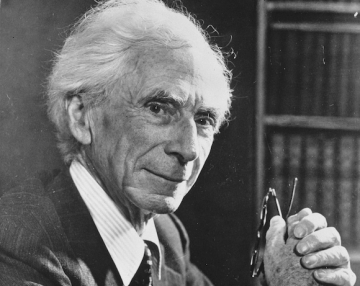 In philosophical circles, there are two Bertrand Russells, only one of whom died 50 years ago. The first is the short-lived genius philosopher of 1897-1913, whose groundbreaking work on logic shaped the analytic tradition which dominated Anglo-American philosophy during the 20th century. The second is the longer-lived public intellectual and campaigner of 1914-1970, known to a wider audience for his popular books such as Why I Am Not a Christian, Marriage and Morals and A History of Western Philosophy.
 It sounds like a miracle, but no great technological leaps were required. In a commercial lab on the outskirts of Helsinki, I watched scientists turn water into food. Through a porthole in a metal tank, I could see a yellow froth churning. It’s a primordial soup of bacteria, taken from the soil and multiplied in the laboratory, using hydrogen extracted from water as its energy source. When the froth was siphoned through a tangle of pipes and squirted on to heated rollers, it turned into a rich yellow flour.
 What happens in the leadup to war is that government officials make claims about the enemy, and then those claims appear in newspapers (“U.S. officials say Saddam poses an imminent threat”) and then in the public consciousness, the “U.S. officials say” part disappears, so that the claim is taken for reality without ever really being scrutinized. This happens because newspapers are incredibly irresponsible and believe that so long as you attach “Experts say” or “President says” to a claim, you are off the hook when people end up believing it, because all you did was relay the fact that a person said a thing, you didn’t say it was true. This is the approach the New York Times
  G
G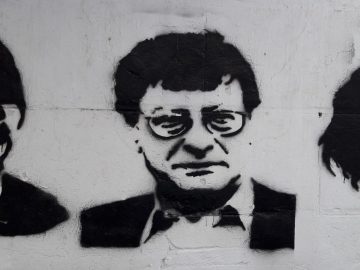 This dialectical reconstruction of exile is one of the most revealing portraits of Darwish. Invoking his poetry’s prophetic iconography, it evokes displacement, absence, and the privilege of representation, about who speaks for the wandering people and how. It asks the question of how exile is framed temporally, probing the conceptions of time at work in this experience. Palestine is thus revealed across three successive temporalities: historically embedded in Biblical tradition and collective memory; a signifier in the present of displacement and loss; and projected into the future by the spectral figure of the exiled poet-prophet. The scene is thus about the intertwinement of the lyrical and the political, the personal and the collective, and the spectral and messianic; all set the parameters of the intellectual-prophet.
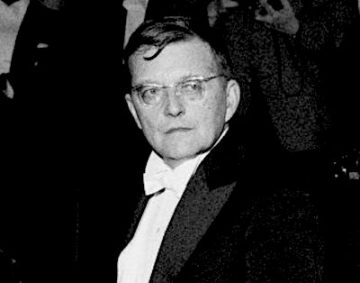 STEPHEN JOHNSON’S BOOK How Shostakovich Changed My Mind (2019) begins with an unforgettable story. In 2006, Johnson traveled to St. Petersburg to meet an aged clarinetist named Viktor Kozlov. Kozlov was a member of the Leningrad orchestra that somehow performed Dmitri Shostakovich’s Symphony No. 7 on August 9, 1942. The city was under Nazi siege. Hundreds of thousands had died. The survivors were starving. Only 15 members of the Leningrad Radio Orchestra remained alive. They were joined by dozens of additional instrumentalists, mainly from military bands, brought in under armed convoy. Special rations were procured. The players were so weak that the initial rehearsals lasted only 15 to 20 minutes. The 75-minute symphony, composed in wartime, mirrored the fraught moment. Kozlov remembered:
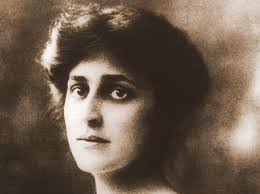
 By the time of her arrival at Harvard the following fall––now Liz instead of Lizzie––she was instantly college famous. Within weeks on campus, everyone knew who Liz Wurtzel was. How could you not? Particularly after the popped-cherry party she threw midyear. Or rather, our mutual friend
  The fear of getting lost and being unable to find our way home is woven into the stories we hear as children: it can haunt us for years. Humanity’s navigational skills are poor and increasingly rarely used, leaving us to view feats of animal navigation with a mixture of envy and admiration. How do Atlantic salmon find their way back to the streams where they were born, after up to three years at sea? How do Arctic terns find their breeding sites in the far north after excursions of more than 70,000 kilometres to the Antarctic? Desert Navigator is the story of how a tiny ant (Cataglyphis spp.) became the ideal model organism for the study of animal navigation. It begins 50 years ago in a vast Saharan salt pan, where a lone, shiny black ant caught the eye of neuroethologist Rüdiger Wehner as it scuttled across the sand. Eventually, it discovered the corpse of a large fly, gripped it firmly in its mandibles, and then performed the manoeuvre that launched Wehner’s field of research.
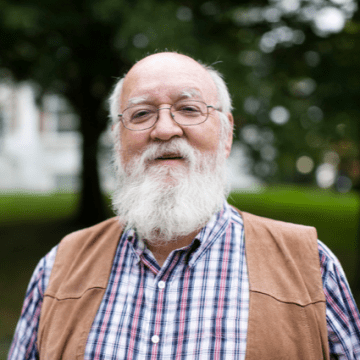 Wilfrid Sellars described the task of philosophy as explaining how things, in the broadest sense of term, hang together, in the broadest sense of the term. (Substitute “exploring” for “explaining” and you’d have a good mission statement for the Mindscape podcast.) Few modern thinkers have pursued this goal more energetically, creatively, and entertainingly than Daniel Dennett. One of the most respected philosophers of our time, Dennett’s work has ranged over topics such as consciousness, artificial intelligence, metaphysics, free will, evolutionary biology, epistemology, and naturalism, always with an eye on our best scientific understanding of the phenomenon in question. His thinking in these areas is exceptionally lucid, and he has the rare ability to express his ideas in ways that non-specialists can find accessible and compelling. We talked about all of them, in a wide-ranging and wonderfully enjoyable conversation.
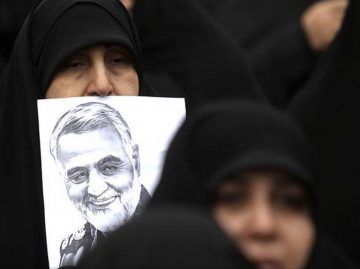 On January 3, the United States assassinated Qassem Suleimani, a top Iranian military commander, while he was leaving Baghdad International Airport in a car with Abu Mahdi al-Muhandis, an Iraqi leader of Kata’ib Hezbollah, an Iran-backed militia. All the occupants of the car were killed.
 JP: Can you talk about how that subculture existed? Was it connected by magazines, or was there an online culture—or was it books that you read in translation or books by other Chinese writers? What was the material connection that made you a fandom?
 THE PLOT OF
 In 1956, in a central London café, Lindsay Anderson, Karel Reisz, Tony Richardson, and Lorenza Mazzetti wrote a manifesto for what they termed the “Free Cinema” movement. Among the aims of these four young, avant-garde filmmakers was a belief in “the importance of people and the significance of the everyday.” They eschewed traditional box office appeal in favor of authentic depictions of the quotidian, particularly that of the ordinary working man and woman. Mazzetti, who died this past weekend at the age of ninety-two, was then only twenty-eight years old—she’d recently moved to England from her native Italy, and first gotten work as a potato picker. Later that year, her second film, Together—which follows two deaf-mutes through the bomb-wrecked streets of London’s East End, or as Mazzetti described it, “fields of ruins overrun by children”—would win the Prix de Recherche at Cannes Film Festival. Her first film, K (1954), “suggested by” Kafka’s Metamorphosis and made on the most shoestring of budgets while she was a student at the Slade School of Art, anticipated the Free Cinema movement, and her signature appears first on the manifesto. And yet today she’s the least commemorated of the four, and her name is often little more than a footnote to the group’s history.
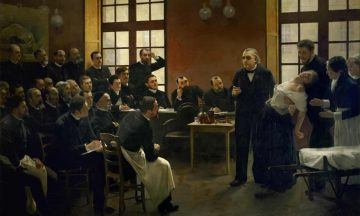 The history of medicine abounds with oddball characters and bizarre events. Yet few figures are quite as eccentric as the French neurologist