
Grigori Guitchounts in Nautilus:
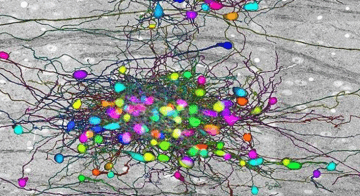 On a chilly evening last fall, I stared into nothingness out of the floor-to-ceiling windows in my office on the outskirts of Harvard’s campus. As a purplish-red sun set, I sat brooding over my dataset on rat brains. I thought of the cold windowless rooms in downtown Boston, home to Harvard’s high-performance computing center, where computer servers were holding on to a precious 48 terabytes of my data. I have recorded the 13 trillion numbers in this dataset as part of my Ph.D. experiments, asking how the visual parts of the rat brain respond to movement. Printed on paper, the dataset would fill 116 billion pages, double-spaced. When I recently finished writing the story of my data, the magnum opus fit on fewer than two dozen printed pages. Performing the experiments turned out to be the easy part. I had spent the last year agonizing over the data, observing and asking questions. The answers left out large chunks that did not pertain to the questions, like a map leaves out irrelevant details of a territory. But, as massive as my dataset sounds, it represents just a tiny chunk of a dataset taken from the whole brain. And the questions it asks—Do neurons in the visual cortex do anything when an animal can’t see? What happens when inputs to the visual cortex from other brain regions are shut off?—are small compared to the ultimate question in neuroscience: How does the brain work?
The nature of the scientific process is such that researchers have to pick small, pointed questions. Scientists are like diners at a restaurant: We’d love to try everything on the menu, but choices have to be made. And so we pick our field, and subfield, read up on the hundreds of previous experiments done on the subject, design and perform our own experiments, and hope the answers advance our understanding. But if we have to ask small questions, then how do we begin to understand the whole?
More here.
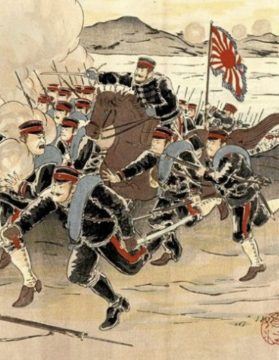 I have a confession to make: I thought it distinctly odd that Norton asked me to translate The Art of War. Perhaps I am too used to gender stereotypes, but like many women who came of age during the Vietnam War, I shy away from violence (verbal and physical) and regard myself as a near-pacifist. Unsurprisingly, I associated the Chinese Art of War with “Kill, kill, kill,” since my first awareness of the text’s existence came during the early 1970s, soon after Brigadier General Griffith introduced his translation as a way to “know thy enemy.”
 The Trump campaign ran on bringing jobs back to American shores, although mechanization has been the biggest reason for manufacturing jobs’ disappearance. Similar losses have led to populist movements in several other countries. But instead of a pro-job growth future, economists across the board predict further losses as AI, robotics, and other technologies continue to be ushered in. What is up for debate is how quickly this is likely to occur.
 How should one think of a nation, institution or company that has pioneered innovation and found solutions to seemingly unsolvable problems, but also has aspects we find objectionable, even despicable? How do we balance good and bad? Can we separate the two, or are they inexorably linked?
 W
W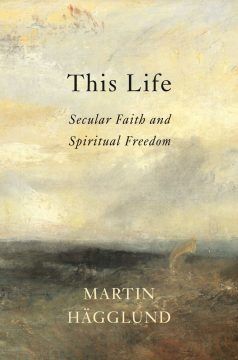 For Hägglund what flows from the recognition that religious faith is incoherent is a revaluation of our relation to our finite lives that he calls secular faith—the faith that life is worth living, for itself, and not for some deferred or transcendent goal. But secular faith leads necessarily to another revaluation. When we realize that our time in this life is finite, we are compelled to ask the most fundamental of questions: what ought I to do with this time? Asking this question is at the core of what Hägglund calls spiritual freedom: “The ability to ask this question—the question of what we ought to do with our time—is the basic condition for what I call spiritual freedom. To lead a free, spiritual life (rather than a life determined merely by natural instincts), I must be responsible for what I do.”
 The primary difficulty of interstellar communication is finding common ground between ourselves and other intelligent entities about which we can know nothing with absolute certainty. This common ground would be the basis for a universal language that could be understood by any intelligence, whether in the Milky Way, Andromeda, or beyond the cosmic horizon. To the best of our knowledge, the laws of physics are the same throughout the universe, which suggests that the facts of science may serve as a basis for mutual understanding between humans and an extraterrestrial intelligence. One key set of scientific facts presents an intriguing question. If aliens were to visit Earth and learn about its inhabitants, would they be surprised that such a wide variety of species all share a common genetic code? Or would this be all too familiar? There is probable cause to assume that the structure of genetic material is the same throughout the universe and that, while this is liable to give rise to life forms not found on Earth, the variety of species is fundamentally limited by the constraints built into the genetic mechanism.
 Julian Lucas: Your introductory essay suggests that when it comes to King, contemporary thought is held “captive by a picture.” Do you think that there can be a coexistence between King the political icon and King the serious philosophical thinker?
 Physics is simple; people are complicated. But even people are ultimately physical systems, made of particles and forces that follow the rules of the
  As the world’s business elites trek to Davos for their annual gathering, people should be asking a simple question: Have they overcome their infatuation with US President Donald Trump?
 Last week, my parents saw Little Women. My mother immediately phoned me. “I think Professor Bhaer is Jewish,” she said, her voice vibrating with barely suppressed excitement. I said I didn’t think the facts supported this theory. But several days later, I got an email from her with the subject line “FYI!!!” When I clicked on the link, I saw it was
 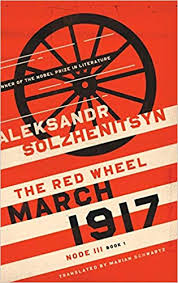 Aleksandr Solzhenitsyn’s multivolume historical novel about the Russian Revolution, The Red Wheel, is divided into four “nodes,” each a lengthy account of a short span of time. March 1917, the third node, is in turn divided into four volumes, the second of which is the book under review, translated into English for the first time. Combining nonfictional historical argument with novelistic accounts of the principal historical actors and a few fictional characters, March 1917 covers a mere three days of unrest and revolution, March 13–15, 1917, at the end of which Tsar Nicholas II abdicates, ending the Romanov dynasty in Russia. Marian Schwartz’s splendid translation captures the prose’s powerful pace and conveys, as few translators could, the author’s subtle use of tone.
 The last time we heard from Bombay Bicycle Club, they’d gone out on a high. 2014’s So Long, See You Tomorrow, their fourth album, was their first to reach number one. Their final show before they announced a hiatus in January 2016 was also the last ever gig at London’s 19,000-capacity Earl’s Court – a historic, confetti-fuelled moment before the bulldozers came in to flatten 40 years of rock history.
 AN ANTIMODERNIST
 Earlier this month, the American Cancer Society announced its latest figures on cancer incidence and mortality