
Robert F. Service in Science:
 Science doesn’t usually take after fairy tales. But Rumpelstiltskin, the magical imp who spun straw into gold, would be impressed with the latest chemical wizardry. Researchers at Rice University report today in Nature that they can zap virtually any source of solid carbon, from food scraps to old car tires, and turn it into graphene—sheets of carbon atoms prized for applications ranging from high-strength plastic to flexible electronics. Current techniques yield tiny quantities of picture-perfect graphene or up to tons of less prized graphene chunks; the new method already produces grams per day of near-pristine graphene in the lab, and researchers are now scaling it up to kilograms per day.
“This work is pioneering from a scientific and practical standpoint” as it promises to make graphene cheap enough to use to strengthen asphalt or paint, says Ray Baughman, a chemist at the University of Texas, Dallas. “I wish I had thought of it.” The researchers have already founded a new startup company, Universal Matter, to commercialize their waste-to-graphene process.
With atom-thin sheets of carbon atoms arranged like chicken wire, graphene is stronger than steel, conducts electricity and heat better than copper, and can serve as an impermeable barrier preventing metals from rusting. But since its 2004 discovery, high-quality graphene—either single sheets or just a few stacked layers—has remained expensive to make and purify on an industrial scale. That’s not a problem for making diminutive devices such as high-speed transistors and efficient light-emitting diodes. But current techniques, which make graphene by depositing it from a vapor, are too costly for many high-volume applications. And higher throughput approaches, such as peeling graphene from chunks of the mineral graphite, produce flecks composed of up to 50 graphene layers that are not ideal for most applications.
More here.
 Suppose that you are angry on Tuesday because I stole from you on Monday. Suppose that on Wednesday I return what I stole; I compensate you for any disadvantage occasioned by your not having had it for two days; I offer additional gifts to show my good will; I apologize for my theft as a moment of weakness; and, finally, I promise never to do it again. Suppose, in addition, that you believe my apology is sincere and that I will keep my promise.
 Consider two classic hypotheses about the development of language and cognition.
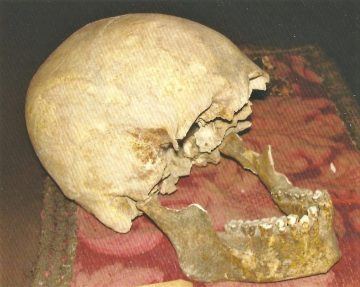 A team of Italian researchers have strengthened the case that at least the cranium found near Pompeii 100 years ago really does belong to Pliny the Elder, a Roman military leader and polymath who perished while leading a rescue mission following the eruption of Mt. Vesuvius in 79 C.E. However, a jawbone that had been found with the skull evidently belonged to somebody else.
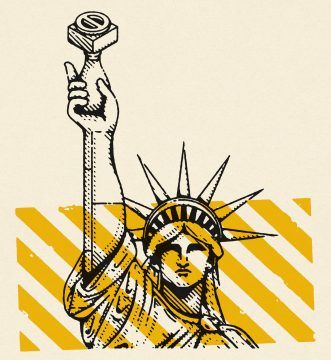 In 2001, when I was the new Washington correspondent for The Arizona Republic, I attended the annual awards dinner of the National Immigration Forum. The forum is a left-right coalition that lobbies for unauthorized immigrants and expansive immigration policies. Its board has included officials of the National Council of La Raza, the American Civil Liberties Union and the American Immigration Lawyers Association, as well as the United States Chamber of Commerce, the National Restaurant Association and the American Nursery and Landscape Association.
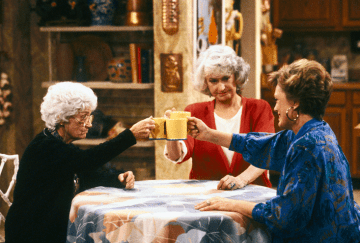 Della DePaulo never fantasized about a dream wedding or being a bridesmaid. Instead, she saw herself as “single at heart,” pursuing intellectual refinement, friendship, and solitude as a young psychologist. Still, she had internalized the popular idea that married people were happier and healthier than the unmarried, and took her own pleasant experience to be exceptional. That is, until she looked into it, and found the claims about the “transformative power of marriage” to be, she says, either “grossly exaggerated or totally untrue.” From then on, she’s focused on how singles actually live.
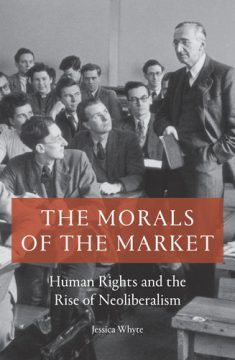 Neve Gordon in the LA Review of Books:
 Benjamin Ivry in Forward:
 Sam Dresser in Aeon:
 Britt Rusert in The Boston Review:
 Is there a contemporary director who can match Terrence Malick for enigmatic genius? A summa cum laude philosophy major at Harvard, then a Rhodes Scholar, Malick was a philosophy professor at MIT before changing course and enrolling in film school. His long career—the filmmaker is seventy-six—has featured a sparse filmography, an abiding unconcern for critical or popular acclaim, and a mid-career hiatus, during which he disappeared from public life while reportedly laboring on a masterwork, to be called Q, exploring the origins of life on earth from the Big Bang onward. His first, short film, the twelve-minute Lanton Mills (1969), is essentially kept under lock-and-key at his behest by the AFI Conservatory, his alma mater, and only available for scholars to see. Malick is the Thomas Pynchon or J. D. Salinger of directors, and the dreamily elliptical quality of his movies has only added to the luster.
 T
T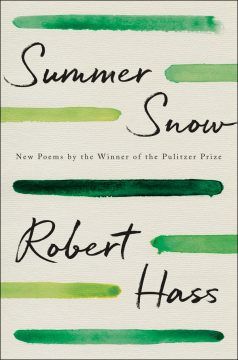 This notion of survival — and of death, its necessary analogue — sits at the center of “Summer Snow,” which offers no illusions about the bittersweet consolations of looking back. “Christmas in August” goes on to remember an older man, “a refugee Professor from another generation” — Hass’s UC Berkeley colleague Czeslaw Milosz. For many years before Milosz’s death in 2004, the two collaborated on translations, and his fellow poet’s presence lingers in these verses like a specter or a soul.
 A number of readers of my recent Chronicle Review essay,
  If there’s a fire, my husband and I know the plan: Grab the children and the red accordion file in the hall closet before fleeing the building. The file contains mostly what you would expect: passports, birth records, Social Security cards and my husband’s certificate of United States citizenship. Also included — more unusual but equally valuable — are the four letters I’ve written to myself over the course of my life. Three have been opened and read; one remains sealed. I wrote the first letter when I was 14, and I stole the idea from a novel. I was alone in my bedroom reading “Emily of New Moon,” a series by L. M. Montgomery, who also wrote the more famous series “Anne of Green Gables.” There are three Emily books, and although I loved Anne, I related more to Emily. Anne is a spunky extrovert, whereas Emily is more withdrawn, more serious. I was a serious, bookish child. I could, in fact, trace my childhood via the female literary characters I loved: Trixie Belden to Betsy and Tacy, Emily of New Moon to Morgaine in “The Mists of Avalon,” all the women in Doris Lessing’s “The Golden Notebook.”