
Anechoic
George Foy stayed in the anechoic chamber
for 45 minutes and nearly went mad.
He could hear the blood rushing in
his veins and began to wonder if he was
hallucinating. He had been to a monastery,
an American Indian sweat lodge,
and a nickel mine two kilometers underground.
In the anechoic chamber, the floor’s design
eliminates the sound of footsteps.
NASA trains astronauts in anechoic chambers
to cope with the silence of space.
Without echo, in the quietest place on earth,
what else can we hold onto? What replaces sound
in concert with what you see? The human voice,
the timber when a person says kamsahamnida
or yes, please, or fuerte, is 25 to 35 decibels.
Hearing damage can start around 115 decibels.
Metallica, front row, possible damage
albeit possible love. The Who, 126 decibels.
A Boeing jet, 165 decibels. The whale, low rumble
frequency and all, 188 decibels, can be heard
for hundreds of miles underwater.
I once walked around inside a whale heart,
which is the size of a small car. The sound
was like Brian Doyle’s heart that gave out
at 60 after he wrote my favorite essay
about the joyas voladoras and the humming
bird heart, the whale heart, and the human
heart. Glass can break at 163 decibels.
Hearing is the last sense to leave us.
Some say that upon death, our vision,
our taste, our touch, and our smell
might leave us, but some have been
pronounced dead and by all indication
are, but they can hear. In this moment,
when the doctor pronounces the time
or when the handgun pumps once more,
what light arrives? What sounds, the angels?
The Ultrasonic Weapon is used for crowd
control or to combat riots—as too many
humans gathered in one place for a unified
purpose can threaten the state. The state
permits gatherings if the flag waves. Sound
can be weaponized or made into art.
It can kill. It can heal a wound. It is
a navigation device and can help determine
if the woman has a second heart inside of her
now, the beating heart of a baby on the ultrasound,
a boy or a girl, making a new music in the body
of another body, a chorus, a concert, a hush.
by Lee Herrick
from Scar and Flower,
Word Poetry, 2019.
 Today I’m headed to the
 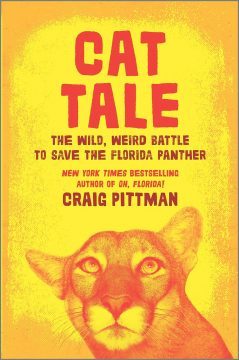 The Florida Panther’s
 Senate Republicans, by and large, have reached an unspoken consensus about President Trump and Ukraine. He should not have put a temporary freeze on congressionally authorized aid to Ukraine, should not have dabbled with using the aid to get Ukraine to investigate Joe Biden or a nutty theory about Ukrainian hacking during the 2016 election, and should not have kept defending his “perfect call” as such. At the same time, his conduct does not merit his removal from office — especially since voters will get to pass judgment on that conduct in a few months.
 THE BEAUTY
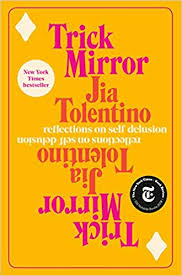 It’s always been fashionable to announce that what Sontag called ‘serious’ intellectual culture is dead or dying. Now, it’s supposed to be a result of what’s inaccurately referred to as ‘the algorithm’, but as Tolentino acknowledges, before she ploughs on with the analysis regardless, ‘people have been carping in this way for many centuries.’ What’s truly amazing about these times is that we have more access than ever before to material that demonstrates the continuity and repetitiveness of history, including evidence of the insistence by critics of all eras that this time is different, yet so many still buy into the pyramid scheme that we are special. It is both self-aggrandising and self-exonerating; it feels right. What seems self-evident to me is that public writing is always at least a little bit self-interested, demanding, controlling and delusional, and that it’s the writer’s responsibility to add enough of something else to tip the scales away from herself. For readers hoping to optimise the process of understanding their own lives, Tolentino’s book will seem ‘productive’. But those are her terms. No one has to accept
 In the summer of 1922 two men called George took part in the first attempted ascent of Mount Everest. George Mallory was an establishment man. A Cambridge graduate and son of a Church of England rector, he dressed in the respectable climbing gear of the time, a jacket and tough, cotton plus-fours. George Finch, his fellow explorer, was an outsider, a moustachioed Australian with chiselled good looks and an independent streak who liked experimenting with new contraptions: he took bottled oxygen to use at high altitude, and wore a specially commissioned coat made from bright green hot-air balloon fabric stuffed with the down of eider ducks. Though climbers were already using sleeping bags filled with down, Finch’s fellow climbers initially mocked his bulky coat. That changed as they approached Everest. “Today has been bitterly cold with a gale of a wind to liven things up,” Finch wrote in his diary. “Everybody now envies my eiderdown coat and it is no longer laughed at.” The two Georges turned back after their third failed attempt on the summit. Two years later Mallory joined another expedition to Everest, but went missing close to the top; his climbing feats were then romanticised by a hero-hungry public. Finch never tried again and pursued a considerably less romantic career as a chemistry professor. Yet ultimately he had a greater impact than that of the better-known George. Today, climbers at high altitude routinely carry oxygen. His other innovation has been even more influential, extending far beyond mountaineering circles: on the 1922 expedition George Finch invented the puffer jacket.
 The Italian Renaissance humanist Girolamo Fracastoro is best remembered for his
 Albert Einstein famously said that quantum mechanics should allow two objects to affect each other’s behaviour instantly across vast distances, something he
 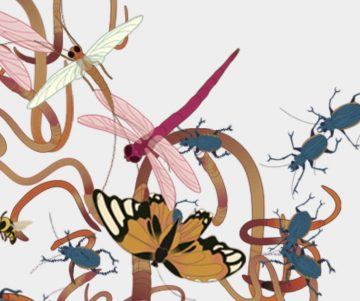 In September 2009, over 3,000 bee enthusiasts from around the world descended on the city of Montpellier in southern France for Apimondia — a festive beekeeper conference filled with scientific lectures, hobbyist demonstrations, and commercial beekeepers hawking honey. But that year, a cloud loomed over the event: bee colonies across the globe were collapsing, and billions of bees were dying.
 Serotonin is a story of psychic descent and personal disintegration, with a bloody political interlude grafted between its narrator’s initial crack-up and his terminal plunge. Florent-Claude Labrouste is forty-six years old and a veteran of the revolving door between the public and private French agricultural bureaucracies. His life has reached an erotic dead end. He’s a good-looking man, so he tells us, but it is a false front: “I have demonstrated my inability to take control of my life, the virility that seemed to emanate from my square face with its clear angles and chiselled features is in truth nothing but a decoy, a trick pure and simple—for which, it is true, I was not responsible.” He’s had a string of girlfriends, makes a good living, rents a big Paris flat, owns a vacation home in Spain, and has a substantial inheritance from his deceased parents, who were the opposite of abusive. And yet . . .
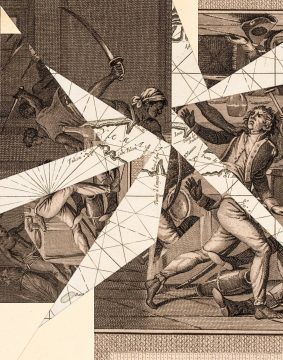 Understood as a military struggle, slavery was a conflict staggering in its scale, even just in the Caribbean. Beginning in the seventeenth century, European traders prowled Africa’s Gold Coast looking to exchange guns, textiles, or even a bottle of brandy for able bodies; by the middle of the eighteenth century, slaves constituted ninety per cent of Europe’s trade with Africa. Of the more than ten million Africans who survived the journey across the Atlantic, six hundred thousand went to work in Jamaica, an island roughly the size of Connecticut. By contrast, four hundred thousand were sent to all of North America. (The domestic slave trade was another matter: by the time the Civil War began, there were roughly four million enslaved people living in the United States.)
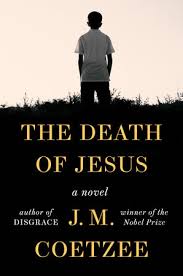 The Death of Jesus abounds in definitional disputes, hairline distinctions and logical paradoxes. When David needs a transfusion, there is dispute over whether blood is best understood by science or primal instinct; Dmitri thinks that the doctor’s “types” are less important than a donor’s personal affinity with the patient. Simón shifts the goalposts on whether David should be treated as “an exception”, depending on what kind of treatment (medical, pedagogical) he is requesting. David dismisses the legitimacy of the word “why” when he isn’t the one using it and insists that things “don’t have to be true to be true”. And towards the end, the reader is prompted to wonder if David’s end isn’t really a beginning? There’s a rumour that on dying you “wake up on some foreign shore” – as Simón and David did at the start of the first volume – and are forced “to play out the rigmarole all over again”.
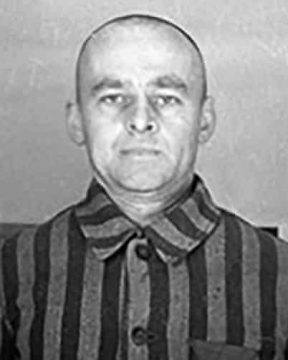 Just after Witold Pilecki’s arrival at