
Sean Carroll in Preposterous Universe:
 What direction does time point in? None, really, although some people might subconsciously put the past on the left and the future on the right, or the past behind themselves and the future in front, or many other possible orientations. What feels natural to you depends in large degree on the native language you speak, and how it talks about time. This is a clue to a more general phenomenon, how language shapes the way we think. Lera Boroditsky is one of the world’s experts on this phenomenon. She uses how different languages construe time and space (as well as other things) to help tease out the way our brains make sense of the world.
More here.
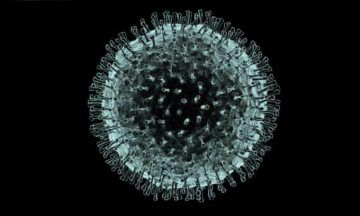 Defeating Covid-19 will call for more than vaccines; it will involve quarantines, social distancing, antivirals and other drugs, and healthcare for the sick. But the idea of a vaccine – the quintessential silver bullet – has come to bear an almost unreasonable allure. The coronavirus arrived at a ripe moment in genetic technology, when the advances of the past half-decade have made it possible for vaccine projects to explode off the blocks as soon as a virus is sequenced. These cutting-edge vaccines don’t use weakened forms of the germ to build our immunity, as all vaccines once did; rather, they contain short copies of parts of the germ’s genetic code – its DNA or RNA – which can produce fragments of the germ within our bodies.
 In response to the swiftly escalating COVID-19 epidemic, whole countries are
  As hundreds of millions of people, maybe billions, avoid social contact to spare themselves and their communities from coronavirus, researchers are discussing a dramatic approach to research that could help end the pandemic: infecting a handful of healthy volunteers with the virus to rapidly test a vaccine. Many scientists see a vaccine as the only solution to the pandemic. Clinical safety trials began this month for one candidate vaccine, and others will soon follow. But one of the biggest hurdles will be showing that a vaccine works. Typically, this is done through large phase III studies, in which thousands to tens of thousands of people receive either a vaccine or a placebo, and researchers track who becomes infected in the course of their daily lives. A quicker option would be to conduct a ‘human challenge’ study, argue scientists in a provocative preprint published this week
 Jake Wojtowicz in Aeon:
 Christopher Mackin in TNR:
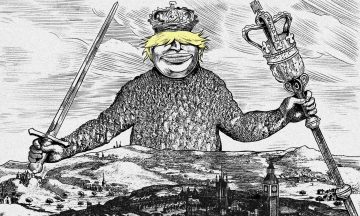 David Runciman in The Guardian:
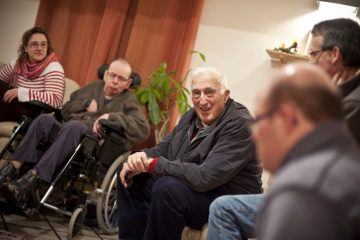 People around the world are processing the news that the revered spiritual leader
 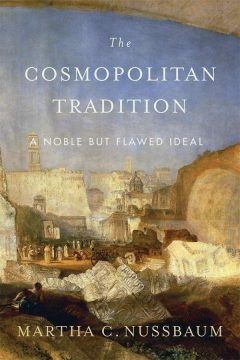 LIKE MARTHA NUSSBAUM’S other books, The Cosmopolitan Tradition is a profound and insightful interrogation of central issues in philosophy and our everyday lives. Nussbaum’s newest contribution analyzes the “Cosmopolitan tradition” — that is, the view that we are citizens of the world who enjoy the equal and unconditional worth of all human beings. This worth is independent of people’s individual traits, which depend on fortuitous natural or social arrangements. As Nussbaum claims, the “insight that politics ought to treat human beings both as equal and as having a worth beyond price is one of the deepest and most influential insights of Western thought.” She further argues that, in this tradition, dignity — the right of a person to be treated respectfully for her own sake — is non-hierarchical. It belongs, in equal measure, to all who have some basic threshold capacity for moral learning and choice. Nussbaum persuasively argues that the major flaw of this noble idea is the bifurcation between duties of justice, on the one hand, and duties of material expenditure, on the other.
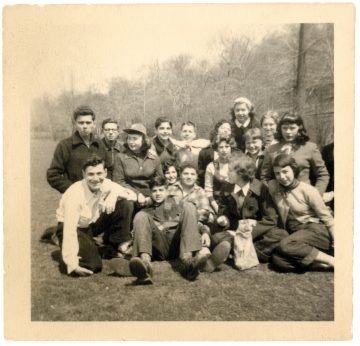 There is a box in my apartment labeled “Old Not Good Photos.” This is an understatement. Most of the photos are two-and-a-half-inch squares, showing little blurred black-and-white images, taken from too far away of people whose features you can barely make out, standing or sitting alone or in groups, against backgrounds of gray uninterestingness. They are like the barely flickering dreams that dissipate as we awaken, rather than the self-important ones that follow us into the day and seem to be crying out for interpretation. However, as psychoanalysis has taught us, it is the least prepossessing dreams, disguised as such to put us off the scent, that sometimes bear the most important messages from inner life. So too, some of the drab little photographs, if stared at long enough, begin to speak to us.
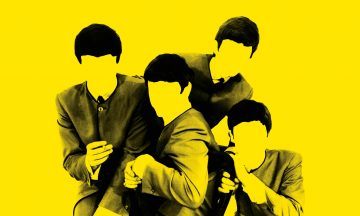 On 29 August 1966, the Beatles closed their set at the Candlestick Park baseball stadium in San Francisco with “Long Tall Sally”, an old Little Richard number that had been part of their repertoire from the very start. “See you again next year,” said John as they left the stage. The group then clambered into an armoured car and were driven away. It was to be their last proper concert. Their American tour had been exhausting, sporadically frightening, and unrewarding. By this stage their delight in their own fame had worn off. They were fed up with all the hassle of touring, and tired of the way the screaming continued to drown out the music, so that even they were unable to hear it. Having been shepherded into an empty, windowless truck after a particularly miserable show in a rainy St Louis, Paul said to the others: “I really fucking agree with you. I’ve fucking had it up to here too.”
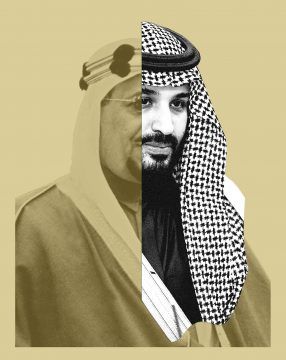 On the final page of “MBS,” his detailed and disturbing portrait of Saudi Arabia’s crown prince Mohammed bin Salman, Ben Hubbard admits that, given what he learned in the course of his reporting on the kingdom’s de facto ruler and the ways his ruthless minions have pursued their boss’s perceived enemies, he “did wonder, while walking home late at night or drifting off to sleep, whether they might come after me as well.” Perhaps that sounds melodramatic, but anyone who reads Hubbard’s clear and convincing narrative will find the concern all too plausible. And where could you turn if the prince did lash out? Certainly not to an American administration that believed M.B.S. ordered the 2018 murder and dismemberment of the Washington Post columnist Jamal Khashoggi but gave the prince a pass. “