
Category: Recommended Reading
On Sentimentality
Robert Albazi at 3AM Magazine:
 At the Mildura Writer’s Festival in 2019, on a panel with Craig Sherborne and Moreno Giovannoni, Helen Garner spoke about Raymond Carver’s unedited stories. She hated them for all of their sentimental scenes—ones that would be removed by Carver’s editor Gordon Lish for What We Talk About When We Talk About Love. Lish took a knife to the cushy scenes and Carver became a master of the spare and cutting. When we arrived home from the festival, my partner and I compared the un-edited stories in Beginners with their edited counter-parts in What we Talk About. For a long time, I had preferred the un-edited versions, yet it had been at least six years since I last read through the stories. We sat on the couch, looking for differences, reading them aloud and deciding which version was better. Garner was right—in What We Talk About large sections of emotive description are gone and, when characters are presented under a harsh light, their crudest actions can leave the reader with sharper impressions of their personality.
more here.
Crime Doesn’t Pay in ‘The Killing’
David Lehman at The American Scholar:
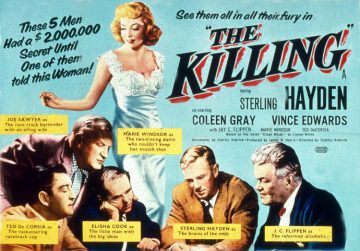 The Killing ends with the greatest money shot in the movies, its nearest competition being the shower of love bestowed on James Stewart on Christmas Eve at the end of It’s A Wonderful Life. Johnny and Fay are at the airport about to board a flight to Boston and freedom. He doesn’t want to let go of the suitcase, but it is too big for the overhead compartment, so he reluctantly yields it. He and Fay watch the suitcase totter atop the checked luggage in the cart taking it from terminal to plane. When a spectator’s dog runs into the cart’s path, the driver swerves, and the suitcase falls off. It pops opens, and the money flies around like snow in a swirling wind.
The set-up has been executed perfectly and yet, because of a stray event, a tiny happenstance, all is for naught—all the blood spilled, all the careful calculation.
more here.
At World’s End
David Steensma in ASH Clinical News:
We could and should have seen something like this coming, and some did. For example, biotech investor Brad Loncar predicted a pandemic in his December 2019 list of “10 Things Likely To Happen In 2020,” while novelist Dean Koontz wrote about a dangerous virus called “Wuhan-400” in a 1981 thriller. Still, seeing this event coming would not have made the reality of it any easier to bear, nor would it have helped us predict what will happen next. In addition to killing tens of thousands of people from China to Canada to Chile – perhaps the worldwide death toll will be in the millions by the time this essay is in print in May – COVID-19 has harmed the world’s economies and altered its social fabric in ways we won’t fully understand for many years. Our hematology patients who have gone through hematopoietic cell transplantation have watched as the rest of the world adopted the “social distancing” and infection precautions that are so familiar to them.
For physicians, nurses, and other health-care workers, the pandemic has completely disrupted how we practice medicine and go about our daily work. I never imagined I would begin each day waiting in a queue at the door of a hospital, carefully marked with masking tape lines placed 6 feet apart, to be screened by security and receive my mask for the day. That daily mask ration has become something I take more care of than my smartphone, even though the phone is 1000 times more costly. The pandemic also has upended our routines outside the hospital and clinic – especially if we have children who are now home from school indefinitely. Many of us have already lost friends, acquaintances, or loved ones to the virus, and there will undoubtedly be more grieving to come.
The worst of humanity has been on display amid this crisis, as happens in all disasters. We’ve seen hoarding of food, toilet paper (!), personal protective equipment (PPE), and – at least in America – guns and ammunition. Doomsday preppers, who have endured years of ridicule, suddenly don’t seem quite so outré. We’ve witnessed far too much willful ignorance from political leaders, suppression of data, and spreading of disinformation. The reputation of the Centers for Disease Control (CDC) – its laboratories still full of terrific staff scientists and technicians, but its leaders muzzled and its managers influenced by lightweight partisan appointees – will take a long time to recover from this debacle.
The Crazy Uncles and charlatan healers of the world have been busy touting unproven COVID-19 therapies on social media and television, citing misleading data and hyped-up anecdotes.
More here.
‘A glimpse of something wonderful’: great pivotal moments – in pictures
From The Guardian:
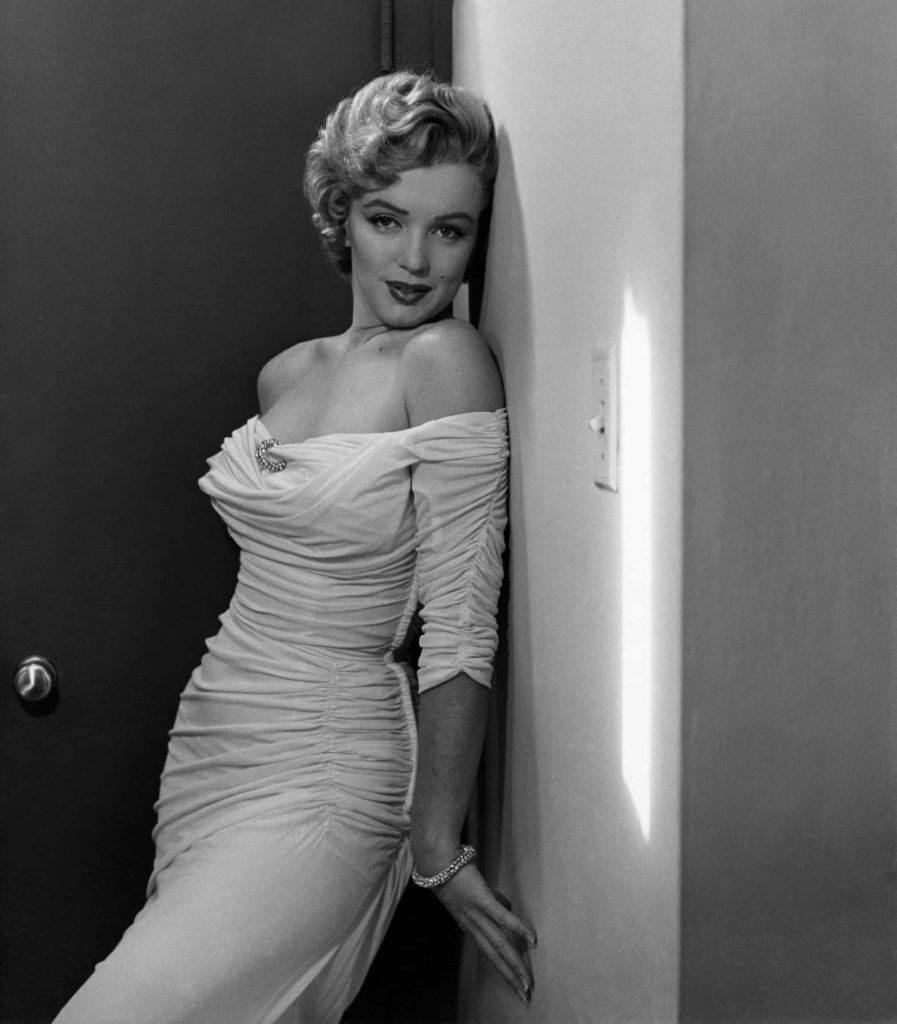
‘Philippe Halsman flew out to Hollywood and photographed Marilyn in her small apartment, as well as doing things around her neighbourhood. LIFE loved the photos and the relatively unknown Monroe was chosen to be on the cover of the 7 April, 1952 issue. This legitimised her appeal and star status, allowing her to sign a multi-year film contract. This image is an outtake from the famous shoot, which was a turning point in her career.’
More here.
Aging Is a Communication Breakdown
Jim Kozubek in Nautilus:
 Johann Wolfgang von Goethe, the 18th-century poet and philosopher, believed life was hardwired with archetypes, or models, which instructed its development. Yet he was fascinated with how life could, at the same time, be so malleable. One day, while meditating on a leaf, the poet had what you might call a proto-evolutionary thought: Plants were never created “and then locked into the given form” but have instead been given, he later wrote, a “felicitous mobility and plasticity that allows them to grow and adapt themselves to many different conditions in many different places.” A rediscovery of principles of genetic inheritance in the early 20th century showed that organisms could not learn or acquire heritable traits by interacting with their environment, but they did not yet explain how life could undergo such shapeshifting tricks—the plasticity that fascinated Goethe.
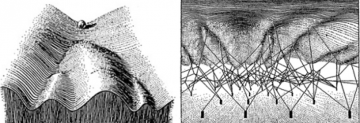
A polymathic and pioneering British biologist proposed such a mechanism for how organisms could adapt to their environment, upending the early field of evolutionary biology. For this, Conrad Hal Waddington became recognized as the last Renaissance biologist. This largely had to do with his idea of an “epigenetic landscape”—a metaphor he coined in 1940 to illustrate a theory for how organisms might regulate which of their genes get expressed in response to environmental cues or pressures, leading them down different developmental pathways. It turned out he was onto something: Just a few years after coining the term, it was found that methyl groups—a small molecule made of carbon and hydrogen—could attach to DNA, or to the proteins that house it, and alter gene expression. Changing how a gene is expressed can have drastic consequences: Every cell in our body has the same genes but looks and functions differently only due to the epigenetics that controls when and how genes get turned on. In 2002, one development biologist wondered whether Waddington’s provocative “ideas are relevant tools for understanding the biological problems of today.”
More here.
Tuesday Poem
The Schools Have Shut
We’d almost forgotten that the city can slowly
go quiet, can whisper: ‘Stay at home today.’
That by staying home you can find a new
meaning of freedom.
That a weekend without football can improve your relationship.
That extra toilet paper won’t save you.
That quarantines don’t really exist
but are invented so that we can read.
That you read to forget yourself.
That a Sunday afternoon can last a whole week,
but that every second still counts.
That we are vulnerable,
that this makes us strong.
That doctors and nurses are really superheroes.
That the wind is a warning
for our heartbeats to recover.
We’d almost forgotten that we exist in relation
to each other, that we are together.
That we’ll stay at arm’s length for a while
so that we can slowly
grow closer to each other.
by Gershwin Bonevacia
from Het Parool, 3/16/20
translation: Michele Hutchison,2020
Read more »
Sunday, April 5, 2020
Like No One They’d Ever Seen
Ed Park in the New York Review of Books:
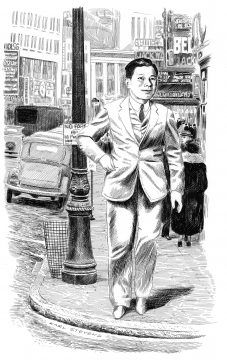
What if the finest, funniest, craziest, sanest, most cheerfully depressing Korean-American novel was also one of the first? To a modern reader, the most dated thing about Younghill Kang’s East Goes West, published by Scribner’s in 1937, is its tired title. (Either that or its subtitle, “The Making of an Oriental Yankee.”) Practically everything else about this brash modernist comic novel still feels electric.
East Goes West has a ghostly history: at times vaguely canonical, yet without discernible influence, it has been out of print for decades at a stretch, and surfaces every quarter-century or so as a sort of literary Brigadoon. (Last year’s Penguin Classics edition is its third major republication.) Kang’s debut, The Grass Roof (1931), captures the twilight of the Korean kingdom in the first two decades of the twentieth century, as Japan colonizes the peninsula. Its narrator, Chungpa Han, is a precocious child whose thirst for education takes him from his secluded home village to Seoul, three hundred miles away; into the heart of Japan; and finally to America, where East Goes West picks up on the pilgrim’s progress.
Though both novels were first published to great acclaim by Maxwell Perkins—the legendary editor of Fitzgerald, Hemingway, and Thomas Wolfe—they stand as the alpha and omega of Kang’s fiction career: an explosion of talent, followed by thirty-five years of silence.
More here.
Brian Eno in conversation with Yanis Varoufakis: Reflecting on our Post-Virus World
Sunday Poem
96 Vandam
I am going to carry my bed into New York City tonight
complete with dangling sheets and ripped blankets;
I am going to push it across three dark highways
or coast along under 600,000 faint stars.
I want to have it with me so I don’t have to beg
for too much shelter from my weak and exhausted friends.
I want to be as close as possible to my pillow
in case a dream or a fantasy should pass by.
I want to fall asleep on my own fire escape
and wake up dazed and hungry
to the sound of garbage grinding in the street below
and the smell of coffee cooking in the window above.
by Gerald Stern
from Poetry 180
Random House, 2003
Bill Withers (1938 – 2020)
https://www.youtube.com/watch?v=WwgggzBgJfM
Wallace Roney (1960 – 2020)
Jan Howard (1929 – 2020)
https://www.youtube.com/watch?v=jEFr5RCjIAA
Do No Harm
Rafia Zakaria in The Baffler:
 This series is devoted to reporting on the experience of doctors at the frontlines of the battle against coronavirus, as we approach what are likely to be some of the deadliest weeks in the history of the United States. Though their identities are known to the editors, the doctors interviewed will remain anonymous so that they do not face repercussions for sharing frank truths about practicing medicine in the midst of this crisis.
ON SUNDAY, MARCH 29, Dr. L[*] walked home in the dark after her shift at a New York hospital ended. The city felt uneasy, as if about to erupt in defiance of the imposed desolation keeping streets empty and noise limited to the unending wail of ambulance sirens. Dr. L lived close to the hospital, but on this dark and silent night, the two blocks seemed longer than ever. In the days that had just passed, the hospital, almost all of which is now devoted to treating COVID-19 patients, had transitioned from anticipating the storm to being in the thick of it; Dr. L had overseen the conversion of more and more floors to COVID-19 floors. As the familiar hospital she and her colleagues knew transformed into a battlefield, they had begun to have the sort of conversations that had been unimaginable just a few weeks ago.
Dr. L recalled overhearing two nurses at a nursing station discussing imminent ventilator shortages. “Who would you save?” one nurse asked the other, “if you had one ventilator and had to choose between a young thirty-five-year-old or a seventy-year-old?” The second nurse didn’t answer. Looking at both, Dr. L interjected. “The hard choices are not going to be between a thirty-five-year-old and a seventy-year-old,” she said, “they’re going to be when you have to choose between a single thirty-year-old male and a forty-five-year-old male with three children.” The nurses just stared at her silently; the idea that they—health workers, nurses and doctors who had sworn to preserve life—would be deciding the value of one life against another still seemed abstract. Dr. L thought about this conversation as she walked into her dark apartment, switching on the light. She was exhausted, but sleep seemed distant, only a theoretical possibility. She turned on the TV in her bedroom and the never-ending news loop began. The president had given a press conference earlier that day; now CNN was playing clips of it. Trump asked if the masks being sent to New York hospitals were “going out the back door.”
More here.
The Revolution Is Only Getting Started
Rebecca Spang in The Atlantic:
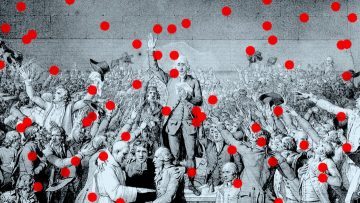 Fear sweeps the land. Many businesses collapse. Some huge fortunes are made. Panicked consumers stockpile paper, food, and weapons. The government’s reaction is inconsistent and ineffectual. Ordinary commerce grinds to a halt; investors can find no safe assets. Political factionalism grows more intense. Everything falls apart. This was all as true of revolutionary France in 1789 and 1790 as it is of the United States today. Are we at the beginning of a revolution that has yet to be named? Do we want to be? That we are on the verge of a major transformation seems obvious. The onset of the next Depression, a challenge akin to World War II, a national midlife crisis—these comparisons have been offered and many more. But few are calling our current moment a revolution, and some have suggested that the coronavirus pandemic—coinciding as it has with the surge in Joe Biden’s bid for the Democratic presidential nomination and the decline of Bernie Sanders’s—marks the end of any such possibility. “The Coronavirus Killed the Revolution,” declared the headline of a recent essay in The Atlantic by Shadi Hamid, who argued that the COVID-19 crisis makes people crave “normalcy” over deep structural change. As a historian of 18th- and 19th-century France, I think claims like these are mistaken.
The United States may not be having a revolution right now, but we are surely living in revolutionary times. If we do not perceive them as such, it is because news coverage and everyday conversations alike turn on nonhuman agents. Instead of visionary leaders or outraged crowds, viruses, markets, and climate change seem to shape events today. History feels like it is out of our hands. People sometimes imagine yesterday’s revolutions as planned and carried out by self-conscious revolutionaries, but this has rarely, if ever, been the case. Instead, revolutions are periods in which social actors with different agendas (peasants stealing rabbits, city dwellers sacking tollbooths, lawmakers writing a constitution, anxious Parisians looking for weapons at the Bastille Fortress) become fused into a more or less stable constellation. The most timeless and emancipatory lesson of the French Revolution is that people make history. Likewise, the actions we take and the choices we make today will shape both what future we get and what we remember of the past.
More here.
Saturday, April 4, 2020
Pandemic Journal
 Over at the NYRB Blog, Ali Bhutto, Jamie Quatro, Edward Stephens, Carl Elliott, and Liza Batkin, et al.:
[Liza Batkin] A few weeks ago (which feel like years), my boyfriend showed me a video of the British comedian Steve Coogan in his Alan Partridge character, demonstrating how to “complete an ablution, entry to exit, without using your hands.” “Drop a thigh,” Patridge begins, bending his leg, then “elbow down to open,” as he clasps his hands and dips his right arm to the phantom door handle. He continues to narrate unusually graceful movements, popping his hip to open the door, spinning on left foot to face the “toilet,” lifting its seat with his right one, and so on.
“It’s funny to imagine getting so good at something so odd,” I think of saying, but stop myself from explaining the joke. It does seem impossible to ever adjust to the awkwardness of avoiding stray particles.
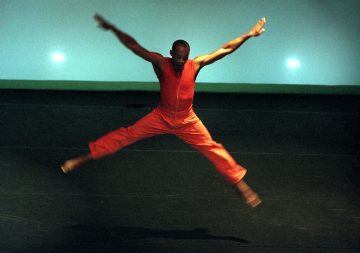
The routine reminds me of my favorite clip of the choreographer Bill T. Jones performing, initially, a short dance phrase, and then the same phrase while describing each movement in as much detail as possible. What was at first marvelously fluid becomes slower and belabored, though still beautiful, as Jones struggles to account for his body’s actions. “As one shifts one’s hip onto the left leg, the left arm breaks over the head, the right leg comes in and proceeds up to a passé parallel position,” he says, as his typically steady leg wobbles uncharacteristically. The task of carefully thinking about what he’s doing appears to unsettle his ability to do it.
More here.
Gaza’s New Conflict: COVID-19
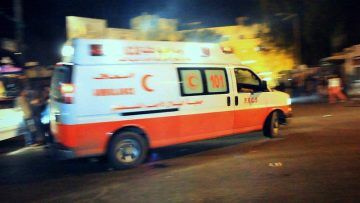 Omar Shaban in Counterpunch:
When the news of confirmed cases broke out, Gazans started taking precautionary measures to protect themselves and their family members from infection. However, with the lack of sufficient resources and equipment, Gazans had only one other way to cope with stress: cynicism and dark comedy. From Facebook posts to Twitter hashtags, Gazans reacted to the irony of being advised by the Palestinian Authority not to travel, whilst living under siege and prohibited from doing so for more than a decade. Others reacted with sarcasm to isolation notices to close down businesses and shops and go into confinement, wondering how they would provide for their children when there is little commercial activity in an ailing economy, even before the arrival of the virus in the first place.
In Gaza, over 50% of the entire population is unemployed; the percentage is 75% for the youth, which renders thousands of workers in agriculture, transportation, retail, and other industries desperate (The Israeli GDP per capita is nearly 30 times that of Gaza’s). Unemployment rates are expected to rise due to major lockdowns of commercial and economic activities. Authorities in Gaza have already closed mosques for prayer, shut down events and activities involving any gathering of people; limited entry to Gaza’s seaport for fishermen under tight restrictions and closed street markets. These decisions were seen as a necessary evil to prevent a major outbreak. However, they will present a painful strike to a weak economy. In the absence of an economic rescue plan, more Gazans will suffer.
More here.
Coronavirus and the Limits of Economics
Sanjay Reddy in Foreign Policy:
The coronavirus pandemic has dramatically disrupted the everyday social and economic patterns of societies around the world. Economists have focused on its economic impact and on what central banks and governments should do in response to an unusual simultaneous disruption of both supply and demand. There is consensus that governments will have to support businesses and workers who are losing income—or risk dangerous knock-on effects on banks and the real economy—and find a way to finance these expenditures. There is also an urgent need to ramp up the production of essential commodities such as ventilators, gloves, and masks; to provide hospital beds; and to ensure that required personnel can themselves turn up for work. Despite disruption to supply chains and restrictions on the population, essential goods and basic services must be provided, firms must be kept from going bankrupt, and employment and incomes must be maintained.
These circumstances raise fundamental questions about the role of the market and the public sector in doing what is needed on the required scale and with sufficient speed. Some economic thinkers are rightly attacking these problems with urgency. But addressing such practical ends also calls for us to rethink more basic economic ideas. The economics discipline has provided the most influential framework for thinking about public policies, but it has proved inadequate, both in preparing for the current emergency and for dealing with it. The pandemic underlines the necessity for a rethinking of our received ideas about economics and points in some directions that this rethinking should take.
More here.
New Pathogen, Old Politics
 Alex de Waal in Boston Review:
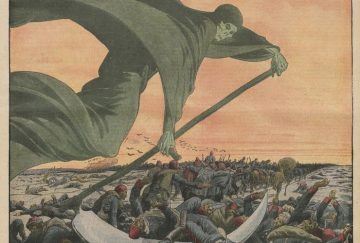
There is a saying among epidemiologists: “If you’ve seen one pandemic, you’ve seen one pandemic.” Echoing this trade wisdom in an interview two weeks ago, Bruce Aylward, the assistant director of the World Health Organization (WHO), pointed out that each new pandemic follows its own logic, and those who rely on past experiences to draw conclusions for public health will make mistakes. With each new pandemic it is tempting to scour history books for parallels and lessons learned. But as many have stressed, the wisdom to be gained is often greatly exaggerated.
Still, it is possible to steer a course between the Scylla of historical blindness and the Charybdis of hasty generalization. In her book about the era of the Black Death of 1348, A Distant Mirror (1978), the historian Barbara Tuchman confines her remarks on the present to a few oblique lines in the preface. “If one insists upon a lesson from history,” she writes, it is, as the French medievalist Edouard Perroy contended, that “Certain ways of behavior, certain reactions against fate, throw mutual light upon each other.” My working premise is that although the pathogen may be new, the logic of social response is not, and it is here that we can see historical continuities. An especially telling case study—still an object of fascination and controversy among historians of health and disease—is the devastating outbreak of cholera in Hamburg at the end of the nineteenth century, the subject of Richard Evans’s superbly researched book, Death in Hamburg (1987).
More here.
Kant’s Conception of Freedom: A Developmental and Critical Analysis
 Over at NDPR, Allen Wood reviews Henry Allison’s Kant’s Conception of Freedom: A Developmental and Critical Analysis:
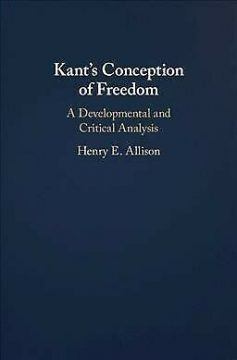
The title of this hefty book might easily mislead. The book is in effect a detailed survey of Kant’s entire philosophy, including even many Reflexionen from Kant’s Nachlass, as seen from the standpoint of one of its leading scholars of the past half century. It encompasses the development of Kant’s philosophy from Universal Natural History and Theory of the Heavens (1755) all the way to Religion within the Boundaries of Mere Reason (1793-94) and even Metaphysics of Morals (1798). The book’s ten chapters divide evenly between Kant’s writings before the Critique of Pure Reason (1781) and his writings after that. It is sometimes evident that Henry E. Allison is reading the early writings as preparatory to his interpretation of the works for which Kant is much better known. But since Allison himself thinks Kant’s mature views about freedom developed relatively late, and that the crucial turn came only between 1785 and 1788, it is hard to resist the conclusion that in the first 230 pages or so Allison is coming to terms with Kant’s early writings more as an end in itself rather than a means to understanding Kant’s later philosophy.
How can one review such a book? Many ostensible book reviews are really discussions of the topic of the book by someone other than the book’s author. Such reviews are sometimes interesting and informative, even if they are mainly a display of the reviewer’s thoughts. But I have always thought that the first duty of a review is to inform its readers about the contents of the book. Criticisms are valuable, if informed and economically argued, because you can learn something about a book’s contents by seeing how they might be challenged.
More here.