
Gene Seymour in Book Forum:
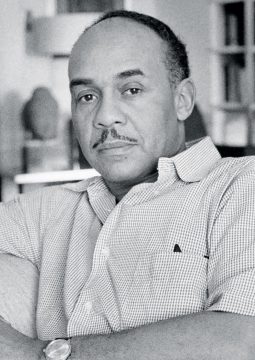 ANY OPPORTUNITY TO READ A GREAT WRITER’S MAIL should be embraced in these days when a serial Instagram feed is about as ambitious as correspondence gets. Granted, at roughly a thousand pages, The Selected Letters of Ralph Ellison may be asking a lot, at the outset, of even the most committed scholar of twentieth-century American literature, to say nothing of the waves of readers who continue to come away from Invisible Man convinced that it’s the Great American Novel.
But these letters, as assembled by John F. Callahan and Marc C. Conner, come to us a quarter of a century after Ellison’s death as more than just another corpus for further academic study. In heft and breadth, the missives here make up the Big Book of Life that Invisible Man’s triumph augured, and that we’ve been awaiting (not always patiently) for all these years. After his first book’s publication in 1952, Ellison doggedly, painstakingly, and at times dolefully toiled at completing a second novel, which remained unfinished at the author’s death in 1994. More than either posthumous version of that book, the densely compacted Juneteenth and forbiddingly gargantuan Three Days Before the Shooting . . . (both curated by Callahan, Ellison’s executor), Ellison’s letters vibrate with striking imagery, flinty repartee, shrewd literary insight, and bountiful reverie. One can’t help thinking while wandering through this capacious volume that if only this mercurial and meticulous man could have somehow sustained the high-spirited, polychromatic flow of his correspondence and carried it into his regular routine, there could have been two, three, even four more novels bearing his name. Or so you’d like to imagine.
The story told by this Ellison opus, as in Invisible Man, concerns a black American’s progress toward self-realization in a world that insists on misunderstanding him. Ellison was correct to insist, especially to interviewers in the immediate wake of its publication, that his novel was not autobiographical, although the author, like the book’s anonymous protagonist, rose from modest beginnings (in Oklahoma City) to attend a historically black university (Alabama’s Tuskegee Institute).
More here. (Note: Throughout February, at least one post will honor The Black History Month. This year’s theme is “African Americans and the Vote.” Readers are encouraged to send in their suggestions)
 Before Audrey Hepburn shimmied into that iconic black dress and dangled her cigarette holder between two fingers, the story of Holly Golightly existed only between the covers of Truman Capote’s beloved novella. Way back in 1958, our reviewer summed it up in words that hold true to this day: “‘Breakfast at Tiffany’s’ is a valentine of love, fashioned by way of reminiscence, to one Holly Golightly … a wild thing searching for something to belong to.”
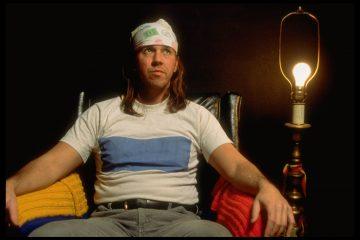 A young woman—observant, self-conscious, harboring literary aspirations, though not quite sure where she wants to end up—meets an older novelist, and they start dating. He is as famous as it’s possible for a contemporary writer to be. He is obsessed with his privacy: She is not to draw any attention, occupying a hidden corner of his life. In fact, he sets all the terms of their relationship; the age gap benefits him. While there’s plenty of desire, it’s tinged with condescension (even spite), which contributes more than it should to their sexual tension.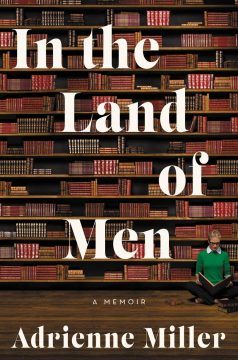
 About 50,000 years ago, ancient humans in what is now West Africa apparently procreated with another group of ancient humans that scientists didn’t know existed.
 For
For 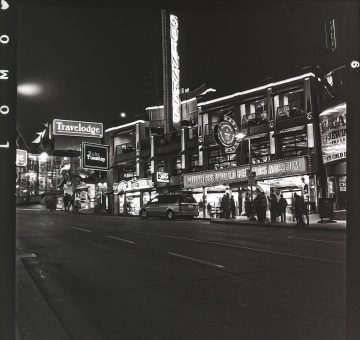 Tackiness gets a bad rap because it makes us feel like suckers. It offends our belief that we deserve better. We are allowed to marvel at top-shelf wax statues of celebrities or modern movie blockbusters because they meet some implicit standard of verisimilitude, because they look “real”: it’s okay to be crassly entertained so long as that entertainment passes some bar of acceptability. Anything that fails that standard is generally held to be tawdry or kitschy or cheesy—to be, in other words, beneath our esteem.
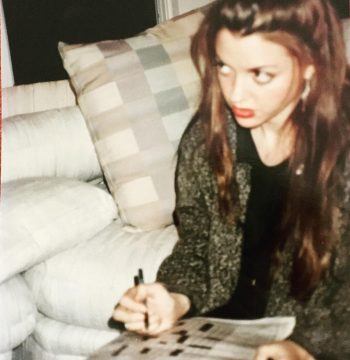 I had to fight for Prozac Nation because everyone wanted it to be a novel. They really thought that I should write a novelized version of my life. The whole thing was: “Who are you? Why would anybody care about your life? If you’re talented, you can write a novel, because you can invent something.” It’s not like I couldn’t do that. It’s not like it couldn’t have been a novel. But I don’t want to write novels. It’s terrible that men make the rules, and that men have decided that novels are somehow more valuable. It’s really, really, really hard to write about yourself. Women who have written about their own lives should be getting the Nobel Prize. Those are the only people who should be getting the Nobel Prize from now on because it’s really hard to do. It’s not that hard to write about politics. Read a book and you can do it. It’s not that hard to write about Donald Trump, or for that matter Afghanistan. It is really hard to figure out the stuff that scares people. I’m not doing this because I need to figure myself out. I have myself figured out. I’m doing it because other people need to figure themselves out. I’m not writing about myself. I’m writing about other people. It’s a really cheap thing to think that all I’m doing is writing about my life, as if that’s some easy thing.
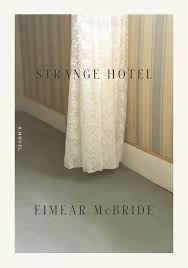 ‘Not all hotels are created equal,’ observes McBride’s narrator; yet ‘once distilled all hotel rooms are essentially alike, if not exactly the same’. She should know: Strange Hotel records an exhausting fictional itinerary of nights spent in, by my count, more than 170 cities, from Dublin to Delhi and further afield. For the most part, these stopovers appear in the simple form of lists, an occasional cryptic ‘x’ denoting, we eventually infer, those occasions when the narrator chooses to forgo her solitude, if not her loneliness, in favour of a casual sexual hook-up. Five rooms, though, come into sharper focus in the novel’s main narrative sections, set in Avignon, Prague, Oslo, Auckland and Austin. Or, more precisely, set in the small and temporarily hospitable space of a hotel room in each city, ‘a place built for people living in a time out of time’.
 The world’s species and natural ecosystems are in crisis. When nearly 200 countries gather in ten days’ time to thrash out a major plan to stem the precipitous decline, China is expected to take a prominent role. The high-stakes negotiations will set the stage for a major biodiversity summit in October, which the country will also host — marking the first time the nation will lead global talks on the environment. That role as host, together with the China’s growing global influence — including its vast Belt and Road Initiative to build international infrastructure — has thrown a spotlight on its own impact on, and efforts to preserve, biodiversity. “We are familiar with China being part of the problem of the global environmental emergency. For the sake of nature and the people living on this planet, there is a need to turn China into part of the solution,” says Li Shuo, a policy adviser at Greenpeace China in Beijing.
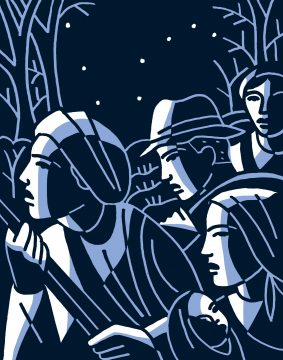 A gunshot echoed over starlit forest near the town of Marine on St. Croix, Minnesota. It was late October, already frigid, and chasers had pushed our group of ten fugitives to the edge of a lake. For a moment, we’d hesitated, shouts drawing closer as the black water winked, but the shot drove us all straight in. My legs went numb; Elyse, a high-school sophomore, exclaimed, “My God! ” Submerged to the waist, I waded through marsh grass and lamplight toward our conductor, who silently indicated the opposite bank. The Drinking Gourd shone overhead with exaggerated clarity. This was my third Underground Railroad Reënactment.
 On the eve of the new year, my Twitter feed and an academic listserv I frequent lit up with arguments about biology and society. Some people had a lot to say about scientific matters—birth sex, assigned sex, genes and chromosomes—while others appealed to social ones: employment rights, free speech, and gender diversity. I could tell that transgender rights lay at the heart of the matter, but why were the people who tagged me on Twitter raging at one another about biological truth? And why were the professionals on my listserv raising disturbing questions about free speech and material reality while also trying to relitigate the meanings of sex and gender?
 This spring, ten tons of liquid xenon will be pumped into a tank nestled nearly a mile underground at the heart of a
  This year more than 60 countries will hold
  What a joy it is to journey back into the Aeneid with Quint as our Sibyl. The latter warns Aeneas that in Italy he will wage wars as cruel as Troy’s, again over a stolen bride, but with aid from a Greek city. She thus articulates from within the poem its famous division into two halves, the second a repetition and reversal of the Iliad. No less inspired, but far more meticulously detailed, is Quint’s structural pronouncement: that chiasmus shapes the Aeneid’s architecture on a fractal scale, from its microscopic details to the thousand-year sweep of its plot. Expanding on this figure’s normative definition as an A-B-B-A arrangement of words, Quint elucidates a range of intertextual symmetries and reversals by which, in his argument, Vergil “double-crosses” his own epic. This grand unified theory seeks to interlink and explain the poem’s meaning, structure, and notorious “ambivalence”: the self-questioning tendencies that have prevented easy interpretation, and divided the poem’s readers, since its publication.
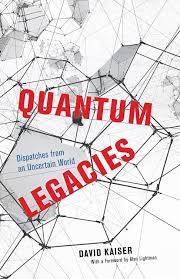 A few themes in particular resonate through this tour of quantum mechanics. The first is that people matter. That might sound obvious — you can’t have any physics if you don’t have physicists — but the point is subtler. The specific personalities matter, and they matter to specific cohorts, making them different from all other cohorts. Even when Kaiser tours the most rarefied and abstract corridors of theoretical physics, he never finds a solitary theorist mooning over a blackboard. All physics happens in conversation, whether it is Einstein and Ehrenfest joking at a physics meeting, or Schrödinger working out his famous thought experiment about a cat — killed (or not) probabilistically with a dose of poison gas — in correspondence with Einstein and other quantum dissidents. As Kaiser points out, it is no accident that, as Europe descended into fascist chaos and warmongering, “Schrödinger’s thoughts turned to poison, death, and destruction.” Even the main character of the first chapter, Paul Dirac, notorious as the weirdest weirdo to ever do theoretical physics, is presented as enmeshed in the communities that found him so inscrutable.
 Jill Herbers, a writer who lives in New Hampshire, has been canvassing for Bernie in recent weeks. “It’s a deeply human experience,” she said. “The teacher’s speaking, and so is the nurse—and so is the person in the five-million-dollar lake house, because they don’t want to see the loons damaged. People love Sanders and love what he’s for. Everyone has been brought up in this system that isn’t working anymore.” Being progressive, to her, “is just human. What’s radical is five hundred thousand people sleeping on the streets. Amazon not paying any taxes.” Sanders’s campaign was a serious one, she said, but also fun, and about love. “Cornel West says, ‘Justice is what love looks like in public.’ ” She smiled.