
The Curfew
I’m alone as usual
but the city is unusually alone.
I watch over its wilderness out of my window.
Nothing but the night and the curfew.
The one tree of the long street
asks about two lovers that have never missed a date.
The broken lantern asks about a kiss
it has concealed in the dark time and again.
The bar is closed and the wine is drinking by itself
and a pot hole in the road is celebrating
footsteps that did not come.
Only the curfew is wandering alone
and all this night is a kingdom for the wind.
What will become of supplication
and deferred footsteps
and appointments that wait
for the curfew’s permission?
What’s all this change in the city?
Where are the weddings and the city lights?
Where are the door bells and the cats’ meows?
Where are the horns and brakes of crazy cars?
Where are the voices of children
who split the darkness with shouting and laughter?
Where’s the tapping of a dancer’s high heels on her way home
or of a woman heading to work?
Where’s me when I hate my loneliness?
The city that was plentiful around me
is now lonely like me
lying on the side of the night.
The curfew is cautious
just like my confused window
like me the solitary
like the city
this cautious stillness…moving stealthily toward the morning of life.
by Radhia Chehaibi
from Split This Rock
translated from the Arabic by Ali Znaidi
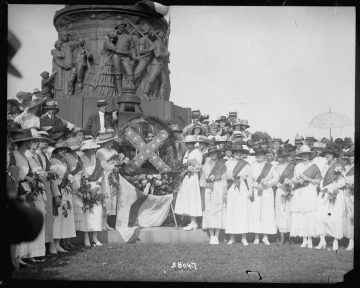 Joe Biden launched his presidential bid in April with a bold defense of the principle that “all men are created equal,” a principle he rightly argued that, from Thomas Jefferson on, “we haven’t always lived up to.” But, Mr. Biden added, this is something “we have never before walked away from,” and that’s where he went wrong. Like most Americans, the former vice president forgets the period ironically known as Redemption, the movement that followed the abolition of slavery and ended 12 years of America’s first experiment in interracial democracy — Reconstruction — with a systematic, multitiered, terrorist-backed rollback, when the defeated Confederate South, as the saying went, “rose again.”
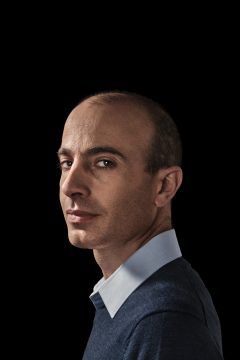 In 2008, Yuval Noah Harari, a young historian at the Hebrew University of Jerusalem, began to write a book derived from an undergraduate world-history class that he was teaching. Twenty lectures became twenty chapters. Harari, who had previously written about aspects of medieval and early-modern warfare—but whose intellectual appetite, since childhood, had been for all-encompassing accounts of the world—wrote in plain, short sentences that displayed no anxiety about the academic decorum of a study spanning hundreds of thousands of years. It was a history of everyone, ever. The book, published in Hebrew as “A Brief History of Humankind,” became an Israeli best-seller; then, as “
 I strongly suspect that at least 95% of occurrences of the phrase ‘a murder of crows’ are found in sentences like, “Did you know that a group of crows is called a ‘murder of crows’?” With this in mind, it can’t really be correct to say that a group of crows is a murder; the preponderance of occurrences of the term in sentences of the sort I just gave means that, in the other 5%, the ones where English-speakers say things like, “Look at that murder of crows,” what is in fact happening is that the speaker is drawing attention to the fact that he or she has mastered this precious bit of vocabulary. The focus of the proposition, in other words, is the speaker, and not the crows.
 A record-breaking temperature reading taken at an Argentinian research station on the continent Thursday clocked in at 18.3 degrees Celsius — 65 degrees Fahrenheit — warmer than it is right now in Orlando, Florida, and the hottest temperature ever recorded in Antarctica.
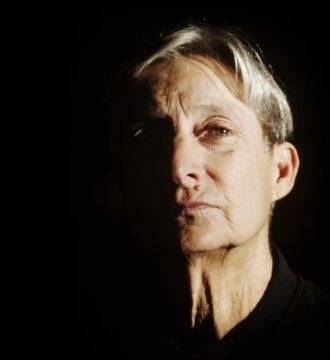 This month, Verso is publishing Butler’s latest book, “
 George Steiner, who has died aged 90, was a polymathic European intellectual of particular severity. In an academic career that took him from the University of Chicago to Harvard, Oxford, Princeton, Cambridge and Geneva, Steiner held forth on tragedy, reading, the decline of literacy, the possibilities of translation, science and chess. He crossed swords with
  That evening, people flooded the supermarkets, packing their carts high with instant food, rice, toilet paper and condoms. A picture of a masked woman with a cartload of Maggi Mee instant noodles was soon turned into a meme. Another image showed a condom-clad finger pressing a lift button; there had been an
 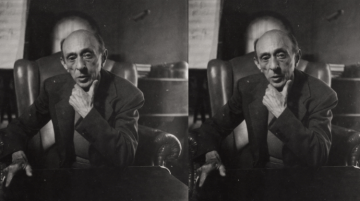 In 1942, when Levant was back in New York City, he commissioned Schoenberg to write a piano piece for him. Expecting something short, perhaps the length of a Chopin Nocturne, Levant “wasn’t prepared,” as he later wrote, for the full-length concerto upon which the composer instead embarked. Accompanying a letter dated August 8, 1942, Schoenberg sent roughly a quarter of the manuscript to Levant. The work, Schoenberg wrote, would be in four parts and would include a scherzo, an adagio, and a rondo-like finale. But though Levant had already paid an installment of $200, a final fee for the commission had yet to be agreed upon. Schoenberg naturally wanted to finalize the details. What followed was a delicate back and forth, the two artists acting like a pair of uneasy dance partners.
 Part-way through this memoir of hospice medicine and living with loss,
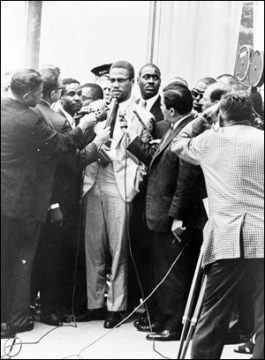 Whenever the Negroes keep the Democrats in power they’re keeping the Dixiecrats in power. This is true! A vote for a Democrat is nothing but a vote for a Dixiecrat. I know you don’t like me saying that. I’m not the kind of person who come here to say what you like. I’m going to tell you the truth whether you like it or not. [applause] Up here in the North you have the same thing. The Democratic Party don’t – they don’t do it that way. They got a thing they call gerrymandering. They maneuver you out of power. Even though you can vote they fix it so you’re voting for nobody. They got you going and coming. In the South they’re outright political wolves, in the North they’re political foxes. A fox and a wolf are both canine, both belong to the dog family. [laughter, applause] Now, you take your choice. You going to choose a northern dog or a southern dog? Because either dog you choose, I guarantee you, you’ll still be in the doghouse.
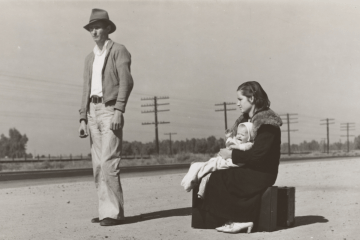 In 1831, Alexis de Tocqueville took a 10-month trip to the United States to study the American penal system. In the resulting book—
 The Greek statesman Demosthenes is credited with saying “I am a citizen of the world,” and the idea that we should take a cosmopolitan view of our common humanity is a compelling one. Not everyone agrees, however; in the words of former British Prime Minister Theresa May, “If you are a citizen of the world, you are a citizen of nowhere.” On the other side of the political spectrum, groups who share a feature of identity — race, ethnicity, gender, sexuality, and others — find it useful to band together to make political progress. Kwame Anthony Appiah is a leading philosopher and cultural theorist who has thought carefully about the tricky issues of cosmopolitanism and identity. We talk about how identities form, why they matter, and how to negotiate the difficult balance between being human and being your particular self.
 You should sit low, not on a chair or a stool or a couch. A small crate will do the job. Or anything that is lower than 9.5 inches from the ground. You can’t shave or cut your hair. You can’t have sex. You shouldn’t take a shower, though you may do some light swabbing of your especially funky bits, as well as dousing your feet and hands in cold water now and again. You can’t greet people in the normal way. You definitely cannot work. No freshly laundered clothes. The list of things you cannot do is long.
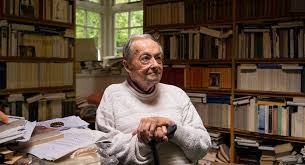 GEORGE STEINER IS A CHARMING
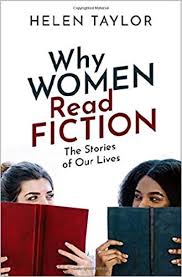 Men not reading women’s writing is widespread, and they begin not reading early. In the university applications that cross my desk, it’s common for male candidates not to mention a single female author, despite otherwise showing evidence of wide and ambitious reading. The opposite is rare.
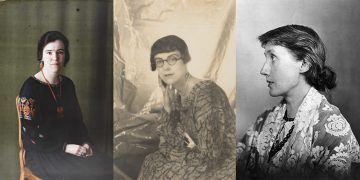 “I would venture to guess that Anon, who wrote so many poems without signing them, was often a woman,” wrote Virginia Woolf in A Room of One’s Own (1929). In that essay, commenting on the fact that women’s lives are “all but absent from history,” she argues that this is not only a consequence of the ways women have been deprived of the material conditions under which their talents can prosper but also reveals the sort of events and lives historians have traditionally considered worth remembering—primarily, the public activities of “great men.” Perusing the index of G. M. Trevelyan’s History of England, Woolf looks up “position of women” and is dismayed to find only a smattering of references, mostly to customs of arranged marriage, wife-beating, and the fictional heroines of Shakespeare. Flicking through chapters on wars and kings, she wonders why so little room is left for women’s activities in the events that “constitute this historian’s view of the past.” It was clear to Woolf that new histories were needed, which would examine the reality of women’s lives, their relationships and activities, and the forces that thwarted their ambitions.