
John Horgan in Scientific American:
 First, some basic facts to convey the scale of the problem. Cancer is the second most lethal disease in the U.S., behind only heart disease. More than 1.7 million Americans were diagnosed with cancer in 2018, and more than 600,000 died. Over 15 million Americans cancer survivors are alive today. Almost four out of ten people will be diagnosed in their lifetime, according to the National Cancer Institute. Cancer has spawned a huge industrial complex involving government agencies, pharmaceutical and biomedical firms, hospitals and clinics, universities, professional societies, nonprofit foundations and media. The costs of cancer care have surged 40 percent in the last decade, from $125 billion in 2010 to $175 billion in 2020 (projected). Cancer-industry boosters claim that investments in research, testing and treatment have led to “incredible progress” and millions of “cancer deaths averted,” as the homepage of the American Cancer Society, a nonprofit that receives money from biomedical firms, puts it. A 2016 study found that cancer experts and the media often describe new treatments with terms such as “breakthrough,” “game changer,” “miracle,” “cure,” “home run,” “revolutionary,” “transformative,” “life saver,” “groundbreaking” and “marvel.”
…What’s the reality behind the hype? “No one is winning the war on cancer,” Azra Raza, an oncologist at Columbia, asserts in her 2019 book The First Cell: And the Costs of Pursuing Cancer to the Last. Claims of progress are “mostly hype, the same rhetoric from the same self-important voices for the past half century.” Trials have yielded improved treatments for childhood cancers and specific cancers of the blood, bone-marrow and lymph systems, Raza notes. But these successes, which involve uncommon cancers, are exceptions among a “litany of failures.”
More here.
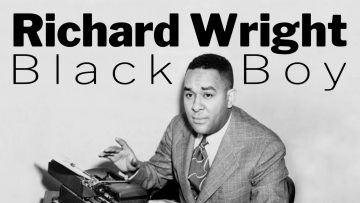 Wright
 ‘What insults my soul’,
  IT’S AN APPROXIMATELY
 One way to lose a popularity contest in the United States is to mention in polite company — who may be chatting about, say, the impeachment or the Mueller investigation — the numerous ways the United States has meddled in the affairs of other countries throughout many years.
 Writing in The New York Times in June 2003, less than two years after the events of September 11 shattered the complacency with which many Americans conducted their lives,
 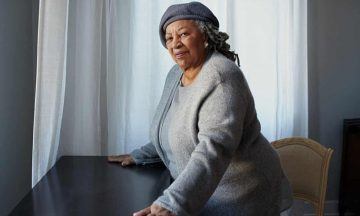 Of all the mantles that have been foisted on Toni Morrison’s shoulders, the heaviest has to be “the conscience of America”. It’s both absurd-sounding and true. For almost half a century her subject has been racial prejudice in the United States, a story that she has told and retold with a steadiness of rage and compassion. Her latest novel, God Help the Child, is her 11th and when I arrive at her apartment in Tribeca, Lower Manhattan, America’s Conscience is having her eyebrows drawn on. “For the photographer,” she explains with a chuckle.
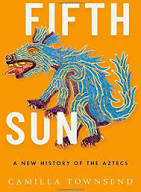 It is to Townsend’s credit that she does not attempt to be comprehensive. The cosmology of the Aztecs, their calendar, gods and myths, get only glancing treatment here. This is a brief history, and one told subtly and well, primarily through the lives of individuals. First among them is the woman baptised by the Spanish as Marina and known in Nahuatl as Malintzin, re-hispanicised as Malinche – a name that would become a synonym for traitor. Born to a noble lineage of a people unhappily subject to Aztec rule, she was offered as a tribute payment to the Mexica and then sold to the Chontal Maya on the Yucatán coast, one of the first communities to encounter Cortés’s ships. Given away again to the Spaniards, she survived by making herself indispensable, serving as Cortés’s concubine and interpreter as he tortured and slaughtered his way around the continent. Townsend has elsewhere devoted an entire book, Matlintzin’s Choices, to her resurrection. She emerges here as a complex and sympathetic figure, able – as indigenous Mexicans would be for generations to come – to hold many worlds within herself at once.
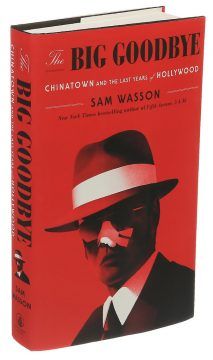 The film “Chinatown” was meticulously designed to capture a precise moment in Los Angeles’s history. Everything about its look and feel says 1937, not 1936 or 1938. In the same way, “The Big Goodbye,” Sam Wasson’s deep dig into the making of the film, is a work of exquisite precision. It’s about much more than a movie. It’s about the glorious lost Hollywood in which that 1974 movie was born.
 Christian List in the Boston Review:
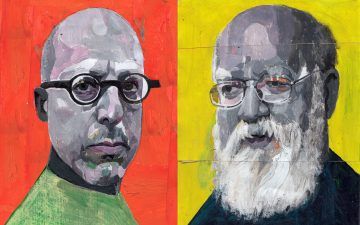 Daniel C Dennett and Gregg D Caruso debate free will in Aeon:
 V.S. Naipaul in the New York Review of Books:
 Matthew Yglesias in Vox: