What are the safest sources of energy?

Hannah Ritchie in Our World in Data:

The increasing availability of cheap energy has been integral to the progress we’ve seen over the past few centuries. Energy access is one of the fundamental driving forces of development. The United Nations says that “energy is central to nearly every major challenge and opportunity the world faces today.”

But energy production has downsides as well as benefits. There are three main categories:

  • Air pollution: An estimated five million people die prematurely every year as a result of air pollution; fossil fuels and biomass burning are responsible for most of those deaths.
  • Accidents: As well as deaths caused by the byproducts of energy production, people die in accidents in supply chains, whether in the mining of coal, uranium or rare metals; oil and gas extraction; the transport of raw materials and infrastructure; construction; or their deployment.
  • Greenhouse gas emissions: Perhaps the most widely discussed downside is the greenhouse gases emitted by energy production, which are a key driver of climate change.

All energy sources have negative effects. But they differ enormously in the size of those effects. That difference can be easily summed up: by all metrics, fossil fuels are the dirtiest and most dangerous, while nuclear and modern renewable energy sources are vastly safer and cleaner.

More here.

Market economics has driven universities into crisis

Owen Jones in The Guardian:

The trebling of tuition fees would unleash a new golden age for English universities, or so we were told. They would become financially sustainable, competitive, liberated from stifling bureaucracy and responsive to the needs of students. And yet, nearly a decade later, higher education is in crisis.
Tuition fees have formed part of a full-frontal assault on the living standards of a generation battered by a housing crisis, stagnating wages and slashed services. And with 83% of student loans forecast to never be paid back in full, the promises of financial sustainability are a nonsense. Both frontrunners for the Labour leadership have committed to maintaining the party’s totemic commitment to abolishing this punitive attack on aspiration, recognising that university education is a social good. But the issue goes much, much wider – and has profound implications for the future of our society.

More here.

Beholding The Ascent of Phoebe Waller-Bridge

Rachel Syme at Bookforum:

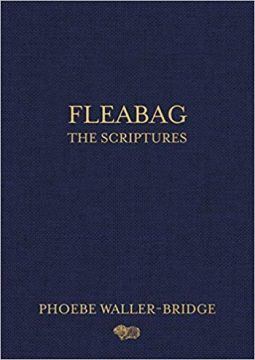
The title of Fleabag: The Scriptures (Ballantine Books, $28) is a cheeky play on words: It refers to the shooting scripts for the television comedy Fleabag, which are reproduced here in full, and it also refers to the fact that the second (and, if creator Phoebe Waller-Bridge is to be believed, final) season of the show, which debuted on Amazon Prime in May 2019, is about the main character’s romantic attachment to an unattainable Catholic priest. But it also acknowledges that Waller-Bridge’s words—printed out on creamy paper stock, bound inside a smooth navy-blue cover, and embossed with gold serif letters like a Gideon Bible—have become a new kind of religious text, albeit one that preaches primarily to secular women living in major metropolitan areas. And there is some truth to this visual provocation: If anyone had a truly blessed year, it was Phoebe Waller-Bridge. A picture of her lounging at the Chateau Marmont after she swept the Emmy Awards in September, with a vodka gimlet in one manicured hand and a cigarette in the other, went viral overnight. Women set it as their phone lock screens and desktop backgrounds; they meditated on it like a rosary. It’s so victorious, so insouciant. Here was a woman not ground to a pulp by anger at the news cycle, but wringing the juice out of life. She appears to be luxuriating, a hard-earned repose after several years of grinding out scripts. And on the seventh day, Phoebe Waller-Bridge rested.
more here.

John Berger’s Life Between Aesthetics and Politics

Bruce Robbins at The Nation:

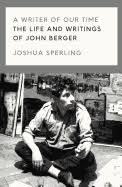
By the middle of the ’70s, Berger was publicly triumphant. Yet it was at this very moment that he chose to retreat from public life and move to a mountain village above Geneva. Sperling does not say—perhaps no one knows—how much that move owed to the breakup of his marriage to Bostock and his new relationship with Bancroft. (Sperling is frustratingly tight-lipped about Berger’s romantic life.) But we do learn a lot about his new existence. “Many of his older neighbors continued to live by agrarian methods more or less unbroken for centuries,” Sperling tells us, and “Berger started to work alongside them. They became his teachers.” Recalling these years, Berger observed, “It was like my university. I learnt to tap a scythe, and I learnt a whole constellation of sense and value about life.” Sperling lists the activities Berger participated in—ones involving hay, cows, trees, weeds, apples, and plenty of manure—and notes that “Berger found in the working life of Quincy not only a home but an anchor: a community.”

more here.

The Group That Freed Themselves by Inventing Rules

Anna Aslanyan at the TLS:

Should humanity lie back and be satisfied to watch new thoughts make ancient verses?” What compelled François Le Lionnais to ask this question was a conversation he had with Raymond Queneau in 1960. A writer interested in mathematics, Queneau told his friend, a chemist interested in art, about a book he was working on, a sequence of ten sonnets such that any line in any of them could replace the corresponding line in any other. To experiment with this and other literary forms, the pair founded “a sort of secret society”, initially a group of eight, which began meeting monthly in Paris. “That which certain writers have introduced with talent (even with genius) in their work … the Ouvroir de Littérature Potentielle (Oulipo) intends to do systematically and scientifically, if need be through recourse to machines that process information”, Le Lionnais wrote in what was to form the group’s first manifesto. Queneau’s Cent mille milliards de poèmes – amounting to a hundred thousand billion rhymed, grammatically correct combinations – was published in 1961, the first book to be billed as Oulipian.

more here.

The Cancer Industry: Hype vs. Reality

John Horgan in Scientific American:

First, some basic facts to convey the scale of the problem. Cancer is the second most lethal disease in the U.S., behind only heart disease. More than 1.7 million Americans were diagnosed with cancer in 2018, and more than 600,000 died. Over 15 million Americans cancer survivors are alive today. Almost four out of ten people will be diagnosed in their lifetime, according to the National Cancer Institute. Cancer has spawned a huge industrial complex involving government agencies, pharmaceutical and biomedical firms, hospitals and clinics, universities, professional societies, nonprofit foundations and media. The costs of cancer care have surged 40 percent in the last decade, from $125 billion in 2010 to $175 billion in 2020 (projected). Cancer-industry boosters claim that investments in research, testing and treatment have led to “incredible progress” and millions of “cancer deaths averted,” as the homepage of the American Cancer Society, a nonprofit that receives money from biomedical firms, puts it. A 2016 study found that cancer experts and the media often describe new treatments with terms such as “breakthrough,” “game changer,” “miracle,” “cure,” “home run,” “revolutionary,” “transformative,” “life saver,” “groundbreaking” and “marvel.”
…What’s the reality behind the hype? “No one is winning the war on cancer,” Azra Raza, an oncologist at Columbia, asserts in her 2019 book The First Cell: And the Costs of Pursuing Cancer to the Last. Claims of progress are “mostly hype, the same rhetoric from the same self-important voices for the past half century.” Trials have yielded improved treatments for childhood cancers and specific cancers of the blood, bone-marrow and lymph systems, Raza notes. But these successes, which involve uncommon cancers, are exceptions among a “litany of failures.”

More here.

The revolutionary legacy of Richard Wright

David Thurston in Nucomintern:

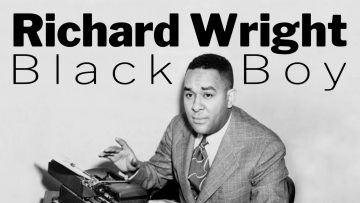
Wright was born near Natchez, Mississipi a century ago in 1908.  Early in life, while living in Memphis, Wright’s father abandoned the family.  Soon afterward, his mother suffered a severe stroke, leaving her disabled, and leaving Richard Wright and his brother Leon to live at the mercy of a their extended family.  Wright’s early life is powerfully recounted in many biographies, but the most vivid source is Black Boy, his own autobiography, published in 1946.

In Black Boy, hunger serves as a powerful running metaphor, a literal description of Wright’s condition for much of his childhood, but also a way of describing his own desire to live beyond the boundaries proscribed by Jim Crow segregation in the South.

He writes:

Hunger stole upon me so slowly that at first I was not aware of what hunger really meant.  Hunger had always been more or less at my elbow when I played, but now I began to wake up at night to find hunger standing at my bedside, staring at me gauntly… Whenever I begged for food now my mother would pour me a cup of tea which would still the clamor in my stomach for a moment or two; but a little later I would feel hunger nudging my ribs, twisting my empty guts until they ached. (BB: 14-15)

As Wright grew older, he came to love reading and desperately sought whatever literary material he could find.  This was quite controversial in the household of his grandmother, who viewed any secular reading as the work of the devil.  Wright links his physical hunger to the hunger for knowledge in this moving passage:

School opened and I began the seventh grade.  My old hunger was still with me and I lived on what I did not eat.  Perhaps the sunshine, the fresh air, and the pot liquor from the greens kept me going.  Of an evening I would sit in my room reading, and suddenly I would become aware of the smelling meat frying in a neighbor’s kitchen and I would wonder what it was like to eat as much meat as one wanted.  My mind would drift into a fantasy and I would imagine myself a son in a family that had meat on the table at each meal; then I would become disgruntled with my futile daydreams and would rise and shut the window to bar the torturing scent of meat. (BB: 137)

Throughout Wright’s years in the South, the threat of brutal racist violence cast a pall across his life.

More here. (Note: Throughout February, at least one post will honor The Black History Month. This year’s theme is “African Americans and the Vote.” Readers are encouraged to send in their suggestions)

Tuesday Poem

FranÇOise And The Fruit Farmer

In town to sell his fruit, he saw her—
Françoise in her summer slacks—
turning to him, coming back
to feel the swelling plums,
one held in each soft hand, breast-high,
above them her eyes enclosing him
in quietness brushed up to colors,
urgings green, thrustings yellow.

A vine-like touch, her promise seemed all profit,
surplus to lay aside and store,
quick harvest if he collapsed his stand,
pulled down his crates, rolled away his canvas:
full bounty if he washed his hands and followed,
trailing her fragrances
of melons in their prime, of berries bursting.

She turned to go, her scent adrift
as if from glistenings in soil turned off a spade.
His yearning had no time
to plant and cultivate
and wait for rain,
yet he was quick to catch a peach about to fall—
that brightness of his wrist
costing the moment that concealed her in the crowd;
and yet a perfect peach lay in his hand,
his only means to feel the way good seasons end.

A lucky day, he thought,
begins with plums.

—James A. Emanuel was born in 1921 in Alliance, Nebraska. His books include Jazz from the Haiku King (1999), Whole Grain: Collected Poems, 1958–1989 (1990), The Broken Bowl: New and Uncollected Poems (1983), Black Man Abroad: The Toulouse Poems (1978), and At Bay (1969). He is also the author of Langston Hughes (1967) and the editor, with Theodore L. Gross, of Dark Symphony: Negro Literature in America (1968). An expatriate African-American, Emanuel lived in Paris.

Sunday, February 16, 2020

American Dirt, Identity and Imagination

Kenan Malik in Pandaemonium:

‘What insults my soul’, Zadie Smith has written, ‘is the idea… that we can and should write only about people who are fundamentally ‘like’ us: racially, sexually, genetically, nationally, politically, personally.’

Both as novelist and essayist, Smith is one of the most subtle guides to the fraught terrain of culture and identity. The problem of ‘cultural appropriation’ – writers and artists being called out for having stepped beyond their permitted cultural boundaries to explore themes about people who are not ‘fundamentally ‘like’ us’ – is an issue that particularly troubles her. Too often these days, on opening a book or on viewing a painting, we are as likely to ask: ‘Did the author or painter have the cultural right to engage with that subject?’ or: ‘Does he or she possess the right identity?’ as: ‘Is it any good?’

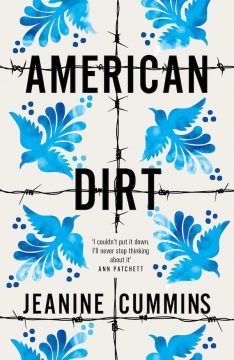
So it is with the latest cultural firestorm over Jeanine Cummins’s novel American Dirt, which tells the story of a mother and son, Lydia and Luca, forced to flee their home in Acapulco and join the migrant trail to America after their family is slaughtered by a drugs cartel. Cummins wants Americans to stop seeing migrants as a ‘faceless brown mass’ and to bear witness to the tragedy of our making on our southern border’.

The novel’s supporters have hailed it as a Great American Novel, even the new The Grapes of Wrath. Its detractors point to the fact that Cummins is non-Mexican and that this wasn’t a story that was hers to tell, which is why she gets it all wrong.

More here.

The Strange Quest to Crack the Voynich Code

Jillian Foley in Undark:

IT’S AN APPROXIMATELY 600-year-old mystery that continues to stump scholars, cryptographers, physicists, and computer scientists: a roughly 240-page medieval codex written in an indecipherable language, brimming with bizarre drawings of esoteric plants, naked women, and astrological symbols. Known as the Voynich manuscript, it defies classification, much less comprehension.

And yet, over the years a steady stream of researchers have stepped up with new claims to have cracked its secrets. Just last summer, an anthropologist at Foothill College in California declared that the text was a “vulgar Latin dialect” written in an obscure Roman shorthand. And earlier in the year, Gerard Cheshire, an academic at the University of Bristol, published a peer-reviewed paper in the journal Romance Studies arguing the script is a mix of languages he called “proto-Romance.”

Thus far, however, every claim of a Voynich solution — including both of last year’s — has been either ignored or debunked by other experts, media outlets, and Voynich obsessives. In Cheshire’s case, the University of Bristol retracted a press release highlighting his paper after other experts roundly challenged his research.

More here.

On Belén Fernández’s “Exile: Rejecting America and Finding the World”

Todd Miller in the Los Angeles Review of Books:

One way to lose a popularity contest in the United States is to mention in polite company — who may be chatting about, say, the impeachment or the Mueller investigation — the numerous ways the United States has meddled in the affairs of other countries throughout many years.
Rigging elections might be the most benign offense on a list that includes engineering military coups, forcing economic policies beneficial to corporations, or blasting another country to bits. And if you mention any of these truths, and the wrong person is in the crowd, there is a chance that the rebuttal will be the following old insult: if you don’t like the country, why don’t you just leave?

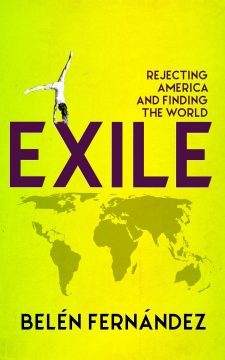
Belén Fernández did just that. And it was no whim. As she explains in her book Exile: Rejecting America and Finding the World, she left because the United States is, as she writes, a “large-scale lab experiment on how to best crush the human soul.”

More here.

Lance Olsen in conversation with Andrea Scrima

From The Brooklyn Rail:

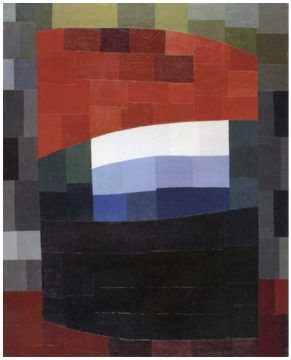
Otto Freundlich, Mein roter Himmel, 1933, oil on canvas, 63 x 51 in. Photo: Til Niermann. Courtesy wikimedia commons.

Andrea Scrima (Brooklyn Rail): Lance, you’ve written a novel that, in a nod to Ulysses (1922) and Mrs. Dalloway (1925) (but perhaps also to Do Androids Dream of Electric Sheep? (1968)), takes place in a single 24-hour period—in this case, June 10, 1927. My Red Heaven—which borrows its title from a painting by the exiled German artist Otto Freundlich—is a paean to the Weimar era and a chilling anticipation of the ruinous events that would soon befall Germany and the rest of Europe and the world. What made you choose this particular summer day?

Lance Olsen: I think I was thinking less of Phillip K. Dick (whom I adore) when the idea for the novel surfaced than James Joyce and Virginia Woolf, who I feel are everywhere in My Red Heaven. In 2015, I stumbled on Freundlich’s abstract Cubist painting at the Pompidou. It was completed in 1933, the year Hitler became chancellor. For some reason, that painting all at once became connotative to me of the cultural energy of the Weimar era. It also gestures toward a collage aesthetic in its collection of apparently disparate forms on a surface that simultaneously unifies them and underscores their multiplicity. I found myself wanting to see what happens when that aesthetic is translated into a narrative architectonics.

More here.

The art of second chances

Ruth Franklin in The Atlantic:

Writing in The New York Times in June 2003, less than two years after the events of September 11 shattered the complacency with which many Americans conducted their lives, the British critic Michael Pye lamented an unlikely casualty of the new era: the ability to occupy ourselves with a superficial novel while sitting in an airport lounge or drifting at 30,000 feet. With tanks now standing guard at London’s Heathrow Airport, what was once an ordinary plane trip had acquired “an element of thoroughly unwanted suspense.” The usual reading material, Pye argued, would no longer do. “We stand in need of something stronger now: the travel book you can read while making your way through this new, alarming world.”

The Canadian writer Emily St. John Mandel used these lines as an epigraph to her second novel, The Singer’s Gun (2010), a book haunted by 9/11. But her entire body of work—her new novel, The Glass Hotel, is her fifth—can be read as a response to Pye’s demand. Mandel’s deeply imagined, philosophically profound reckonings with life in an age of disaster would indeed be appropriate companions alongside a plastic cup of wine and a tray of reheated food (if we’re lucky). But they are equally welcome at home during anxious days of following the news cycle or insomniac nights of worrying about the future. “You can make an argument that the world’s become more bleak, but I feel like we always think we’re living at the end of the world,” Mandel said in a recent interview at the University of Central Florida. “When have we ever felt like it wasn’t going to be catastrophic?”

More here.

Toni Morrison: ‘I’m writing for black people … I don’t have to apologise’

Hermione Hoby in The Guardian:

Of all the mantles that have been foisted on Toni Morrison’s shoulders, the heaviest has to be “the conscience of America”. It’s both absurd-sounding and true. For almost half a century her subject has been racial prejudice in the United States, a story that she has told and retold with a steadiness of rage and compassion. Her latest novel, God Help the Child, is her 11th and when I arrive at her apartment in Tribeca, Lower Manhattan, America’s Conscience is having her eyebrows drawn on. “For the photographer,” she explains with a chuckle.
Later, she’ll tell the photographer: “We did makeup for you. I have eyebrows and everything,” then add: “You lose all that stuff … ” The implied second half of that sentence is “when you reach my age”: Morrison turned 84 in February. Her many literary laurels include a Pulitzer in 1988 for Beloved, a Nobel in 1993, and, in 2012, the presidential medal of freedom, from her friend Barack Obama. Being America’s most venerated living writer does not, however, stop a person wanting to look good in pictures. And, it is natural that beauty and the notion of self-image are on her mind as at the centre of her new book is a striking, dark-skinned woman called Bride who tries to shield herself from her own past with surface beautification. A love story unfolds, precariously, between her and Booker, a scholarly young black man adrift in grief for a dead brother. He tells her: “scientifically there’s no such thing as race, Bride, so racism without race is a choice. Taught, of course, by those who need it, but still a choice. Folks who practice it would be nothing without it.”

Bride’s blackness is both the source of her childhood misery – her lighter-skinned mother is so horrified by it that she considers killing her baby – and of her adult success. She works in the fashion and beauty industry where, heeding one stylist’s dictum to dress only in white, she makes herself, “a panther in snow”, an exoticised “other”. The novel intimates that fetishising blackness, both for the observer and the observed, might be just as insidious as outright prejudice. There’s the ex-boyfriend, for example, who seems to claim her as some kind of racial trophy. When this young white man takes her home to his parents it’s clear “that I was there to terrorise his family, a means of threat to this nice old white couple. ‘Isn’t she beautiful?’ he kept repeating … His eyes were gleaming with malice.”

More here. (Note: Throughout February, at least one post will honor The Black History Month. This year’s theme is “African Americans and the Vote.” Readers are encouraged to send in their suggestions)

Sunday Poem

The shortest prayer I was ever taught was

no: what other name could a god have:

I named my son after my dead
grandfathers: blood and not blood

gather around the bent-corner Kodak
altar: I learned to cook by fetching ingredients

one by one: carrying them between
the kitchen and her swollen hands: I can

play cards and hold my liquor because I have
his blood: inheritance is what we can hold onto

not what we are given: my grandmother’s ring
was meant for me: my mother gave it away:

I kept his name: gave what I could
to my son: if I had a god who said yes: I’d ask

harder questions: where were you:
when Sandy walked through

my neighborhood: upended trees and sudden
opened roofs: my neighbor’s house and the world

could see where her baby slept: I like the new vinyl siding
and newer owners: if bad luck knew where I lived

I’d move: I broke a child once
twice: I was broken once

twice: I did what I had to do:

my mother can make ground beef
and ketchup and vinegar into my brother’s favorite food:

my favorite bible story is the one where our unlikely hero
feeds thousands with just a few fish and sleight

of hands: I have said god’s name and been ignored
so long: the night filled with prayer

by Nicole Homer
from
Split This Rock

Nicole Homer is a New Jersey based writer and educator. Her work can be found in the American Academy of Poets Poem-a-Day, Muzzle, The Offing, Winter Tangerine, Rattle, The Collagist, and elsewhere. A fellow of both The Watering Hole and Callaloo, Nicole serves as an Editor and regular contributor at BlackNerdProblems, writing critique of media and pop culture, and as faculty at the Pink Door Writing Retreat for Women and Gender Non-conforming Writers of Color.

Saturday, February 15, 2020

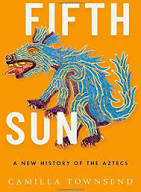
A Revolutionary History of The Aztecs

Ben Ehrenreich at The Guardian:

It is to Townsend’s credit that she does not attempt to be comprehensive. The cosmology of the Aztecs, their calendar, gods and myths, get only glancing treatment here. This is a brief history, and one told subtly and well, primarily through the lives of individuals. First among them is the woman baptised by the Spanish as Marina and known in Nahuatl as Malintzin, re-hispanicised as Malinche – a name that would become a synonym for traitor. Born to a noble lineage of a people unhappily subject to Aztec rule, she was offered as a tribute payment to the Mexica and then sold to the Chontal Maya on the Yucatán coast, one of the first communities to encounter Cortés’s ships. Given away again to the Spaniards, she survived by making herself indispensable, serving as Cortés’s concubine and interpreter as he tortured and slaughtered his way around the continent. Townsend has elsewhere devoted an entire book, Matlintzin’s Choices, to her resurrection. She emerges here as a complex and sympathetic figure, able – as indigenous Mexicans would be for generations to come – to hold many worlds within herself at once.

more here.