
The Letters of the Dead
We read the letters of the dead like helpless gods,
but gods, nonetheless, since we know the dates that follow.
We know what debts will never be repaid.
Which widows will remarry with the corpse still warm.
Poor dead, blindfolded dead,
gullible, fallible, pathetically prudent.
We see the faces people make behind their backs.
We catch the sound of wills being ripped to shreds.
The dead sit before us comically, as if on buttered bread,
or frantically pursue the hats blown from their heads.
Their bad taste, Napoleon, steam, electricity,
their fatal remedies for curable diseases,
their foolish apocalypse according to St. John,
their counterfeit heaven on earth according to Jean Jacques.
We watch the pawns on their chessboards in silence,
even though we see them three squares later.
Everything the dead predicted has turned out completely different.
or a little bit different—which is to say completely different.
The most fervent of them gaze confidently into our eyes:
their calculations tell them that they’ll find perfection there.
by Wistlawa Szymborska
from View with a Grain of Sand
Harcourt Brace, 1995
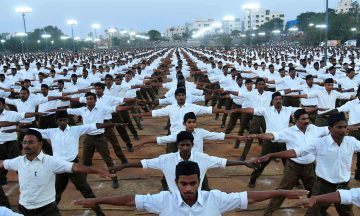 Soon after the violence began, on 5 January, Aamir was standing outside a residence hall in Jawaharlal Nehru University in south Delhi. Aamir, a PhD student, is Muslim, and he asked to be identified only by his first name. He had come to return a book to a classmate when he saw 50 or 60 people approaching the building. They carried metal rods, cricket bats and rocks. One swung a sledgehammer. They were yelling slogans: “Shoot the traitors to the nation!” was a common one. Later, Aamir learned that they had spent the previous half-hour assaulting a gathering of teachers and students down the road. Their faces were masked, but some were still recognisable as members of a Hindu nationalist student group that has become increasingly powerful over the past few years.
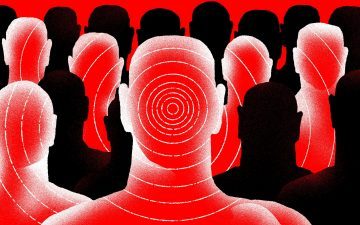 Numbers have a certain mystique: They seem precise, exact, sometimes even beyond doubt. But outside the field of pure mathematics, this reputation rarely is deserved. And when it comes to the coronavirus epidemic, buying into that can be downright dangerous.
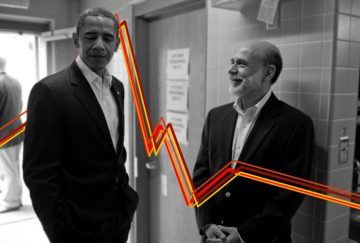 More than a decade after the financial crises of 2008, the shortcomings of the government’s response have become painfully clear.
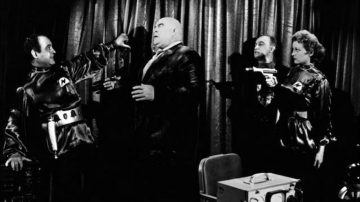 We bad-movie watchers have our own anticriteria, the sorts of badness we prefer. Some of us use the term “bad movies” to mean, simply, films that emerge from a supposedly lowbrow genre, or films that are stylized in the manner we tend to label “camp.” (
 Russia had a Dr. Seuss. Same deal as ours, except his hot decade wasn’t the fifties; it was the twenties. There’s a lot to be said here.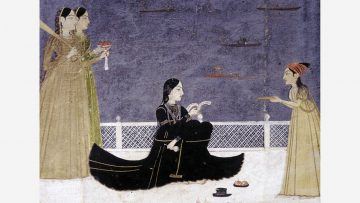
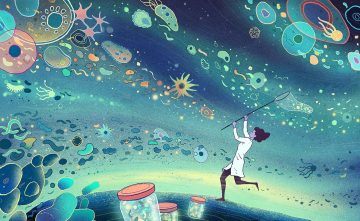 What does a healthy forest look like? A seemingly thriving, verdant wilderness can conceal signs of pollution, disease or invasive species. Only an ecologist can spot problems that could jeopardize the long-term well-being of the entire ecosystem. Microbiome researchers grapple with the same problem. Disruptions to the community of microbes living in the human gut can contribute to the risk and severity of a host of medical conditions. Accordingly, many scientists have become accomplished bacterial naturalists, labouring to catalogue the startling diversity of these commensal communities. Some 500–1,000 bacterial species reside in each person’s intestinal tract, alongside an undetermined number of viruses, fungi and other microbes. Rapid advances in DNA sequencing technology have accelerated the identification of these bacteria, allowing researchers to create ‘field guides’ to the species in the human gut. “We’re starting to get a feeling of who the players are,” says Jeroen Raes, a bioinformatician at VIB, a life-sciences institute in Ghent, Belgium. “But there is still considerable ‘dark matter’.”
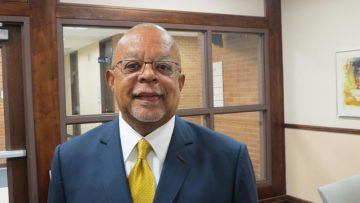 Henry Louis Gates, a renowned and award-winning filmmaker, author of two dozen books, a professor and director of African American studies at Harvard University, has written about race in America. He explores the Civil War, Reconstruction to Jim Crow, the civil rights movement and the state of race relations today. Gates spoke at UNC Charlotte Tuesday for the school’s 2019 Chancellor Speaker Series and at the uptown campus to school donors and city leaders. WFAE’s “All Things Considered” host, Gwendolyn Glenn, caught up with him to talk about race, voting, economics and other issues.
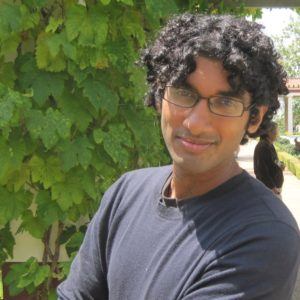 Nations generally want their economies to be rich, robust, and growing. But it’s also important to person to ensure that wealth doesn’t flow only to a few people, but rather that as many people as possible can enjoy the benefits of a healthy economy. As is well known, the best way to balance these interests is a contentious subject. On one side we might find free-market fundamentalists who want to let supply and demand set prices and keep government interference to a minimum, while on the other we might find enthusiasts for very strong government control over all aspects of the economy. Suresh Naidu is an economist who has delved deeply into how economic performance affects and is affected by other notable social factors, from democracy to revolution to slavery. We talk about these, as well as how concentrations of economic power in just a few hands — monopoly and its cousin, monopsony — can distort the best intentions of the free market.
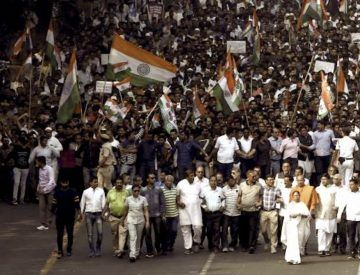 Graveyards in India are, for the most part, Muslim graveyards, because Christians make up a miniscule part of the population, and, as you know, Hindus and most other communities cremate their dead. The Muslim graveyard, the kabristan, has always loomed large in the imagination and rhetoric of Hindu nationalists. “Mussalman ka ek hi sthan, kabristan ya Pakistan!”—Only one place for the Mussalman, the graveyard or Pakistan—is among the more frequent war cries of the murderous, sword-wielding militias and vigilante mobs that have overrun India’s streets.
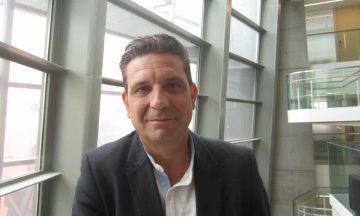 A third of the way through this absorbing and engagingly written book, Albert Costa describes a family meal: “The father speaks Spanish with his wife and his son, but uses Catalan with his daughter. The daughter in turn speaks Catalan with her father but Spanish with the rest of the family, including the grandmother, who only speaks Spanish though she understands Catalan.” It’s what Costa calls “orderly mixing”, and, depending on which restaurants you visit, a common enough situation: everyone is bilingual here, but the language used changes according to who it is directed at. Given that everyone at the table understands both languages, would it not be easier and less confusing if everyone just chose one language and stuck to it? That sounds logical, but the bilingual mind doesn’t work that way. If you do not believe it, Costa suggests “having a conversation with a friend in the language you do not usually use and see how far you get”.
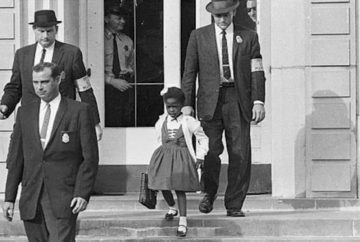 The footprints of a child are small but on November 14, 1960, six-year-old Ruby Bridges walked with purpose as she became the first African American student to integrate an elementary school in the South. This venture leads to the advancement of the Civil Rights Movement and created a pathway for further integration across the southern parts of the U.S.
 When Darwin wrote the Origin of Species, he famously closed the book with the provocative promise that “light will be thrown on the origin of man and his history.”