
Emily Tamkin in New Statesman:
 Since 1964, the presidential candidate who has won Florida and its 29 electoral college votes has also won the White House in every election except 1992. In that time, the constant has not been whether Florida goes for Republicans or Democrats – both parties have been in power in the past three decades – but that the vote has been close. In 2016, Donald Trump won with 48.6 per cent of the vote compared to Hillary Clinton’s 47.4 percent. In 2008, Barack Obama had 51 percent, compared to John McCain’s 48.2. And no one, of course, can forget the 2000 election, which came down to 537 votes out of six million cast (and a Supreme Court decision that eventually left George W Bush the winner). But why does the White House tend to swing in the same direction as this state? And why is the vote always so tight? What is it that, every four years, keeps our anxious eyes pointed towards the Sunshine State?
…Crucially, this isn’t also just another close presidential election in Florida. It’s happening during a pandemic in which, particularly in Florida, the death toll is still rising at time of writing. The need many will have to vote safely by mail therefore adds a logistical component to the concern about voter representation. “How many people are going to mail their ballot the day before?” Robinson asked, noting that her group is working to let people know that they need to get their votes in on time. “There could be a lot of ballots that aren’t counted.” Trump has generally tried to discredit mail-in voting, but tweeted that mail-in voting was safe in Florida, perhaps recognising that he needs the votes of Florida’s ageing population.
To Fernand Amandi, managing partner at leading multi-ethnic and multi-lingual public opinion research firm Bendixen & Amandi, Trump’s narrative that mail-in voting is illegitimate is the reason that, this time, Democrats will carry the state. “Like cult members, a lot of [Trump] supporters have said we’re not going to vote by mail,” Amandi said. “Just because Republicans aren’t going to vote by mail doesn’t mean millions of Democrats and independents aren’t going to do it.”
More here.

 Goran Therborn in the New Left Review:
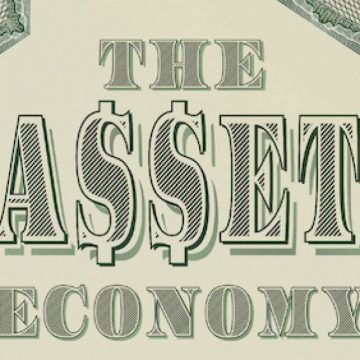 Lisa Adkins, Melinda Cooper, Martijn Konings in the LA Review of Books:
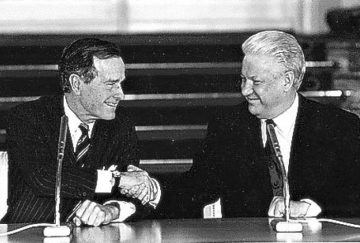 Edward Fishman in the Boston Review:
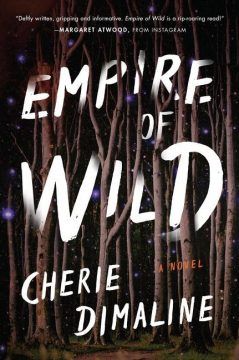 Roanhorse said she started out writing “Tolkien knockoffs about white farm boys going on journeys” because she figured that’s what epic fantasy was supposed to be. After deciding to feature a Native woman as the hero, in 2018 she released “
 Uncoupling healthcare assets from healthcare services: Using technology and next-generation logistics, many healthcare services will be uncoupled from their facility-based operations. The explosion of telemedicine over the past 60 days, substituting for the legacy in-person physician visit, points to a future in which the home is the optimal site of medical care.
 Routinely hailed as one of the most
 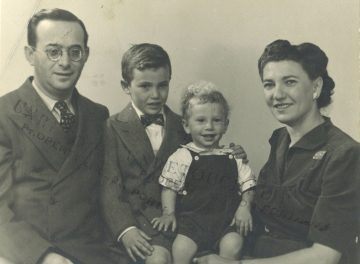 My parents were married at six o’clock on Sunday evening, October 25, 1936, at the Quincy Manor in the Bedford-Stuyvesant section of Brooklyn, and a week or so later, they began clipping coupons from the front page of The New York Post, one coupon a day, and mailing them to the Post, twenty-four coupons at a time, which coupons, along with ninety-three cents, brought them four volumes of a twenty-volume set of The Complete Works of Charles Dickens, a set that, with full-page illustrations, was printed from plates Harper & Brothers had used for older, more expensive sets. The Post’s promotion began in January 1936 and expired on May 16, 1938, two weeks before I was born. And when, eighty-two years later, in the week of June 9, 2020—a week that marked the 150th anniversary of Dickens’s death—I was isolated in my New York City apartment due to the Covid-19 lockdown, it occurred to me that this might be a good time to do what I’d often thought of doing: reread all of Dickens.
 In our latest study, published in