https://www.youtube.com/watch?v=bCalqwsicls

https://www.youtube.com/watch?v=bCalqwsicls
Sam Leith at The Spectator:
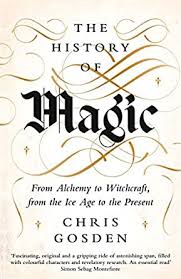 On this week’s books podcast, my guess is Oxford University’s Professor of European Archaeology, Chris Gosden. Chris’s new book The History of Magic: From Alchemy to Witchcraft, From the Ice Age to the Present opens up what he sees as a side of human history that has been occluded by propaganda from science and religion. Accordingly, he delves back to evidence from the earliest human settlements all over the world to learn about our magical past – one thread in what he calls the ‘triple-helix’ of our cultural history. He tells me why John Dee got a bad rap, where magic wands came from – and why, unusually as an academic, he argues that magic isn’t just an anthropological curiosity but might, in fact, have something useful to teach us.
more here.
Namwali Serpell at the NYRB:
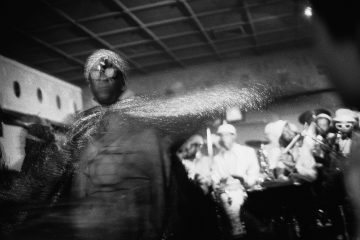
Pictures of Sun Ra often suggest chaotic hybridity: priestly futuristic costumes and sets, ancient Egypt and the planet Saturn forming a palimpsest of past and future utopias. His sound synthesized big band, swing, hard bop, reggae, Afropop, electronic music, and Walt Disney musicals. His references—expressed in his lyrics, poetry, and pamphlets—showcased this eclecticism too: Kabbalah, gnosticism, freemasonry, pan-Africanism, Zen. When he taught a course at the University of California, Berkeley in 1971, his syllabus included The Egyptian Book of the Dead; the theosophical works of Madame Blavatsky, the nineteenth-century Russian medium; Henry Dumas, a brilliant poet gunned down by New York City Transit Police in 1968. He often cited George G.M. James’s Stolen Legacy (1954), which claimed that Greek philosophy had filched its ideas from Egyptian mythology.
In Sun Ra’s various writings and interviews, he always maintained that there was a metaphysical basis for what he called his “equations”: non sequitur chains of koans and runes, of numerology and etymology.
more here.
Stan Carey in Sentence First:
 My limited knowledge of Scots and Scottish English when I was young was based on caricatures in comics, particularly ‘Hot-Shot Hamish’. It was not until later that visits to Scotland, friendships with Scottish people, and books by the likes of James Kelman and Irvine Welsh gave me a proper flavour of the richness of Scots vocabulary and grammar.
Scots is a language with Germanic roots and a complicated political history. Linguistically it has been described as a continuum spanning Broad Scots and Standard Scottish English, with considerable variety in between. A common misconception is dispatched on the Spellin an Grammar page of Scots Wikipedia: ‘Scots isna juist Inglis written wi orra wirds an spellins. It haes its ain grammar an aw.’
It is wirds that are showcased in Cauld Blasts and Clishmaclavers, a new book by Robin A. Crawford, whose publisher, Elliott & Thompson, sent me a copy. The book is a marvellous compendium of a thousand Scottish words, from a’ (aa, aw) ‘all’ to yowe trummle ‘unseasonably cold weather in early summer’ – cold enough to make a yowe (ewe) trummle (tremble).
More here.
John Horgan in Scientific American:
Horgan: Neuroscientist Christof Koch has suggested that we get brain implants to keep up with machines. Does that strike you as a good idea?
 Schneider: It depends upon the larger social and political setting. Several large research projects are currently trying to put AI inside the brain and peripheral nervous system. They aim to hook you to the cloud without the intermediary of a keyboard. For corporations doing this, such as Neuralink, Facebook and Kernel, your brain and body is an arena for future profit. Without proper legislative guardrails, your thoughts and biometric data could be sold to the highest bidder, and authoritarian dictatorships will have the ultimate mind control device. So, privacy safeguards are essential.
I have other worries as well.
More here.
Agnes Callard in the New York Times:
 The Greek philosopher Aristotle did not merely condone slavery, he defended it; he did not merely defend it, but defended it as beneficial to the slave. His view was that some people are, by nature, unable to pursue their own good, and best suited to be “living tools” for use by other people: “The slave is a part of the master, a living but separated part of his bodily frame.”
Aristotle’s anti-liberalism does not stop there. He believed that women were incapable of authoritative decision making. And he decreed that manual laborers, despite being neither slaves nor women, were nonetheless prohibited from citizenship or education in his ideal city.
Of course Aristotle is not alone: Kant and Hume made racist comments, Frege made anti-Semitic ones, and Wittgenstein was bracingly upfront about his sexism. Should readers set aside or ignore such remarks, focusing attention on valuable ideas to be found elsewhere in their work?
More here.
We weren’t there when it happened.
We were on our way to another city,
another life,
under a changing sky that moved with us.
We crossed fields of green then yellow,
towns of suspicious people and impassive crows,
and not once did we miss our home
or feel nostalgia for the past.
That’s how the journey was:
at night silence,
in the morning mist.
Once I found a tin button in my pocket
and played at holding it under the sun,
throwing glimmerings onto the tall crops.
Later it was a used coin
and we had free passage at every checkpoint.
The plains of Europe are our witnesses.
They also know that something happened,
although we never saw it.
We were on our way to another country,
another life,
with neither flamboyant luggage
nor room for memories.
Everything opened before us,
now silence and later mist.
by Jordi Doce
from: We were not there
publisher: Shearsman, Swindon, 2019
translation: 2019, Lawrence Schimel
Original Spanish after “Read More”
.
Read more »
Ruth Williams in The Scientist:
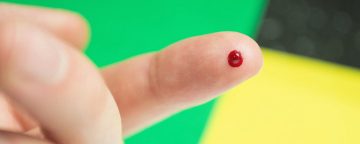 Studies of blood samples from four rheumatoid arthritis patients collected over years has led to the discovery of an RNA profile that predicts an imminent flare-up of symptoms, according to a report in the New England Journal of Medicine today (July 15). The transcriptional signature also indicates that a type of fibroblast previously linked to the disease becomes enriched in the blood before migrating to the joints to wreak havoc. “The work is clearly a breakthrough in how patients with [rheumatoid arthritis] might be managed in the future,” Lawrence Steinman of Stanford University writes in an email to The Scientist. If such an RNA test were commercially developed, then “via a home test involving a mere finger stick, markers that precede a flare [would be] identified. This would allow the individual to consult with their physician and take necessary measures to avert such a flare,” continues Steinman, who studies autoimmune diseases but was not involved in the study.
Rheumatoid arthritis, in which the body’s immune system attacks the joints to cause swelling, stiffness, and pain, exhibits a waxing and waning of symptoms, as do many other autoimmune diseases. Even with treatment to suppress certain immune cells or cytokines, it is common for a patient to experience a couple of relapses each year, says study author Dana Orange, a clinical rheumatologist and researcher at Rockefeller University in the laboratory of Robert Darnell. Relapses in the disease are debilitating and can make life hard to plan, explains Orange. Patients “just don’t know when they are going to be blind-sided and incapacitated with a flare,” she says. Orange, Darnell, and colleagues therefore sought a way to predict such occurrences. Being a dynamic molecule, RNA “lends itself to profiling changes over time,” says Darnell, whose research focuses on RNA regulation in autoimmune and other diseases. “What we wanted to do,” he says, “was to design a study where we could have the RNA before a patient gets sick with a flare . . . to try and get signatures of what might be the antecedents.”
To this end the team recruited patients, via an ad in a newspaper, who were willing to collect tiny samples of their own blood—a few drops via a finger stick—each week and keep diaries of their symptoms. The patients also had clinical evaluations once a month. The team then sequenced the messenger RNA content of a selection of the blood samples—those representing baseline conditions and the weeks immediately prior to, during, and after a flare—to see whether and how the transcriptomes varied with the waxing and waning of symptoms. A total of 162 samples, taken from four patients over the course of one to four years, were sequenced and analyzed computationally. When they looked at the weeks preceding a flare up, “what jumped out was that something changed from the baseline,” says Darnell. Two weeks prior to a relapse, the team detected a change in the RNA profile that was consistent with an increased abundance of immune cells. “That gave us a hint that we were on the right track and that was exciting,” says Darnell, “but the big excitement came when we were looking at week -1.”
“There was a unique set of genes that were unexpected—they had signatures of stem cells and mesenchymal cells,” Darnell continues, and “it was not clear exactly what to make of that.”
More here.
Peter Wehner in The Atlantic:
 The most revealing answer from Donald Trump’s interview with Fox News Channel’s Chris Wallace came in response not to the toughest question posed by Wallace, but to the easiest. At the conclusion of the interview, Wallace asked Trump how he will regard his years as president. “I think I was very unfairly treated,” Trump responded. “From before I even won, I was under investigation by a bunch of thieves, crooks. It was an illegal investigation.” When Wallace interrupted, trying to get Trump to focus on the positive achievements of his presidency—“What about the good parts, sir?”—Trump brushed the question aside, responding, “Russia, Russia, Russia.” The president then complained about the Flynn investigation, the “Russia hoax,” the “Mueller scam,” and the recusal by his then–attorney general, Jeff Sessions. (“Now I feel good because he lost overwhelmingly in the great state of Alabama,” Trump said about the first senator to endorse him in the 2016 Republican primary.)
Donald Trump is a psychologically broken, embittered, and deeply unhappy man. He is so gripped by his grievances, such a prisoner of his resentments, that even the most benevolent question from an interviewer—what good parts of your presidency would you like to be remembered for?—triggered a gusher of discontent. But the president still wasn’t done. “Here’s the bottom line,” he said. “I’ve been very unfairly treated, and I don’t say that as paranoid. I’ve been very—everybody says it. It’s going to be interesting to see what happens. But there was tremendous evidence right now as to how unfairly treated I was. President Obama and Biden spied on my campaign. It’s never happened in history. If it were the other way around, the people would be in jail for 50 years right now.”
Just in case his bitterness wasn’t coming through clearly enough, the president added this: “That would be Comey, that would be Brennan, that would be all of this—the two lovers, Strzok and Page, they would be in jail now for many, many years. They would be in jail; it would’ve started two years ago, and they’d be there for 50 years. The fact is, they illegally spied on my campaign. Let’s see what happens. Despite that, I did more than any president in history in the first three and a half years.”
With that, the interview ended.
More here. (Note: Thanks to Syed Tasnim Raza)
Lee Upton in Agni:
 For several weeks I’ve been hunting up works by the English writer Sylvia Townsend Warner. Her long career, dedication, and daring—her uncompromising will to lead a life of her own, writing fiction that can’t simply be cornered by the term “eccentric,” crafting in her eighties some of the strangest stories ever to appear in The New Yorker—she’s one of the spine-stiffening writers. She makes a perfect quarantine companion.
I don’t think it’s uncommon for the world to cooperate while you’re working intensely on a long piece of fiction. Slivers of what you imagined may emerge right in front of you, ready to be observed. You keep seeing a character’s name. Or a stranger looks like a character you created. Or a word in the story’s title keeps showing up when you’re reading online. That happens too with the writers who emerge for us. I’m at a point where I especially need Warner’s sentences with all their power and quirky mischief. I need, as well, the imaginative company of a writer with a long career, who took chances at each bend along the way.
More here.
Sean Carroll in Preposterous Universe:
 Someday, most likely, we will encounter life that is not as we know it. We might find it elsewhere in the universe, we might find it right here on Earth, or we might make it ourselves in a lab. Will we know it when we see it? “Life” isn’t a simple unified concept, but rather a collection of a number of life-like properties. I talk with astrobiologist Stuart Bartlett, who (in collaboration with Michael Wong) has proposed a new way of thinking about life based on four pillars: dissipation, autocatalysis, homeostasis, and learning. Their framework may or may not become the standard picture, but it provides a useful way of thinking about what we expect life to be.
More here.
Matt Taibbi in Substack:
 Conservatives once tried to legislate what went on in your bedroom; now it’s the left that obsesses over sexual codicils, not just for the bedroom but everywhere. Right-wingers from time to time made headlines campaigning against everything from The Last Temptation of Christ to “Fuck the Police,” though we laughed at the idea that Ice Cube made cops literally unsafe, and it was understood an artist had to do something fairly ambitious, like piss on a crucifix in public, to get conservative protesters off their couches.
Today Matt Yglesias signing a group letter with Noam Chomsky is considered threatening. Moreover a lot less than booking a Robert Mapplethorpe exhibit can get you in the soup – a headline, a retweet, even likes are costing people jobs. Imagine how many movies Milos Forman would have had to make if Jerry Falwell had been able to get people fired this easily.
This is separate from the Democratic Party “moving right,” or in the case of issues like war, financial deregulation, and surveillance, having always been in lockstep with the right. This is about a change in the personality profile of the party’s most animated, engaged followers.
More here.
Lorna Knowles Blake at The Hudson Review:
 In the Lateness of the World[1] is Carolyn Forché’s first collection of poems in seventeen years. Over the past four decades, Forché’s work has grown to exemplify what she describes as “poetry of witness.” In her 1993 anthology Against Forgetting: Twentieth-Century Poetry of Witness, Forché argued against “personal” or “political” aims for poems, striving instead to present poets who persisted in writing under the most extreme social duress in conditions of war, exile and imprisonment.
This new collection continues Forché’s journey through histories both personal and political. Working in many modes (elegy, lament, lists, landscapes, prose pieces and various stanza patterns), Forché creates a sense of end times, of a speaker sifting through various bewildering events.
more here.
Tash Aw at The Paris Review:
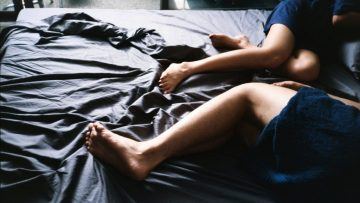 Anocha Suwichakornpong’s second feature-length film, By the Time it Gets Dark, is ostensibly a story about the brutal crackdown on student demonstrators at Thammasat University in Bangkok in 1976—the year of the filmmaker’s birth, forty years before the film was released—but its unpredictable, twisting narrative doubles back on itself in such strange ways that it becomes an interrogation of collective memory, a questioning of the role of history in contemporary Southeast Asia. The premise appears simple: two women arrive at an isolated house in the countryside, relieved to be there yet not entirely at ease with each other as they admire the spectacular views of the dry northern landscape. They have the clothes and demeanor of Bangkok dwellers, and we soon learn that they are there to tell the story of the Thammasat University killings. Taew, the older woman, was a leading figure in the student protests of the time, and has since become a celebrated writer. Ann, the younger, is a filmmaker, and spends the following days organizing oddly formal interviews with Taew, recorded on her camera, trying to piece together enough information to write a screenplay for a film based on the killings.
more here.
I sit before the TV screen
with remote control in hand.
I want it to stay this way.
This dark, quiet room
without a world in it.
This nothing, this sweet
nothing. The fire truck
toy on the shelf beneath the TV,
look how it saves
no one. In this room
there is nothing
burning. Dear God, it is
possible. You are the one
with wings. Shelter us.
Let something have been fixed today:
The deal among the nations signed,
the guns, all of them, taken away,
a woman believed,
a man contrite. A border
covered in dust. God,
I need to know what happened
to those who tried to cross.
What happened after the storm
and earthquake and fire.
I can’t be everywhere at once,
but you can. How can I convince you
we are worthy of miracles?
How much longer can I delay
the inevitable knowing,
the daily ritual of witness?
At least bear it with me,
dear God. Come sit
on the couch, put your feet up,
I’m making tea. Tell me
how this will end.
Tell me if there is a chance.
Or maybe we can bargain for peace?
Trade for redemption?
Give me something,
anything, before I let
the messengers into my room.
I will not look away.
Promise me
you won’t either.
by Hila Ratzabi
from Narrative Magazine
Felipe De Brigard in aeon:
 The other day I caught myself reminiscing about high school with a kind of sadness and longing that can only be described as nostalgia. I felt imbued with a sense of wanting to go back in time and re-experience my classroom, the gym, the long hallways. Such bouts of nostalgia are all too common, but this case was striking because there is something I know for sure: I hated high school. I used to have nightmares, right before graduation, about having to redo it all, and would wake up in sweat and agony. I would never, ever like to go back to high school. So why did I feel nostalgia about a period I wouldn’t like to relive? The answer, as it turns out, requires we rethink our traditional idea of nostalgia.
Coined by the Swiss physician Johannes Hofer in 1688, ‘nostalgia’ referred to a medical condition – homesickness – characterised by an incapacitating longing for one’s motherland. Hofer favoured the term because it combined two essential features of the illness: the desire to return home (nostos) and the pain (algos) of being unable to do so. Nostalgia’s symptomatology was imprecise – it included rumination, melancholia, insomnia, anxiety and lack of appetite – and was thought to affect primarily soldiers and sailors. Physicians also disagreed about its cause. Hofer thought that nostalgia was caused by nerve vibrations where traces of ideas of the motherland ‘still cling’, whereas others, noticing that it was found predominantly among Swiss soldiers fighting at lower altitudes, proposed instead that nostalgia was caused by changes in atmospheric pressure, or eardrum damage from the clanging of Swiss cowbells. Once nostalgia was identified among soldiers from various nationalities, the idea that it was geographically specific was abandoned.
By the early 20th century, nostalgia was considered a psychiatric rather than neurological illness – a variant of melancholia. Within the psychoanalytic tradition, the object of nostalgia – ie, what the nostalgic state is about – was dissociated from its cause. Nostalgia can manifest as a desire to return home, but – according to psychoanalysts – it is actually caused by the traumatic experience of being removed from one’s mother at birth. This account began to be questioned in the 1940s, with nostalgia once again linked to homesickness.
More here.
Giorgia Guglielmi in Nature:
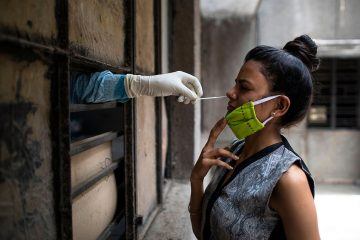 The timing couldn’t have been worse. In March, just as Thailand’s coronavirus outbreak began to ramp up, three hospitals in Bangkok announced that they had suspended testing for the virus because they had run out of reagents. Thai researchers rushed to help the country’s clinical laboratories meet the demand. Looking for affordable and easy-to-use tests, systems biologist Chayasith (Tao) Uttamapinant at the Vidyasirimedhi Institute of Science and Technology in Rayong reached out to an old acquaintance: CRISPR co-discoverer Feng Zhang, who had been developing an assay for the coronavirus inspired by the gene-editing technology.
Within days, Uttamapinant received starter kits from Zhang’s lab at the Broad Institute of MIT and Harvard in Cambridge, Massachusetts, and tested them on samples from a hospital in Bangkok. “The kits are quite cheap and work well,” says Uttamapinant, who hopes to get the test approved for clinical use by the end of the year. He has teamed up with biochemists in Thailand to produce the testing reagents locally, with Zhang on standby for support. “This effort to produce everything locally will have a lasting impact on infectious-disease monitoring and diagnosis in this part of the globe,” says Uttamapinant. Epidemiologists say mass testing for SARS-CoV-2 — requiring millions of tests per country per week — is the most practical way out of the current crisis. It allows officials to isolate those who test positive, limit the spread of disease and help to determine when it is safe to relax restrictions.
But countries are struggling to ramp up testing. One reason is that the standard test to detect SARS-CoV-2 — based on a mainstay lab technique called the reverse-transcription polymerase chain reaction, or RT-PCR — requires trained personnel, specific chemical supplies and expensive instruments that take hours to provide results and are often available only in labs that provide routine, centralized services. This limits the number of tests that can be done, especially in developing countries. Even in wealthy regions such as the United States, providers have reported a severe shortage of test kits and required materials — from nose swabs to chemical reagents — because of supply-chain problems. Scaling up reliable tests quickly has proved challenging, too: early RT-PCR tests developed by the US Centers for Disease Control and Prevention malfunctioned, for example, leading to a series of delays.
Research groups around the world are now devising tests that go beyond PCR.
More here.