
Richard Brody at The New Yorker:
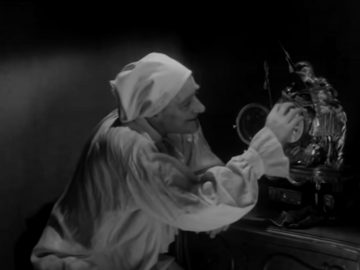 For that matter, Kant’s rigorous discipline turns out to be contagious. Though he was unmarried, he didn’t live alone—he had a household and spent much time interacting with his friend and unofficial majordomo Wasianski (played by André Wilms) and the manservant Lampe (Roland Amstutz)—and much of the movie’s action is centered on Kant’s obsessional domestic routine and the petty agonies of its perturbations. (The script, by Collin and André Scala, is loosely based on the memoirs of the real-life Wasianski, as retold by Thomas De Quincey.) Each morning, Lampe awakens Kant with the same phrase (“Herr Professor, it’s time!”)—and undoes the cord leading from the bed to the doorknob in case the philosopher should awaken during the night and need to get out in the dark. He serves Kant a pot of coffee with a similarly fixed motto (“Herr Professor, here is the coffee!”) and—after the philosopher takes three quick slugs of it with the same three brusque gestures—hands him his pipe for a smoke and, soon thereafter, the newspaper. When the coffee is delayed, Kant vents his anger with derisive twists of metaphysical irony regarding deferred happiness and the comforts of death.
more here.
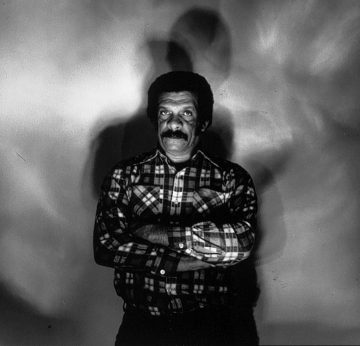
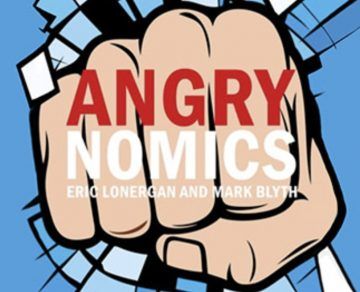 Chris Dillow writes perhaps the most interesting
 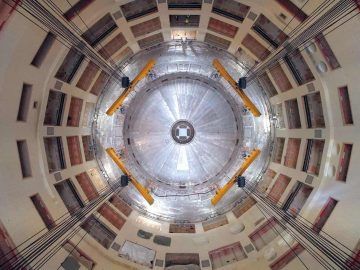 The world’s largest nuclear fusion project began its five-year assembly phase on Tuesday in southern
  We live in a time of personal timorousness and collective mercilessness.
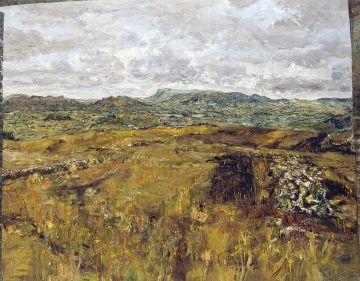 For the poet Seamus Heaney—a kind of laureate of the bog—the landscape always had a “strange assuaging effect . . . with associations reaching back into early childhood.” The bog was liberty and community, as well as labor. This ambiguous, borderless terrain—neither living nor dead, wet nor dry, public nor private—has never been politically neutral. Ireland’s bogs were often viewed by city dwellers as fundamentally moribund: economic and cultural voids, the refuge of brigands, outcasts, and hermits, synonymous with a semi-bestial peasantry—“miserable and half-starved specters,” according to one nineteenth-century account. In folklore, bogs are the lairs of the shape-shifting púca—an 1828 study of fairy mythology called them “wicked-minded, black-looking, bad things”—while in Edna O’Brien’s classic 1960 novel The Country Girls, the protagonists are contemptuously dismissed as “fresh from the bogs.”
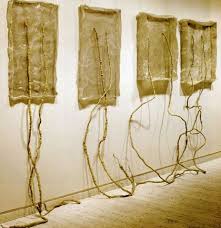 The idea of negation was central to the tensions Hesse created and mediated in her sculptures. One of her favourite descriptions of them was ‘chaos structured as non-chaos’: it captures the distinctive look of her work and its commitment to disruptive repetition. Her graph paper drawings put the contradiction to work, the essential orderliness of a grid providing her with a structure for her chaos. When she chose a green-ruled variety as the matrix for a tightly inked pattern, it was so that the opposition between line and circle, the harmony of repeated shapes and the freeform, would seem almost to hum on the page. This piece is one among hundreds of drawings included in Eva Hesse Oberlin, a travelling exhibition distilled from the enormous collection of Hesse’s works and papers (some 1500 items) housed at the Allen Memorial Art Museum at Oberlin College in Ohio. Hesse wasn’t educated at Oberlin, but at Yale: it was her elder sister, Helen, who chose Oberlin for reasons that, many years later, seem both savvy and poignant.
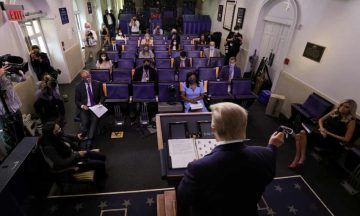 During the past few years of Donald Trump’s deranged presidency, if there is one writer I turn to it is Masha Gessen, whose piercing clarity is gemlike and refusal to equivocate precious. Their ability – Gessen is non–binary/trans and uses they/them pronouns – is surely to do with their Russian American background. As a journalist, Gessen has covered Russia, Hungary and Israel, so is not experiencing illiberalism for the first time. Instead of a weariness however, what is present in the book is a stunning capacity to connect the dots in a way that few can.
 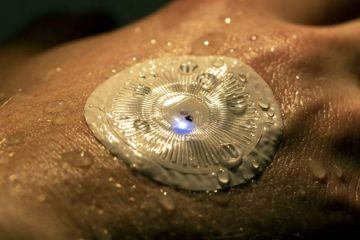 Wearable technologies offer a convenient means of monitoring many physiological features, presenting a multitude of medical solutions. Not only are these devices easy for the consumer to use, but they offer real-time data for physicians to analyze as well. From the
 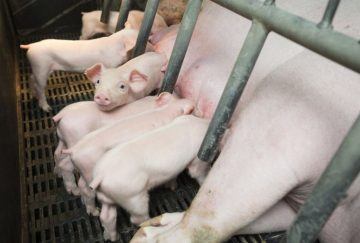 “Never look a hog in the eyes,” an experienced hand told anthropologist Alex Blanchette as they prepared to artificially inseminate sows. “If the animals think you are looking at them, they will freeze.” Like a living, inverted panopticon, hundreds of pigs would watch their handlers from their pens with a petrifying gaze. “They have almost 360 degrees vision,” a former worker recollected. “Sometimes they look like they are not looking at you. . . . but if you look at their eyes, you will see that they are always following you.”
 Despite occasional and important disagreements, most people are in rough agreement about what it means to be moral, to do the right thing. There’s much less agreement about why we should be moral, or even what kind of answer to that question could be convincing. Philosopher Russ Shafer-Landau is one of the leading proponents of
 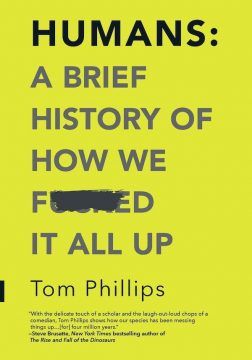 THE WORLD IS LITTERED with the consequences of monumental human screw-ups — environmental, economic, political, social, and now, as we deal with a pandemic, health-related. You might even claim, as Tom Phillips does in Humans: A Brief History of How We F*cked It All Up, that these screw-ups are a defining characteristic of humankind. There’s the everyday type that you and I commit — say, accidentally shattering your phone’s screen on the sidewalk — and then there’s the scaled-up kind — say, killing a river or triggering a famine that results in millions of deaths. In his book, Phillips walks us through tens of thousands of years of human-caused disasters, the results of systematic mistakes that people seem unwilling or unable to learn from.
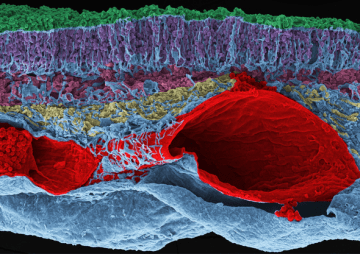 In 1968 an exhibit entitled Cybernetic Serendipity: The Computer and the Arts was held at the Institute of Contemporary Arts in London. The first major event of its kind, Cybernetic Serendipity’s aim was to “
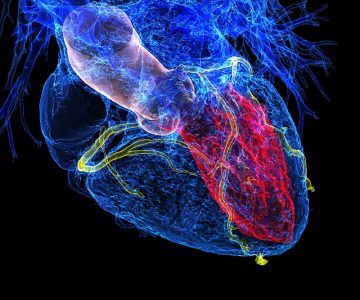 Current methods for predicting heart attacks are woefully outdated, says Cheerag Shirodaria, a cardiologist at the Oxford University Hospitals NHS Foundation Trust, UK. “We basically look at a patient’s age, obesity and whether they have diabetes. The most sophisticated we get is measuring their cholesterol,” he says. Heart attacks are often caused when fatty accumulations inside arteries, known as plaques, result in the narrowing of blood vessels. These plaques then rupture and form blood clots. Age, being overweight or obese and having diabetes are all risk factors, and people in at-risk groups are closely monitored. “But 50% of heart attacks are in people without narrowing, and they’re being missed by current tests,” he says. A desire to drag prognosis into the modern era is what pushed Shirodaria and a group of like-minded cardiologists to set up Caristo Diagnostics. Rather than blood-vessel narrowing, the team focuses on another driver of plaque ruptures — vascular inflammation. The company uses algorithms to analyse information that until now has been hidden in the noise of computed tomography (CT) scans. This enables it to assess inflammation and calculate the likelihood that a person will have a heart attack in a given time period.