
Vidya Krishnan in The Atlantic:
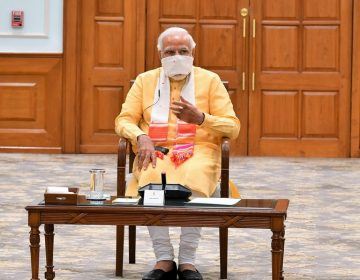 Soon after the Bollywood superstar Amitabh Bachchan tweeted that he had tested positive for COVID-19 and been admitted to a Mumbai hospital, the authorities declared his palatial residence in India’s business capital a “containment zone,” and several members of the Bachchan family were announced to have also tested positive. Bachchan is one of the world’s most recognizable actors, a celebrity with no peer in India, and his health was an issue of national concern. Ultimately, his case was a light one, and he was eventually discharged, allowed to quarantine at home.
Yet while the narrow facts of his case appear straightforward, the episode nevertheless spotlights a much broader problem in India: Its coronavirus caseload appears to only be worsening, hamstrung by decades of underinvestment in public health, poor medical infrastructure, and, more recently, a troubling official tolerance of pseudoscience, as well as a growing politicization of health care.
The mere fact that Bachchan tested positive—that he was tested at all—will focus minds in India on the coronavirus pandemic, which has been slowly but surely gathering pace in the country. More than 1.8 million people have so far tested positive, upwards of 48,000 are known to have died of COVID-19, and infections show little sign of abating. Arguably India’s most recognizable celebrity, Bachchan has starred in movies for decades, as have his wife, son, and daughter-in-law, and his high-profile announcement may spur many who were skeptical of getting tested to do so (if they are able) and to take greater precautions: He is quite literally cinematic royalty, some combination of Tom Hanks and Prince Charles (both of whose diagnoses made the virus very real for Americans and Britons, respectively).
More here.
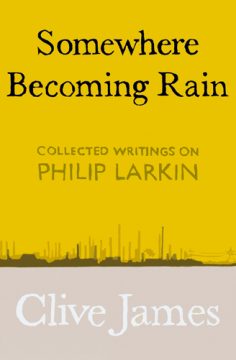 This, Clive James’s final book, is a collection of his writings on Larkin and his work. James takes his title from the final words of Larkin’s ‘The Whitsun Weddings’ (1959). The ninety four pages, which include copies of one manuscript letter and two typed letters from Larkin to James, don’t offer very much book for your money, but you do get Clive James, who’s always good value. His explanation of why Jack Nicholson is the only Hollywood actor appropriate to play Larkin onscreen justifies the price of admission.
 In July 1925, Margaret Mead, a doctoral student at Columbia University, set off on a cross-country train journey with a young faculty member, Ruth Benedict. Mead was bound for the west coast and then American Samoa, her first fieldwork expedition as a junior anthropologist. Benedict was stopping in New Mexico to study myth and ritual in the Zuni Pueblo. The journey took them through Ohio to Illinois, across the prairie, then south toward the deserts. It was the longest the two of them had ever spent together, certainly the longest without their husbands in tow.
 Recently, researchers at MIT published a study that looks into autonomous vehicle mobility, employment and policy. The research found that self-driving vehicles will happen later than sooner.
 It is becoming clear that many of our nation’s children could be attending school from home for this school year and possibly longer. If educators and families aren’t empowered with the right support and tools, this will evolve from an education crisis to an education catastrophe.
 Since 1964, the presidential candidate who has won Florida and its 29 electoral college votes has also won the White House in every election except 1992. In that time, the constant has not been whether Florida goes for Republicans or Democrats – both parties have been in power in the past three decades – but that the vote has been close. In 2016, Donald Trump won with 48.6 per cent of the vote compared to Hillary Clinton’s 47.4 percent. In 2008, Barack Obama had 51 percent, compared to John McCain’s 48.2. And no one, of course, can forget the 2000 election, which
 Goran Therborn in the New Left Review:
 Lisa Adkins, Melinda Cooper, Martijn Konings in the LA Review of Books:
 Edward Fishman in the Boston Review:
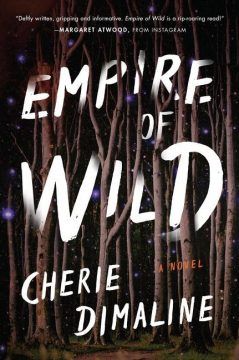 Roanhorse said she started out writing “Tolkien knockoffs about white farm boys going on journeys” because she figured that’s what epic fantasy was supposed to be. After deciding to feature a Native woman as the hero, in 2018 she released “