
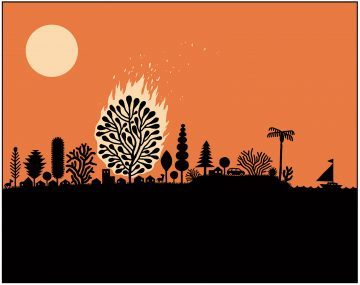
Bill McKibben in the New York Review of Books:
So now we have some sense of what it’s like: a full-on global-scale crisis, one that disrupts everything. Normal life—shopping for food, holding a wedding, going to work, seeing your parents—shifts dramatically. The world feels different, with every assumption about safety and predictability upended. Will you have a job? Will you die? Will you ever ride a subway again, or take a plane? It’s unlike anything we’ve ever seen.
The upheaval that has been caused by Covid-19 is also very much a harbinger of global warming. Because humans have fundamentally altered the physical workings of planet Earth, this is going to be a century of crises, many of them more dangerous than what we’re living through now. The main question is whether we’ll be able to hold the rise in temperature to a point where we can, at great expense and suffering, deal with those crises coherently, or whether they will overwhelm the coping abilities of our civilization. The latter is a distinct possibility, as Mark Lynas’s new book, Our Final Warning, makes painfully clear.
Lynas is a British journalist and activist, and in 2007, in the run-up to the Copenhagen climate conference, he published a book titled Six Degrees: Our Future on a Hotter Planet. His new volume echoes that earlier work, which was by no means cheerful. But because scientists have spent the last decade dramatically increasing understanding of the Earth’s systems, and because our societies wasted that decade by pouring ever more carbon into the atmosphere, this book—impeccably sourced and careful to hew to the wide body of published research—is far, far darker.
More here.
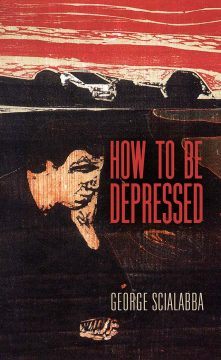 Gerald Russello in LA Review of Books:
 Felicia Wong in Boston Review:
 An interview with Laleh Khalili in Phenomenal World:
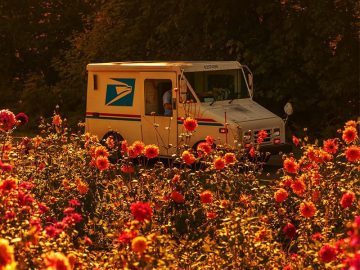 From 1753 to 1774, as he oversaw Britain’s colonial mail service, Benjamin Franklin improved a primitive courier system connecting the 13 fragmented colonies into a more efficient organization that sped deliveries between Philadelphia and New York City to a mere 33 hours. Franklin’s travels along the post roads would inspire his revolutionary vision for how a new nation could thrive independent of Britain. But not even he imagined the pivotal role that the post would play in creating the Republic. By the early 1770s, Franklin’s fellow patriots had organized underground networks, the Committees of Correspondence and then the Constitutional Post, that enabled the founders to talk treason under the British radar. In 1775, before the Declaration of Independence was even signed, the Continental Congress turned the Constitutional Post into the Post Office of the United States, whose operations became the first—and for many citizens, the most consequential—function of the new government itself.
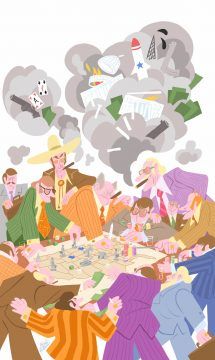 It used to be called the New World. Now it’s run by a man who wants to make it great “again.”
 When I was a teenager I read James Thurber’s Secret Life of Walter Mitty. I fell in love with this story of a meek, middle-aged Connecticut man whose daydreams afford him temporary escape from a dreary shopping trip with his overbearing wife. Maybe it was because I was an incorrigible daydreamer too. Or maybe I read in his fantasies of being a fearless Navy commander, a world-famous surgeon, or a brandy-swilling bomber pilot a sense of my own opportunities in life, at that point still wide open if you left my gender out of it. Unlike Walter Mitty, I could still learn anything, be anyone.
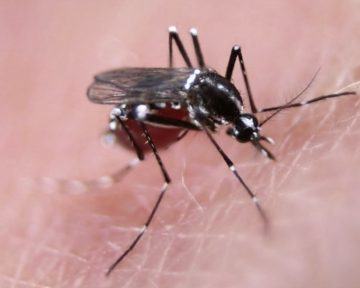 A plan to release over 750 million genetically modified mosquitoes into the Florida Keys in 2021 and 2022 received final approval from local authorities, against the objection of many local residents and a coalition of environmental advocacy groups. The proposal had already won state and federal approval.
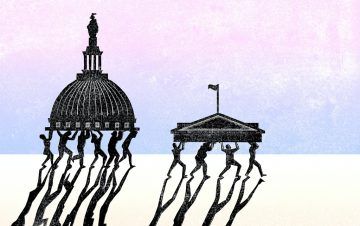 EVENTS IN CHARLOTTESVILLE,
 Conspiracy theories are
 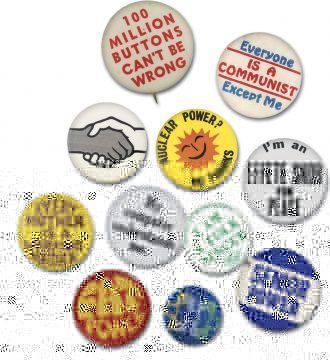 In August 2017, a few weeks before the fall semester began at Cornell University, I received an email inviting me to participate in a campaign called “I’m First!” The idea was to encourage “faculty and staff on campus to identify themselves, via T-shirt or button, as the first in their family to graduate from a four-year institution.” The rationale for this themed costume party was the following: “This visual campaign will allow first-generation students to clearly identify (and connect with) faculty and professional staff that have had similar experiences as them!” Though I have been a tenured professor at Cornell for eleven years, neither of my parents, who are French, pursued post-secondary education. My father finished high school; my mother learned stenography at a vocational school and got her first job at sixteen. I guess this made me an ideal candidate to wear the nice T-shirt provided by the administration. But I declined. I’m not ashamed of my background, and I don’t underestimate the challenges students face when they are the first in their family to attend college. But the two occurrences of the verb “to identify” in one eight-line paragraph were clear hints that the I’m First! initiative—part of a national campaign—was pushing a new social identity: “first-gen.”
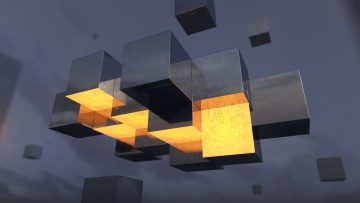 A team of mathematicians has finally finished off Keller’s conjecture, but not by working it out themselves. Instead, they taught a fleet of computers to do it for them.
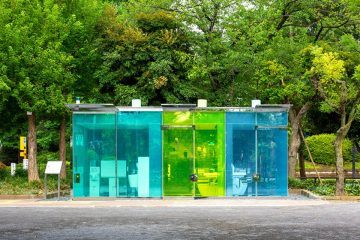 At first, it’s hard to fathom how a public restroom with transparent walls could possibly help ease toilet anxiety — but a counterintuitive design by one of Japan’s most innovative architects aims to do just that.
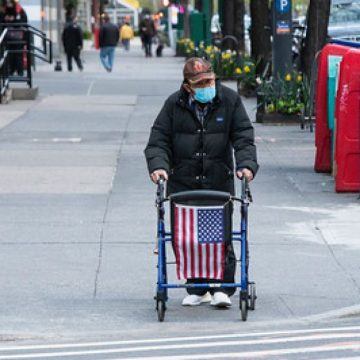 FEBRUARY WAS ONLY six months ago, but it belongs to a different era. Back then I still thought that, notwith-standing different private interests, moral values, and group allegiances, the United States could still function as a democratic society. I remember I was visiting Amherst College to take part in a public conversation with the novelist Susan Choi on the art of fiction. After the event, we signed books, shook hands with attendees, and went to dinner with our hosts in a packed restaurant. The next morning, I took a walk around the campus, ending up at the local bookstore, where I picked up and put down a dozen different novels before settling on one. Phrases like “aerosolized droplets” and “surface contamination” had not yet entered my daily vocabulary.