
Dylan could have written this yesterday and the sense of being bound up in a bad dream would feel, verse by verse, as palpably true.
Stuck Inside of Mobile With the Memphis Blues Again
Oh, the ragman draws circles
Up and down the block
I’d ask him what the matter was
But I know that he don’t talk
And the ladies treat me kindly
And furnish me with tape
But deep inside my heart
I know I can’t escape
Oh, Mama, can this really be the end
To be stuck inside of Mobile
With the Memphis blues again
Well, Shakespeare, he’s in the alley
With his pointed shoes and his bells
Speaking to some French girl
Who says she knows me well
And I would send a message
To find out if she’s talked
But the post office has been stolen
And the mailbox is locked
Oh, Mama, can this really be the end
To be stuck inside of Mobile
With the Memphis blues again
Mona tried to tell me
To stay away from the train line
She said that all the railroad men
Just drink up your blood like wine
An’ I said, “Oh, I didn’t know that
But then again, there’s only one I’ve met
An’ he just smoked my eyelids
An’ punched my cigarette”
Oh, Mama, can this really be the end
To be stuck inside of Mobile
With the Memphis blues again
Grandpa died last week
And now he’s buried in the rocks
But everybody still talks about
How badly they were shocked
But me, I expected it to happen
I knew he’d lost control
When he built a fire on Main Street
And shot it full of holes
Oh, Mama, can this really be the end
To be stuck inside of Mobile
With the Memphis blues again
 There are some problems for which it’s very hard to find the answer, but very easy to check the answer if someone gives it to you. At least, we think there are such problems; whether or not they really exist is the famous
 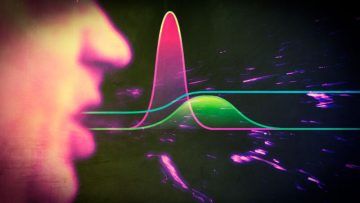 One of the least expected aspects of 2020 has been the fact that epidemiological models have become both front-page news and a political football. Public health officials have consulted with epidemiological modelers for decades as they’ve attempted to handle diseases ranging from HIV to the seasonal flu. Before 2020, it had been rare for the role these models play to be recognized outside of this small circle of health policymakers.
 Published shortly after his death in 1633,
 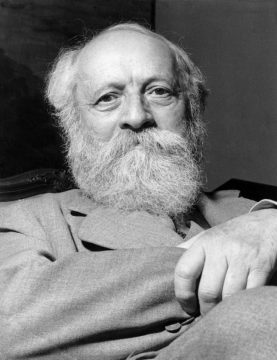 “I am unfortunately a complicated and difficult subject.” With these words of Martin Buber, Paul Mendes-Flohr lays down the challenge for his meticulous biography of the distinguished Jewish scholar, humanist, and author of I and Thou. “Complicated,” to be sure, and “difficult,” certainly; that goes with the territory of Buber’s at times maze-like philosophical explorations and heavily Germanic articulation. And one may add to these challenges the fact that—to quote this biographer—Buber was a “contested figure who evoked passionate, conflicting opinions about his person and his thought.” Yet these obstacles are by no means insurmountable, thanks to Mendes-Flohr’s philosophical acumen and gift for succinct expression. Indeed, in his capable hands Buber’s life makes for an engrossing, instructive tale, and an exemplary contribution to Yale’s “Jewish Lives Series.”
 As universities face major changes, their financial outlook is becoming dire. Revenues are plummeting as students (particularly international ones) remain home or rethink future plans, and endowment funds implode as stock markets drop.
 Writing from a Birmingham jail, Martin Luther King Jr famously told his anxious fellow clergymen that his non-violent protests would force those in power to negotiate for racial justice. “The time is always ripe to do right,” he wrote. On an early summer evening, two generations later,
 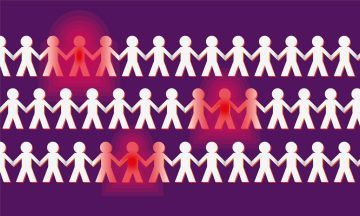 Epidemiological studies are now revealing that the number of individuals who carry and can pass on the infection, yet remain completely asymptomatic, is larger than originally thought. Scientists believe these people have contributed to the spread of the virus in care homes, and they are central in the debate regarding face mask policies, as health officials attempt to avoid new waves of infections while societies reopen.
 What’s your reaction when you see the term “double-entry book-keeping”? Do you associate it with cool, societal-changing innovations like the Internet, Google, social media, laptops, and smartphones? Probably not. Neither did I—until I was asked to write a brief article about the fifteenth century Italian mathematician Luca Pacioli, to go into the sale catalog for the upcoming (June) Christie’s auction of an original first edition of his famous book Summa de arithmetica, geometria, proportioni et proportionalita (“Summary of arithmetic, geometry, proportions and proportionality”), published in 1494, which I referred to in
  Each of us is different, in some way or another, from every other person. But some are more different than others — and the rest of the world never stops letting them know. Societies set up “norms” that define what constitute acceptable standards of behavior, appearance, and even belief. But there will always be those who find themselves, intentionally or not, in violation of those norms — people who we might label “weird.” Olga Khazan was weird in one particular way, growing up in a Russian immigrant family in the middle of Texas. Now as an established writer, she has been exploring what it means to be weird, and the senses in which that quality can both harm you and provide you with hidden advantages.
 Albert Memmi, the great Tunisian-born French Jewish intellectual,
  The moralizing has begun.
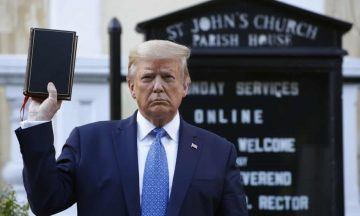
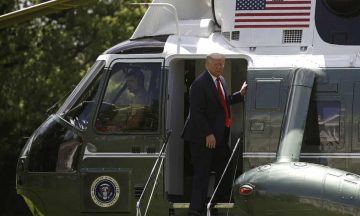 You’d be forgiven if you hadn’t noticed. His verbal bombshells are louder than ever, but Donald J Trump is no longer president of the United States. By having no constructive response to any of the monumental crises now convulsing America, Trump has abdicated his office. He is not governing. He’s golfing, watching cable TV and tweeting. How has Trump responded to the widespread unrest following the murder in Minneapolis of George Floyd, a black man who died after a white police officer knelt on his neck for minutes as he was handcuffed on the ground? Trump called the protesters “thugs” and threatened to have them shot. “When the looting starts, the shooting starts,” he tweeted, parroting a former Miami police chief whose words spurred race riots in the late 1960s. On Saturday, he gloated about “the most vicious dogs, and most ominous weapons” awaiting protesters outside the White House, should they ever break through Secret Service lines.