 Adam Shatz in the LRB:
In The Paranoid Style in American Politics, Richard Hofstadter wrote that the right-wing extremists who rallied behind Barry Goldwater’s 1964 race for president were
concerned more to express resentments and punish ‘traitors’, to justify a set of values and assert grandiose, militant visions, than to solve actual problems of state ... Their true victory lay not in winning the election but in capturing the party – in itself no mean achievement – which gave them an unprecedented platform from which to propagandise for a sound view of the world.
Trump, however, succeeded not only in capturing the Republican Party, but in proving that open resentment, raging against foreigners, denouncing ‘treason’ and essentially avoiding governance could be, for nearly half the population, an acceptable, even admirable, style of presidential leadership. Through his thunderous, nihilistic fury, he established an almost erotic connection with his base, which, unmoved by reason, often heedless of its own economic interests, found emotional compensation in his tributes to the ‘uneducated’ and his insults against members of Eastern seaboard ‘elites’.
Even in defeat, Trump gained nearly seven million more votes than in 2016. (Only one presidential candidate has won more votes in US history: Joe Biden.) He won in Florida by playing on fears of socialism among Cubans and Venezuelans, and even managed to pick up around 18 per cent of the vote among Black men by stoking their well-founded distrust of Democrats who have supported tough-on-crime policies (in this instance, both Biden and Harris).
Republicans appear to have held on to the Senate, and made some progress in the House, where Marjorie Taylor Greene of Georgia will soon become the first QAnon supporter to be elected to Congress. Trumpism and its darker manifestations are far from dead.
More here.


 Audrey Truschke in Aeon:
 Two themes seem
 A powerful gene-editing tool called Crispr-Cas9, which this month
  The essays explore the subjects – walls and borders, truth and silence, identity and memory and the limitations of language – present in her fiction while her autobiographical accounts give valuable context. Despite having slept through a nation’s collapse, Erpenbeck swiftly realised: “Everything that had been called the present up until then was suddenly called the past.” And so she erected another border inside herself, “made of time, between the first half of my life which was transformed into history by the fall of the wall… and the second half, which began at that same moment”. She clearly enjoyed a happy childhood. In John we learn about the lovesick schoolboy who would phone her and, refusing to reveal his identity, would quote Beatles lyrics. Years later, when Erpenbeck requested her file from the Stasi, she discovered that they had intercepted John’s daily record of who had arrived and left her apartment block. In Open Bookkeeping her mother’s death in 2008 is reduced to a poignant list of everything Erpenbeck has to find a home for, the accounts she has to close, the refunds that come in and those that don’t.
 A.N. Wilson has been for many years one of England’s most formidable biographers, as well as an amazingly productive novelist — 23 novels under his belt, to match nearly the same number of nonfiction considerations of subjects ranging from Jesus and St. Paul to Milton, Darwin, Hitler, C. S. Lewis and the queen. (Along the way he spent seven years lecturing on medieval literature at Oxford.) His knowledge is wide, his writing fluent — one can only wonder why his name and reputation haven’t flourished here in America the way they have in his own country, where he is something of a Figure. Alas, I don’t believe that this is going to change with his latest book, “The Mystery of Charles Dickens,” which is appearing just in time for the Dickens anniversary. Here, to put it bluntly, is a highly peculiar biography — peculiar not for what it says about Dickens but for what it says about Wilson himself.
 Look away, America. For your own good, look away. Everything will still be there when you come back. Even once the vote counting’s done, there’ll be the recounting, and the tag-along lawsuits.
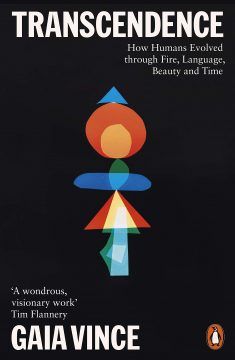 Let’s turn to Transcendence by
  France elected Emmanuel Macron president in 2017 as a symbolic barrier against the rising global tide of illiberal populism. Four years later, as the chaos fomented by U.S. President Donald Trump builds toward some sort of crescendo in the United States, domestic tensions in France threaten to define Macron’s leadership and legacy. The coronavirus pandemic is resurgent, leading the government to institute a strict new lockdown that will continue at least until early December; the mouvement des “gilets jaunes” (“yellow vest” protest movement) has been simmering since late 2018; and a crisis that began in 2015, when Islamist terrorists twice attacked Paris, never went away and has in fact returned with new intensity in recent months.
 The moment every Donald Trump opponent has been waiting for is at hand: Joe Biden seems to be taking the lead. So why am I not happy? I am certainly relieved. A Biden victory would be an infinitely better result than a Trump win. If Trump were to maintain power, our child-king would be unfettered by bothersome laws and institutions. The United States would begin its last days as a democracy, finally stepping over the ledge into authoritarianism. A win for Biden would forestall that terrible possibility.