
Maggie Koerth in Five Thirty-Eight:
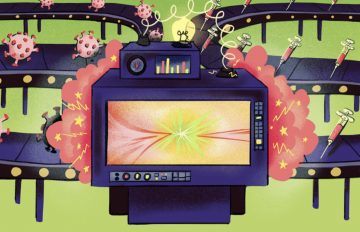 If a COVID-19 vaccine went on the market before Election Day, Kamala Harris said she’s not sure she’d take it. And she’s not alone. In a recent poll, a majority of Americans — 62 percent — said they were worried that the Trump administration would pressure the Food and Drug Administration to release a vaccine before it’s ready, and 54 percent said they simply wouldn’t take that hypothetical vaccine at all, even if it were free.
Scientists around the world are currently undertaking one of the fastest vaccine-development programs in history, trying to get the novel coronavirus under control as quickly as humanly possible. But the vaccines being tested sit at a nexus of misinformation and mistrust. Between Trump’s apparent meddling in federal health agencies’ decision-making, skepticism about the seriousness of the disease, and long-standing culture wars around the safety of vaccines in general, it’s easy to find yourself floundering, unsure who you can trust.
So I spoke with a handful of people who really know how vaccines, clinical trials and COVID-19 work to find out how to know when it’s a good idea to get the vaccine. They offered these four pieces of advice.
More here.
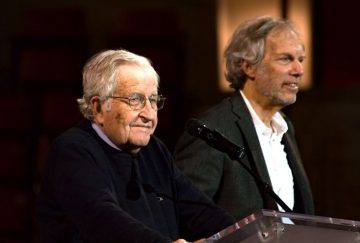 C. J. Polychroniou: How does the coronavirus pandemic, and the response to it, shed light on how we should think about climate change and the prospects for a global Green New Deal?
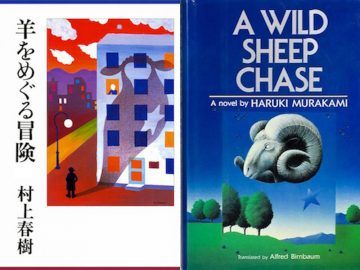 On May 10, 1989, Haruki Murakami’s editor at Kodansha International, Elmer Luke, sent Murakami a fax reporting on the sale of U.S. paperback rights to A Wild Sheep Chase (to Plume for fifty-five thousand dollars) and asking him to take part in the promotional activities that were scheduled in New York that fall. Murakami declined. Several months later, Luke and Murakami met in person for the first time in Tokyo (together with another editor from KI), and on August 14, just three days before a copy of A Wild Sheep Chase arrived at the Murakamis’ home, Luke again asked Murakami to join him in New York. Murakami once again declined. On September 24, Luke asked again, saying that Murakami’s translator Alfred Birnbaum had become unable to attend, and that they had also managed to arrange an interview with the New York Times. Murakami finally relented.
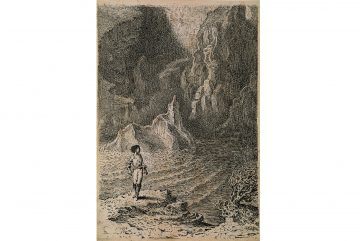 To be a good illustrator, said Mervyn Peake, it is necessary to do two things. The first is to subordinate yourself entirely to the book. The second is ‘to slide into another man’s soul’.
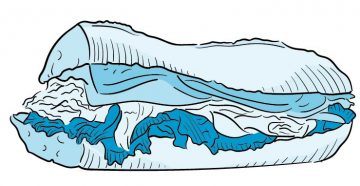 To properly construct a bodega sandwich, sammich, hoagie, or sub, it is helpful to first consider Théodore Géricault’s The Raft of the Medusa. Forget for a second that this painting ushered in the dawn of Romanticism. Instead, study the shipwrecked subjects, the fifteen men with faces longer than hymns who endured their own appetites for thirteen days at sea.
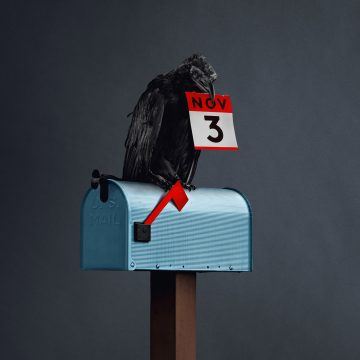
 The danger is not merely that the 2020 election will bring discord. Those who fear something worse take turbulence and controversy for granted. The coronavirus pandemic, a reckless incumbent, a deluge of mail-in ballots, a vandalized Postal Service, a resurgent effort to suppress votes, and a trainload of lawsuits are bearing down on the nation’s creaky electoral machinery.
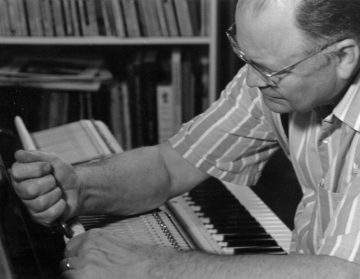 Verne Edquist, a master piano tuner who spent most of his professional life working for one client – Glenn Gould – died peacefully on August 27 after a long illness. He was 89.
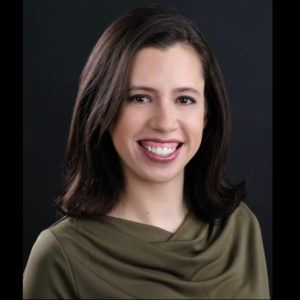 Stephen Hawking made a number of memorable contributions to physics, but
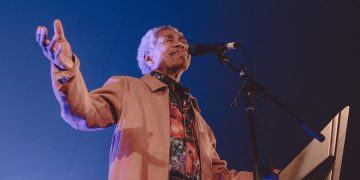 A new compilation,
 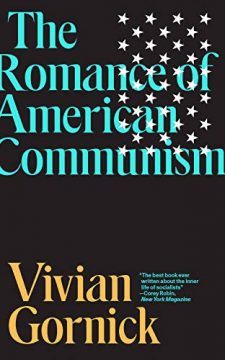 Because Gornick is foremost a memoirist, any tour of her work must contend with her autobiography as she tells it, in fragments. There is no single book in which she narrates her life story straight through; “truth in memoir,” she writes in The Situation and the Story (2001), “is achieved not through a recital of actual events.” Instead, each of her books marshals different pieces of her life in service of a central insight, whether she’s writing memoir, criticism, reportage, or a biography of someone else. She is dedicated to nonfiction as a genre, but has a novelist’s instinct for selection. To recount her biography chronologically thus requires some reconstruction.
 The immediate aftermath of the
 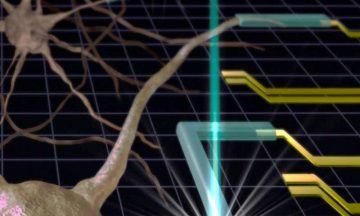 Researchers at the National Institute of Standards and Technology (NIST) have developed a new method of 3-D-printing gels and other soft materials. Published in a new paper, it has the potential to create complex structures with nanometer-scale precision. Because many gels are compatible with living cells, the new method could jump-start the production of soft tiny medical devices such as drug delivery systems or flexible electrodes that can be inserted into the human body.
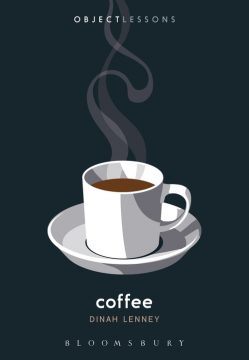 What does coffee do to you? Dinah Lenney’s Coffee is a free-form exploration of such surprisingly complicated questions: Why do we drink coffee? What gives it its power? Humans have been considering these and other coffee-related queries (like “Is it good for my health?” and “Is it good for my society?”) for centuries, ever since they first encountered the substance. Lenney is most interested in coffee’s direct effects on our lived experience, and what they mean.