
Christopher Vaughan in the Stanford Medicine News Center:
 Researchers at the Stanford University School of Medicine have discovered a way to regenerate, in mice and human tissue, the cushion of cartilage found in joints.
Loss of this slippery and shock-absorbing tissue layer, called articular cartilage, is responsible for many cases of joint pain and arthritis, which afflicts more than 55 million Americans. Nearly 1 in 4 adult Americans suffer from arthritis, and far more are burdened by joint pain and inflammation generally.
The Stanford researchers figured out how to regrow articular cartilage by first causing slight injury to the joint tissue, then using chemical signals to steer the growth of skeletal stem cells as the injuries heal. The work was published Aug. 17 in the journal Nature Medicine.
“Cartilage has practically zero regenerative potential in adulthood, so once it’s injured or gone, what we can do for patients has been very limited,” said assistant professor of surgery Charles K.F. Chan, PhD. “It’s extremely gratifying to find a way to help the body regrow this important tissue.”
More here.
 In an age of visual profusion, when the vividness and abundance of images consumed for distraction and commerce is breathtaking, it might seem naive for an artist to try to create images of incantatory, even magical power. To seek a holy relationship to the image today is often seen as foolhardy.
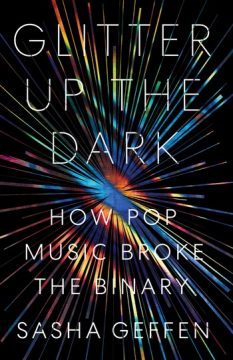 For many of the artists in this book, music and performance’s inherent haziness is able to envelop everything in an intoxicating fog, which allows artists the freedom to try on different gender identities without always revealing where, exactly, their “authentic” selves begin. (Of course, it offers similar possibilities to the complex and questioning people listening, too.) This is the “alternate ribbon of time”—a phrase Geffen borrows from the queer indie pop star Perfume Genius—that links the butch blues singer Lucille Bogan’s 1935 recording of “BD Woman’s Blues” (the initials stood for “bull dyke”) with, say, the crusading punk group Against Me!’s 2007 song “The Ocean.” Five years before the band’s front person Laura Jane Grace came out as a transgender woman, she sang in that song, “If I could have chosen, I would have been born a woman / My mother once told me she would have named me Laura.” Presuming poetic license, no one batted an eyelash. Grace “assumed everyone around her would pick up on her overt confession of dysphoria,” Geffen writes, “but couched in a song, it glanced off the world.”
 THE GREATEST AND MOST UNDEFINABLE
 The thought of white men imagining all of brown women’s sexuality being available to them for purchase came to me following more recent historic revelations. On September 3, the New York Times published
 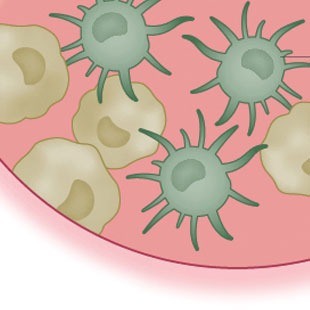 In 2013, two independent teams of scientists, one in Maryland and one in France, made a surprising observation: both germ-free mice and mice treated with a heavy dose of antibiotics responded poorly to a variety of cancer therapies typically effective in rodents. The Maryland team, led by
  Dad wrote me a letter on my 50th birthday. It is one of my most prized possessions. In it, he encouraged me to stay curious. He said some very touching things about how much he loved being a father to my sisters and me. “Over time,” he wrote, “I have cautioned you and others about the overuse of the adjective ‘incredible’ to apply to facts that were short of meeting its high standard. This is a word with huge meaning to be used only in extraordinary settings. What I want to say, here, is simply that the experience of being your father has been… incredible.”
 Sexuality is, and always has been, a topic that is endlessly fascinating but also contentious. You might think that asexuality would be more straightforward, but you’d be wrong. Asexual people, or “aces,” haven’t been front and center in the public discussion of gender and sexuality, and as a result there is confusion about such basic issues as what “asexuality” even means. Angela Chen is a science journalist and an ace herself, and she’s written a new book about asexuality and how it fits into the wider discussion of sex and gender. Precisely because sexuality is so taken for granted by many people, thinking about asexuality not only helps us understand the issues confronting aces, but the meaning of sexuality more broadly.
 Researchers have shown how industries could work together to recycle cigarette butts into bricks, in a step-by-step implementation plan for saving energy and solving a global littering problem. Over 6 trillion cigarettes are produced each year globally, resulting in 1.2 million tons of toxic waste dumped into the environment. RMIT University researchers have previously shown fired-clay bricks with 1% recycled cigarette butt content are as strong as normal bricks and use less energy to produce. Their analysis showed if just 2.5% of global annual brick production incorporated 1%
  Scientific American has never endorsed a presidential candidate in its 175-year history. This year we are compelled to do so. We do not do this lightly.
 Rail: Were you always a figurative painter?
 Widening opportunity in education is the noblest of social and political projects. But the cost is now clear. In the ‘bad old days’ students were, as they are today, taught with commitment and passion, but sometimes eccentricity added a spark. Provided he – and it was usually a he – turned up fully dressed and sober and didn’t lay hands on anyone, the crazy lecturer could be an inspiration. Expectations were less explicit, the rhetoric and metrics of achievement were absent, which made everyone feel freer. Even applying to a university seemed less pressured, because it was so unclear what it would be like when you got there. You absorbed teachers’ anecdotal experiences and sent off for prospectuses, including the student-produced ‘alternative’ versions mentioning safe sex and cheap beer. Even after matriculation I had only a vague sense of the structure of my course. The lecture list was to be found in an austere periodical of record available in newsagents. Mysteries that today would be cleared up with two clicks on a smartphone had to be resolved by listening to rumours. This news blackout has been replaced by abundant online information, the publication of lucid curricular pathways, the friendly outreach of student services and the micromanagement of an undergraduate’s development. Leaps of progress all, if it weren’t for the suspicion that students might develop better if they had to find out more things for themselves. We learned to be self-reliant and so were better prepared for an indifferent world; we didn’t for a moment see the university as acting in loco parentis. Excessive care for students is as reassuring as a comfort blanket and can be just as infantilising.
 Adam Shatz in the LRB: