
Editors in Nature:
 Since Nature’s earliest issues, we have been publishing news, commentary and primary research on science and politics. But why does a journal of science need to cover politics? It’s an important question that readers often ask.
This week, Nature reporters outline what the impact on science might be if Joe Biden wins the US presidential election on 3 November, and chronicle President Donald Trump’s troubled legacy for science. We plan to increase politics coverage from around the world, and to publish more primary research in political science and related fields. Science and politics have always depended on each other. The decisions and actions of politicians affect research funding and research-policy priorities. At the same time, science and research inform and shape a spectrum of public policies, from environmental protection to data ethics. The actions of politicians affect the higher-education environment, too. They can ensure that academic freedom is upheld, and commit institutions to work harder to protect equality, diversity and inclusion, and to give more space to voices from previously marginalized communities. However, politicians also have the power to pass laws that do the opposite.
…Perhaps even more troubling are signs that politicians are pushing back against the principle of protecting scholarly autonomy, or academic freedom. This principle, which has existed for centuries — including in previous civilizations — sits at the heart of modern science. Today, this principle is taken to mean that researchers who access public funding for their work can expect no — or very limited — interference from politicians in the conduct of their science, or in the eventual conclusions at which they arrive. And that, when politicians and officials seek advice or information from researchers, it is on the understanding that they do not get to dictate the answers. This is the basis for today’s covenant between science and politics, and it applies across a range of research, education, public-policy and regulatory domains.
More here.
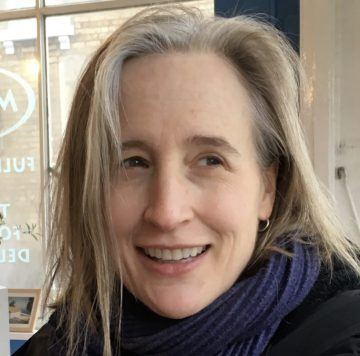 AC: I need to rephrase this question slightly in order to answer it. “Moral realism” is a label that I deliberately don’t use in describing my image of ethics. Not that, abstractly considered, the term is obviously ill-suited to capture things I believe. It is, for instance, a conviction of mine that that there are morally salient aspects of the world that as such lend themselves to empirical discovery. A case could easily be made for speaking of moral realism in this connection. But that would likely generate confusion. When I claim that, say, humans and animals have moral qualities that are as such observable, I work with an understanding of what the world is like, and of what is involved in knowing it, that is foreign to familiar discussions of moral realism. These discussions are often structured by the assumption that objectivity excludes anything that is only adequately conceivable in terms of reference to human subjectivity. Moral realism is frequently envisioned as an improbable position on which moral values are objective in this subjectivity-extruding sense while still somehow having a direct bearing on action and choice. Thus does the specter of Mackie’s “argument from queerness” still haunt the halls of moral philosophy.
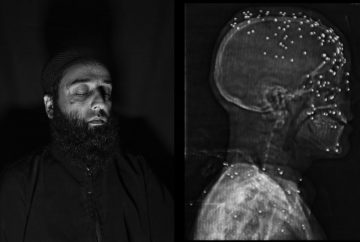 India first started using pellet-firing shotguns against Kashmiris in 2010 but the matter only hit international prominence in 2016 when protests following the death of Burhan Wani resulted in thousands of injuries, the blinding of hundreds and the deaths of over 70 people.
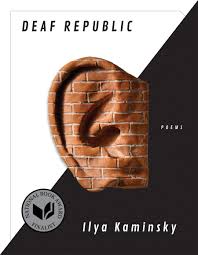 Twenty-five years after he and his parents fled Ukraine, Ilya Kaminsky went back to Odessa, the city of his childhood. As he explored the city, he did not feel that he had truly returned until he removed his hearing aids. He has written that, for him, Odessa is ‘a silent city, where the language is invisibly linked to my father’s lips moving as I watch his mouth repeat stories again and again. He turns away. The story stops.’
 There is a much darker side to his life, too. The relentless womanising, including with vulnerable people far, far younger than him; the children so numerous they were hard to keep track of; the brutal break-ups, vicious feuds and spasms of verbal cruelty that made Freud, for many people, an impossibly sulphurous figure, a coldly brilliant predator smoking with menace. Observing him at the Jewish wedding in London of the painter RB Kitaj, the poet Stephen Spender whispered to Feaver: “I can’t stand being in the same place with Lucian. He is an evil man.”
 Covid-19 has created a crisis throughout the world. This crisis has produced a test of leadership. With no good options to combat a novel pathogen, countries were forced to make hard choices about how to respond. Here in the United States, our leaders have failed that test. They have taken a crisis and turned it into a tragedy. The magnitude of this failure is astonishing.
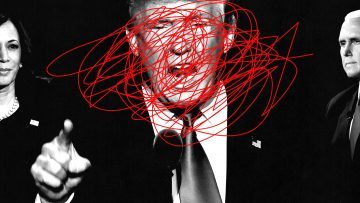 In perhaps the most chaotic week of a chaotic presidency, what was most surprising about tonight’s vice-presidential debate was how oddly normal it felt.
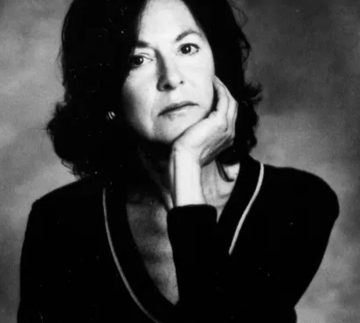 The poet Louise Glück has become the first American woman to win the Nobel prize for literature in 27 years, cited for “her unmistakable poetic voice that with austere beauty makes individual existence universal”.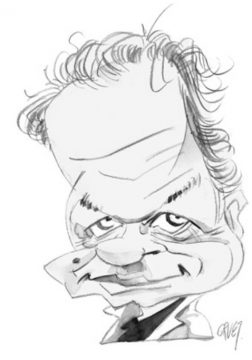
 At the first debate between Joe Biden and Donald Trump, Biden refused to say whether he’d expand the Supreme Court if Republicans confirm Barrett, insisting that the issue is a “distraction.” He’s wrong. Broaching the conversation about systemic reform after the election will be too late. And the coming Supreme Court term, which begins Monday, reflects just some of what’s at stake, this week, this month, and in the months ahead. The debate about structural changes to the court can’t wait until a hypothetical future in which everything has settled down. That future has already vanished.
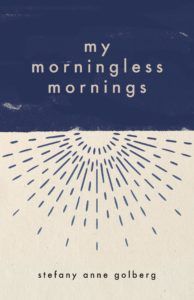 Even when ruminating upon dream diaries, werewolves, and vampires, Golberg’s erudition imbues her childlike wonder with a preacher’s certitude. She finds analogies across cultures and languages, weaving centuries-old philosophies into her personal examination of late-night gloom and early-morning revelation. There’s a selective nature to her surveys, some of which take the form of art and literary criticism. But the essays build upon successive themes, Golberg’s metaphors compounding and accreting into a more solid, ambitious exploration of identity. Who are we, these essays ask, and when are we most ourselves? “I suppose this was Jung’s point all along, that the dreamworld is not separate from the everyday world,” she considers, “that we enact our dreams in daily life as we enact our daily life in dreams, and that to divide these parts of ourselves — the sleeping self and the wide-awake self — makes us incomplete.” These analyses make approachable essays even for readers not steeped in the work of Japanese novelists and nineteenth-century painters.
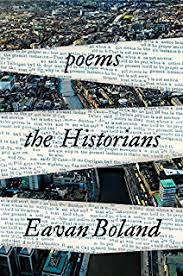 Steadily, poem by poem and book by book, Eavan worked her way into the heart of darkness, not in the Conradian sense of course, but into the centre of those marginal, penumbral zones outside the spotlight of what was “officially” deemed worthy of being remembered. Hers was a double journey ‑ the poet finding her way into the self-granted warrant of her craft, the citizen struggling for the vindication of women, for a more amplified and more truthful narrative of Ireland. Her method was her purpose: in confronting exclusion, in the historical sense, she simultaneously chose to examine her own path into permission, into the poem, ever-present to herself, always questioning her step-by-step progress into her own gathering experience of making. And at the same time, not as a polemicist but as a citizen, she was attempting to formulate, or reformulate, a more ample and truthful vision of Ireland. By the time she had arrived at the pared back landscapes and poemscapes of Outside History and Against Love Poetry, it seems to me that she had succeeded in fusing her double quest: she had found a way to speak plainly of and for all those whom history had cast aside, a neglect, often deliberate, that was both political and moral; and at the same time she had found in herself a voice she could finally consider adequate to her subject and to the unforgiving demands of her craft.
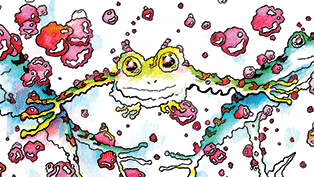 Ever since Charles Darwin taught us that life is constantly driven to change by myriad pressures—that species are not static, but are constantly morphing—biologists have debated how fast those changes can occur. The discovery of the genome a century after Darwin published On the Origin of Species seemed to demarcate an upper limit. Animals could evolve only as fast as advantageous genes could arise and spread, and as existing genomes could be reshuffled through sexual reproduction. But then came “epigenetics”: Some adaptation could occur more quickly, without changing genes themselves, but by altering how existing genes translated into living flesh. Rosenberg and others are proposing an even quicker process—organisms can adapt rapidly by switching their symbiotic microbes. The very quality that makes pandemics so terrifying—rapid contagion—may also drive mass adaptation.
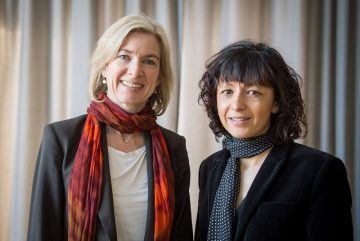 It’s CRISPR. Two scientists who pioneered the revolutionary gene-editing technology are the winners of this year’s Nobel Prize in Chemistry. The Nobel Committee’s selection of Emmanuelle Charpentier, now at the Max Planck Unit for the Science of Pathogens in Berlin, and Jennifer Doudna, at the University of California, Berkeley, puts to rest years of speculation as to who would be recognized for their work developing the CRISPR–Cas9 gene-editing tools. The technology has swept through labs worldwide and has countless applications: researchers hope to use it to alter human genes to eliminate diseases, create hardier plants, wipe out pathogens and more.