
Another Life
Women spend the afternoon squatting on the porch,
picking lice from each other’s hair.
They spend the evening feeding the little ones,
lulling them to sleep in the glow of the bottle lamp.
The rest of the night they offer their back to be slapped
and kicked by the men of the house
or sprawl half-naked on the hard wooden cot.
Crows and women greet the dawn together,
the women blowing into the oven to start the fire,
tapping on the back of the winnowing tray with five fingers
and, with two, picking out the stones.
Half their lives women pick stones from the rice.
All their lives stones pile up in their hearts,
no one there to touch them even with two fingers.
by Taslima Nasrin
from The Poetry Nook
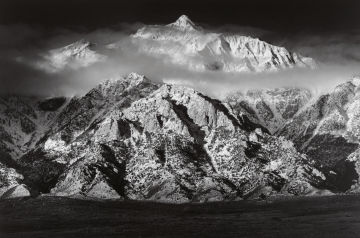 In 1879 Josiah Royce wrote a letter from Berkeley, to William James at Harvard, describing the intellectual condition of his home state: “There is no philosophy in California. From Siskiyou to Ft. Yuma, and from the Golden Gate to the summit of the Sierras there could not be found brains enough to accomplish the formation of a single respectable idea that was not manifest plagiarism.” From any other author, these words could only be received as complaint, but Royce himself understands them as a neutral description of fact, perhaps even as subtle praise for a land he deems ill-disposed to the convection of metaphysical hot air.
 Yet while researchers celebrate the achievement, they stress that the newfound compound — created by a team led by
 To anyone
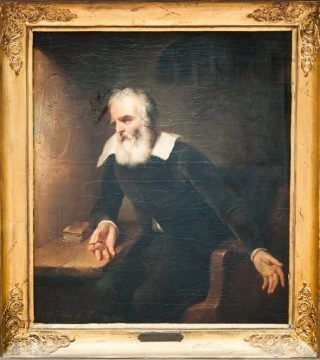 “And yet it moves.” This may be the most famous line attributed to the renowned scientist
 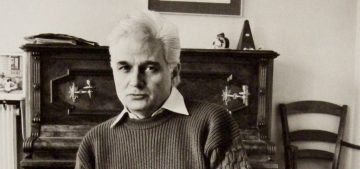 The question of where the Juifs d’Algérie, the community into which Jackie was born, fitted into Algerian society was, inevitably, a complex one. Derrida’s family were Sephardic, and claimed roots from Toledo in Spain. In 1870, Algerian Jews were granted French citizenship by the Crémieux Decree, which brought their rights in line with the rest of the pied-noir (black foot, i.e. wearing shoes) population of Algeria. The majority Muslim population had no such rights, and were subject to the Code de l’indigénat, which gave them, at best, second-class status before the law. Although tensions had not reached the scale that would lead to and accompany the Algerian War, they were already present. At the same cinemas where Aimé and Georgette had watched Chaplin, Algerians “clapped and cheered when the hero made stirring speeches about Swiss independence in William Tell and when the Foreign Legionnaire heroes in Le Hommes Sans Nom(The Men with No Name) were shot by Moroccan insurgents.”
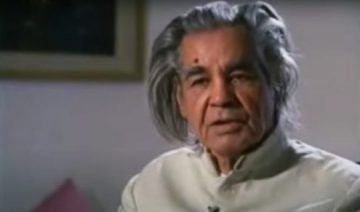 As real border walls were being put up, so were metaphorical borders. The Urdu writers had been published freely in both countries until this point. There were hardly any Urdu literary journals at the time in India because Indian Urdu writers had published in Pakistan where the readership was larger; Urdu being Pakistan’s national language. The war changed that. New Urdu journals arose in India, most notably Shabkhoon launched by Shamsur Rahman Faruqi in Allahabad. Writers, Urdu or not, wanted to address the crisis of the war. They criticized the Progressives because their answers were old and dated. Marxists and Socialists were under attack in both Pakistan and India. In Pakistan, there was a call of national cultural unity, with Urdu at its center. Before this year, Bhasha Poetry, which freely took words from Indian languages other than Urdu was popular in Pakistan. After, the form quietly died.
 Biologists like to think of themselves as properly scientific behaviourists, explaining and predicting the ways that proteins, organelles, cells, plants, animals and whole biota behave under various conditions, thanks to the smaller parts of which they are composed. They identify causal mechanisms that reliably execute various functions such as copying DNA, attacking antigens, photosynthesising, discerning temperature gradients, capturing prey, finding their way back to their nests and so forth, but they don’t think that this acknowledgment of functions implicates them in any discredited teleology or imputation of reasons and purposes or understanding to the cells and other parts of the mechanisms they investigate.
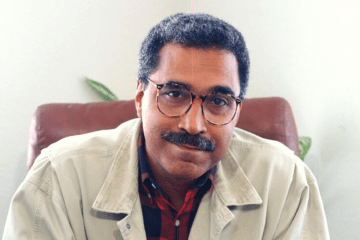 Shelby Steele is experiencing a revival. For over 30 years, the controversial black American essayist and culture critic has consistently produced some of the most original insights to be found on the precarious issue of race in America and has been met with reactions that range from reverence to revulsion. Usually, it’s one reaction or the other. To his critics, Steele is a race traitor, a contrarian black conservative who makes a living assuaging the guilty consciences of whites at the expense of his own people. To his admirers, he is a lone voice of clarity in the chaos of America’s racial discourse who, at 74 years of age, continues to speak uncomfortable and disconcerting truths to power. But his greatest strength may turn out to be a knack for anticipation. As the social upheavals inspired by America’s “racial reckoning” rage on, Steele’s work now looks prescient—it identified the underlying forces that would eventually shape our explosive cultural moment, and offers a more honest accounting of our past and present.
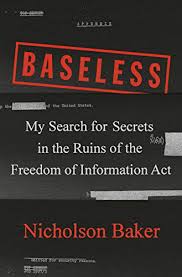 Baker has long been intrigued by the fact that the declassified versions of government documents concerning bioweapons from this era that are available still tend to be heavily censored. The continued secrecy, for him, raises a striking question: What other information do these documents contain that remains so sensitive after all this time that the US government continues to hide it from the American public and the rest of the world under these redactions?
 In late August, the singer, songwriter, and guitarist Adrianne Lenker stood beside a creek in upstate New York, watching the water move. The day before, Lenker, who is twenty-nine, had packed up the Brooklyn apartment she’d been sharing with two roommates. She was preparing to haul a vintage camping trailer across the country to Topanga Canyon, on the west side of Los Angeles, where her band,
 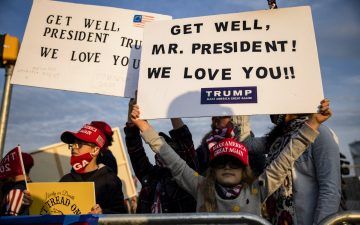 We “data people” have all been burnt by polling – and it hurts. In Britain, America and elsewhere, there have been enough high profile “misses” by the industry to give anyone cold feet about relying on polls as the sole metric for how an election might play out. On balance, however, polling has good form for calling most races right – and is becoming increasingly accurate. If this comes as a surprise, it might be because humans often process negative memories (poll misses) more thoroughly than they do positive (accurate polls). Perhaps conscious that history may repeat itself, betting markets are