
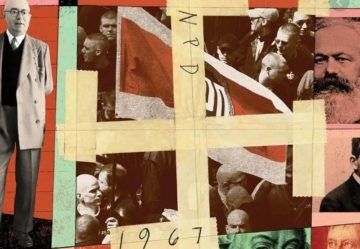
 Peter Gordon in The Nation:
n April 6, 1967, Theodor W. Adorno accepted an invitation from the Association of Socialist Students at the University of Vienna to deliver a lecture on “aspects of the new right-wing extremism.” The topic held a special urgency: The National Democratic Party, a recently founded neofascist group in West Germany, was surging in popularity and would soon surpass the official 5 percent threshold needed to secure representation in seven of Germany’s 11 regional parliaments. In Europe after World War II, Adorno was highly esteemed not only for his philosophical and cultural writings but also for his analysis of the fascist tendencies that still survived in the so-called liberal democratic orders of the capitalist West, and the students and socialist activists gathered in Vienna were eager to hear his thoughts.
The lecture, though brief, addressed the specific instances of a neofascist resurgence in postwar West Germany. And it spoke to the general question of what fascism is and how we should think about challenges to liberal democracy that come from the extreme right. Liberal democracies, Adorno argued, are by their nature fragile; they are riven with contradictions and vulnerable to systemic abuse, and their stated ideals are so frequently violated in practice that they awaken resentment, opposition, and a yearning for extrasystemic solutions. Those who defend democracy must confront the persistent inequalities that breed this resentment and that prevent democracy from becoming what it claims to be.
Newly transcribed from a tape recording and now published in an English translation under the title Aspects of the New Right-Wing Extremism, the lecture reminds us of Adorno’s political engagement into the late 1960s.
More here.
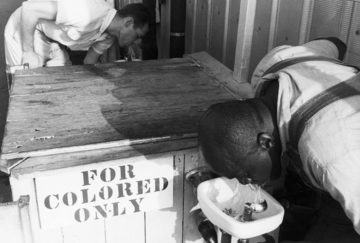 Charisse Burden-Stelly in Boston Review:
 The New Left Review has introduced a blog, Sidecar. Wolfgang Streeck in Sidecar:
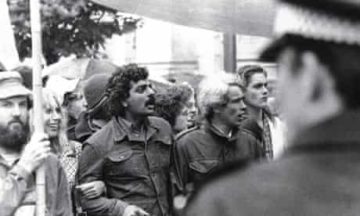 Stefan Collini in The Guardian:
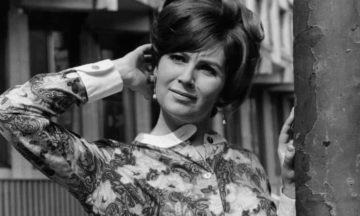 Most people approaching their 90th birthday would be forgiven for deciding that, whatever their work, enough was enough and it was time to relax. Most people, however, are not
  Ten years ago, a hawker in Tunisia set himself on fire, which
 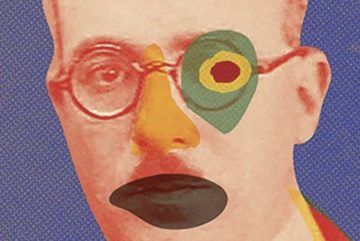 I was in Australia on the tail-end of my eastern book tour, the Last Book Tour perhaps, one that had taken me to Indonesia and Bangladesh earlier, when the plague, after circling for months, dove in for the kill. I left perhaps a week before Australia locked down and have wondered what would have happened if I got stuck Down Under, a world unfamiliar in ways I did not expect. During the tour, however, I spent time on the periphery of stages and outside hotel lobbies, smoking, chatting with local literary rock stars, the likes of Tara June Winch and Christos Tskiolkas. On the plane back home to Karachi, I began Christos’s
  Almost 60 years ago, in February 1961, two teams of scientists stumbled on a discovery at the same time. Sydney Brenner in Cambridge and Jim Watson at Harvard independently spotted that genes send short-lived RNA copies of themselves to little machines called ribosomes where they are translated into proteins. ‘Sydney got most of the credit, but I don’t mind,’ Watson sighed last week when I asked him about it. They had solved a puzzle that had held up genetics for almost a decade. The short-lived copies came to be called messenger RNAs — mRNAs – and suddenly they now promise a spectacular revolution in medicine.
 I’ve recently spent a good chunk of time engrossed in reading A Promised Land, the first volume of President Barack Obama’s memoirs. After four years of the most impulsive and unstable president of my lifetime, hearing Obama’s calm and judicious voice in my head was like having a long, comforting talk with an old friend. His retelling of the challenges of his first two and a half years, from the global financial crisis and the passage of Obamacare to the Democrats’ midterm collapse in 2010 and the successful operation to kill Osama bin Laden in May 2011, is full of revealing details and discerning insight.
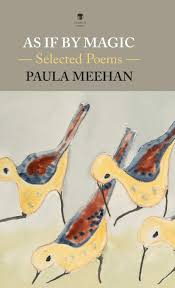 A poem from Paula Meehan’s second collection, Pillow Talk (1994), is called “Autobiography”. Well, in some ways a Selected Poems is like an autobiography; it expresses a sense that the life lived to date, and the work done, have some weight and perhaps some unity. Also, all autobiographies are provisional, and a Selected does not have the terminal stamp of a Collected Poems. There may yet be – one hopes there will be – many surprises in store. But there are differences: the poems included in Paula Meehan’s Selected Poems do not tell the writer’s chronological story. Rather, many of them are revisitings of phases or moments in the poet’s life, from the varying perspectives of later days. They explore those enlightening moments, when new meanings emerge from well-remembered encounters, that may only come when there is a degree of distance, for example when the adult can see what the adults in her own earlier life were about, and divine the depths of their emotions.
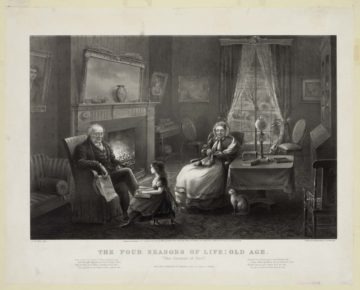 At other times and in other places, traditional ways of life, social classification, and metaphysical order gave shape and coherence to the course of life, providing a picture of aging well. Each period of life had its activities, duties, and forms of flourishing.
 Once, in another life, I was a tech founder. It was the late nineties, when the Web was young, and everyone was trying to cash in on the dot-com boom. In college, two of my dorm mates and I discovered that we’d each started an Internet company in high school, and we merged them to form a single, teen-age megacorp. For around six hundred dollars a month, we rented office space in the basement of a building in town. We made Web sites and software for an early dating service, an insurance-claims-processing firm, and an online store where customers could “bargain” with a cartoon avatar for overstock goods. I lived large, spending the money I made on tuition, food, and a stereo.
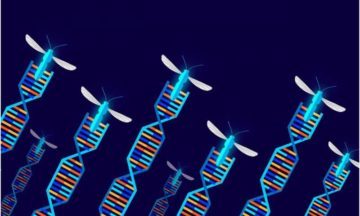 Gene drive organisms (GDOs), developed with select traits that are genetically engineered to spread through a population, have the power to dramatically alter the way society develops solutions to a range of daunting health and environmental challenges, from controlling dengue fever and malaria to protecting crops against plant pests.
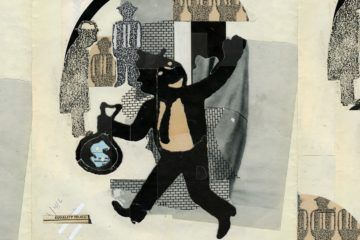 This year marks the seventy-fifth anniversary of publication of
 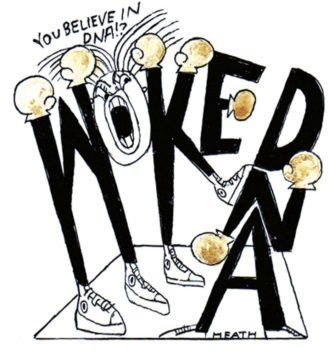 For, whether we like it or not, it is a true fact that we are cousins of kangaroos, that we share an ancestor with starfish, and that we and the starfish and kangaroo share a more remote ancestor with jellyfish. The DNA code is a digital code, differing from computer codes only in being quaternary instead of binary. We know the precise details of the intermediate stages by which the code is read in our cells, and its four-letter alphabet translated, by molecular assembly-line machines called ribosomes, into a 20-letter alphabet of amino acids, the building blocks of protein chains and so of bodies.
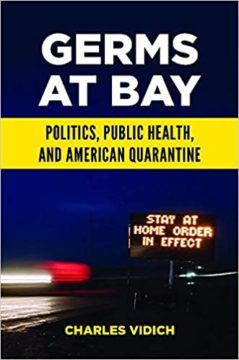 As the US confronts both a political crisis of presidential succession and a worsening pandemic, it might be instructive, though perhaps not comforting, to learn that we’ve been here before.