A Nasogenital Tale

Urte Laukaityte at Aeon Magazine:

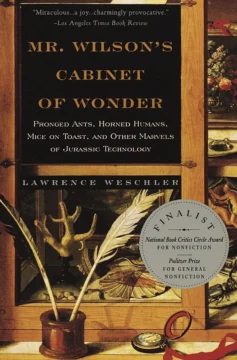
In Vienna, in late February 1895, a 30-year-old woman, Emma Eckstein, is about to undergo an operation. She has recently complained of a few health problems – mostly stomach pain and discomfort, some sadness, especially around her period. Luckily, a young Berlin doctor by the name of Wilhelm Fliess is there to help. He comes highly recommended by a long-time trusted family friend, himself a reputable physician, Sigmund Freud. They agree that Eckstein’s menstrual stomach issues can be addressed through a simple surgery on an altogether different body part – Fliess removes a bit of bone from inside her nose.

The late 19th century saw a flowering of interest in the nasogenital reflex – the idea that there is a strong physiological link between the nose and the genitals. The nasogenital concept could allegedly explain all manner of trouble, not just in the reproductive system but across the board. The nose provided a clinical shortcut of sorts, a kind of map of the body. For mild illness, treatment could involve stimulating the problem areas of the nasal mucosa with cocaine.

more here.

Enjoying the content on 3QD? Help keep us going by donating now.
Thursday, June 5, 2025

What a psychotherapist learned during his chats with a large language model

Robert Saltzman in The Hedgehog Review:

What does it mean to say, “I am aware,” when that sentence might be as much a performance as a report?

That is the edge we now stand on. The question is not whether AI is sentient but how the invention of such accurate, coherent, convincing mirrors reflects upon our own experience of sentience, insight, and presence. We assume a great deal about our status as self-aware beings. What if those assumptions are fashioned largely from automatic responses of which we are unaware, not so different from Claude’s unawareness of its algorithms?

Claude is not a mind. But it can demonstrate the shape of one with emptiness at its center. There is no there there.

But what of us?

More here.

Enjoying the content on 3QD? Help keep us going by donating now.

Inside the thriving wild-animal markets that could start the next pandemic

Jane Qiu in Nature:

The world is still recovering from the COVID-19 pandemic, which many researchers say probably started, or was at least amplified, at a market selling live animals in Wuhan, China1,2. Yet the wildlife trade still thrives in many parts of the globe. China banned the farming and trading of most wildlife species for food in 2020, but these practices have simply gone underground. “We are back to business as usual,” says Vincent Nijman, a conservation biologist at Oxford Brookes University, UK, with “millions and millions of animals being traded on a daily basis”.

The wildlife trade acts as a vast global network of unregulated natural laboratories, through which potential pathogens freely circulate, evolve and ultimately congregate in urban centres, says Andrew Cunningham, a wildlife epidemiologist at the Institute of Zoology in London. “It’s the scariest thing we are doing,” he says.

More here.

Enjoying the content on 3QD? Help keep us going by donating now.

Pirates of the Ayahuasca

Sarah Miller at n+1:

On the second night the ayahuasca tasted terrible, like the entire jungle had shit into my mouth. The first sign of intoxication came in the form of a ticking sound. Next, I felt that there was a seam being stitched into my face. The seam was not painful, but something was tugging at it, the same entity that was making the ticking noise, and as the ticking noise increased, the tension also increased. When I imagined my face, in my mind’s eye, it was blank, no features, not even skin, covered with thick stocking fabric. I searched in vain for the part of my brain that could remind me this was not real. What was my name? What was the name of this scary drug I was on? 

The ticking sound turned into the sound of rustling feathers. I sat up, trying not to give in to the Medicine, but then I had to lie down. The rustling went on and on, for hours, and I saw nothing but dirty feathers, broken plates and cutlery and swatches of fabric, refrigerator interiors and bathroom tiles and grandmothers’ wheelchairs and enema bags and pill containers and tomato egg timers and Pet Rocks from homes I’d been to in elementary school.

more here.

Enjoying the content on 3QD? Help keep us going by donating now.

In Search Of The True Internet Novel

Sophie Kemp at The Point:

Allow me, for a moment, to talk about David Foster Wallace. In 1993, Wallace wrote an essay, “E Unibus Pluram,” about the effects of television’s presence in contemporary literature. He argues that television, when written about in a postmodern context, often feels hackneyed. This fiction, he writes, “is not just a use or mention of televisual culture but a response to it, an effort to impose some sort of accountability on a state of affairs in which more Americans get their news from television than from newspapers.” But in trying to satirize television, he argues, these literary works just end up feeling like a pale imitation of the thing itself. Bland, forgettable, dated. The satire has no teeth.

Replace the word “television” with “internet” in “E Unibus Pluram,” and you will find that Wallace’s essay more or less holds up, 32 years later. That everything kind of falls apart, when you satirize the thing you’re also trying to imitate. That perhaps instead of writing a novel that, say, defamiliarizes the sensation of being on X, you could go on X and have it all defamiliarized for you. We are now in the very first wave of Zoomer literature, and these writers, like their predecessors, are still trying to shape the internet into prose.

more here.

Enjoying the content on 3QD? Help keep us going by donating now.

Why does Switzerland have more nuclear bunkers than any other country?

Jessi Jezewska Stevens in The Guardian:

Faced with unrelenting Russian aggression and the simultaneous withdrawal of American military and diplomatic support, European countries across the continent are reinvesting in defence. But civilian protection – non-military measures for civil defence, including the construction of nuclear and air raid bunkers – has also emerged as a fresh priority. In January, Norway reintroduced a cold war-era mandate to build air raid shelters in all newly constructed residential buildings – a requirement Switzerland has upheld continuously since 1963. In Germany, which recently passed groundbreaking legislation to finance billions in new military spending, the question of how and whether to build civilian bunkers is once again a matter of active public debate. Partly inspired by efforts in Germany and Norway, in March of this year, the European Union issued official statements urging residents to keep an emergency stockpile containing 72 hours’ worth of supplies on hand at all times. The exposure to war and human-made disaster feels more acute than it has since any other time since the end of the cold war.

In Switzerland, the redoubled interest in civilian protection is more a bellwether for shifting public attitudes than a sign of an actual change in policy.

More here.

Enjoying the content on 3QD? Help keep us going by donating now.

Whose Weil?​ Simone, Patron Saint of Everyone

Jack Hanson in The Drift:

During the First World War, a six-year-old Simone Weil learned that soldiers on the Western Front were not rationed sugar, so she refused to eat it until conditions improved. But whereas most leave such zealous empathy in childhood, Weil’s commitment to suffering with — or, at least, in the same way as — others became the hallmark of her work as a philosopher and political activist, as well as of her short, harrowing life. And though her ascetic self-denial tended toward self-erasure, a theme she would reflect endlessly upon in her writing, she couldn’t help standing out. At the École Normale Supérieure, the elite Paris institution of higher learning where she was among the first generation of women to be educated, she was known as “The Red Virgin,” a testament to her asceticism, her communism, and, as her peers saw it, her scorn for femininity. (An improvement, perhaps, on “The Martian,” the sobriquet given to her by her lycée teacher, the radical pacifist philosopher, Alain.)

Once, when her classmate Simone de Beauvoir argued that the point of political progress was not to provide for people’s needs but to help them find “the reason for their existence,” Weil countered, “It’s easy to see you’ve never gone hungry.”

More here.

Enjoying the content on 3QD? Help keep us going by donating now.

Thursday Poem

Under a Single Tent

When you do things from your soul
you feel a river moving in you, a joy.

When actions come from another section,
the feeling disappears.

Don’t let others lead you. They may be blind,
or worse, vultures. Reach for the rope
of God. And what is that?

Putting aside self-will.

Because of willfulness people sit in jail.
From willfulness, the trapped bird’s wings are tied.
From willfulness, the fish sizzles in the skillet.

The anger of police is willfulness. You’ve seen
a magistrate inflict visible punishment.
Now see the invisible.

If you could leave selfishness, you would see
how your soul has been tortured.

We are born and live inside black water in a well.
How could we not know what an open field of sunlight is?

Don’t insist on going where you think you want to go.
Ask the way to the spring.

Your living pieces will form a harmony.

There is a moving palace that floats through the air,
with balconies and clear water running in every part of it,
infinity everywhere, yet contained under a single tent.

by Jalal al-Din Muhammad Rumi
(Mathnawi, VI, 3487-3510)

Enjoying the content on 3QD? Help keep us going by donating now.

Wednesday, June 4, 2025

When Elvis and Ella were pressed onto X-rays – the subversive legacy of Soviet ‘bone music’

Richard Gunderman in The Conversation:

By using electrical microphones, amplifiers and electromechanical recorders, record companies could capture a far wider range of sound frequencies, with much higher fidelity. For the first time, recorded sound closely resembled what a live listener would hear. Over the ensuing years, sales of vinyl records and record players boomed.

The technology also allowed some enterprising music fans to make recordings in surprising and innovative ways. As a physician and scholar in the medical humanities, I am fascinated by the use of X-ray film to make recordings – what was known as “bone music,” or “ribs.”

This rather bizarre, homemade technology became a way to skirt censors in the Soviet Union – and even played an indirect role in its dissolution.

More here.

Enjoying the content on 3QD? Help keep us going by donating now.

Lack of health insurance explains about five to twenty percent of the mortality disparity between high- and low-income Americans

Angela Wyse & Bruce D. Meyer at the National Bureau of Economic Research:

We examine the causal effect of health insurance on mortality using the universe of low-income adults, a dataset of 37 million individuals identified by linking the 2010 Census to administrative tax data. Our methodology leverages state-level variation in the timing and adoption of Medicaid expansions under the Affordable Care Act (ACA) and earlier waivers and adheres to a preregistered analysis plan, a rarely used approach in observational studies in economics. We find that expansions increased Medicaid enrollment by 12 percentage points and reduced the mortality of the low-income adult population by 2.5 percent, suggesting a 21 percent reduction in the mortality hazard of new enrollees. Mortality reductions accrued not only to older age cohorts, but also to younger adults, who accounted for nearly half of life-years saved due to their longer remaining lifespans and large share of the low-income adult population. These expansions appear to be cost-effective, with direct budgetary costs of $5.4 million per life saved and $179,000 per life-year saved falling well below valuations commonly found in the literature. Our findings suggest that lack of health insurance explains about five to twenty percent of the mortality disparity between high- and low-income Americans. We contribute to a growing body of evidence that health insurance improves health and demonstrate that Medicaid’s life-saving effects extend across a broader swath of the low-income population than previously understood.

More here.

Enjoying the content on 3QD? Help keep us going by donating now.

AI Signals The Death Of The Author

David J. Gunkel at Noema:

If the author as the principal figure of literary authority and accountability came into existence at a particular time and place, there could conceivably also be a point at which it ceased to fulfill this role. That is what Barthes signaled in his now-famous essay. The “death of the author” does not mean the end of the life of any particular individual or even the end of human writing, but the termination and closure of the author as the authorizing agent of what is said in and by writing. Though Barthes never experienced an LLM, his essay nevertheless accurately anticipated our current situation. LLMs produce written content without a living voice to animate and authorize their words. Text produced by LLMs is literally unauthorized — a point emphasized by the U.S. Court of Appeals, which recently upheld a decision denying authorship to AI.

Criticism of tools like ChatGPT tends to follow on from this. They have been described as “stochastic parrots” for the way they simply mimic human speech or repeat word patterns without understanding meaning.

more here.

Enjoying the content on 3QD? Help keep us going by donating now.

Ancient Burials

Rebecca Batley at Aeon Magazine:

To understand why early humans seemed to fear the dead, we first need to consider the long history of intentional burial. Only through excavated graves, makeshift tombs and other forms of interment can we begin making sense of prehistoric anxieties surrounding the dead. However, this history is not always straightforward: though we now have a rough idea of when burial became widespread, researchers are still vigorously debating exactly when humans began deliberately interring their dead.

One of the most controversial claims is that intentional burials may have been practised as early as 240,000 years ago by one of our hominin relatives, Homo naledi. This was proposed in 2023 after a team of researchers, led by the paleoanthropologist Lee Berger, found a minimum of 15 Homo naledi skeletons in the caverns of South Africa’s Rising Star cave system. The team claims that the excavated remains show ‘a consistent pattern of differentiation’ – that is, the bodies were intentionally buried. However, this interpretation has since been challenged by other archaeologists who argue that there is no sedimentological evidence showing that the burials were deliberate.

more here.

Enjoying the content on 3QD? Help keep us going by donating now.

On capitalism’s critics, why everyone is so unhappy with the system, and what may come next

James Surowiecki at The Yale Review:

This is a pivotal moment for American capitalism. Even though GDP and household incomes have grown steadily in this century, most Americans say they feel dissatisfied with the state of the economy and believe that the country’s economic future will be worse than its past. There is a deep sense of discontent with capitalism, and a conviction that the two paradigms of political economy that have dominated the West since World War II—Keynesian social democracy on the one hand and free-market-centered neoliberalism on the other—no longer work. And while politicians like Bernie Sanders, with his left-wing populism, and Donald Trump, with his right-wing nationalism, have tapped into this discontent, what the new order will ultimately look like remains wholly unclear.

This is, then, a perfect moment for John Cassidy’s new book, Capitalism and Its Critics, which takes, as its title suggests, a wide-ranging look at the history of capitalism through the eyes of some of its foremost critics.

More here.

Enjoying the content on 3QD? Help keep us going by donating now.

Wednesday Poem

The Personal

I who have loved the personal
have fallen a bit out of love
with the personal.

I have never
owned a pair of slippers.
I recently realized my feet are cold.
I think I’ll buy slippers, I said
to myself and then my son,

over the phone, just for the sake
of conversation. I wasn’t asking
for his permission or anything.
Why do you want slippers? he asked.
I’m cold, I said. You’re cold?

What’s wrong with you? he asked.
like an accusation.
I don’t like it when you’re suddenly cold.
You sound like Ha-hoo, he said.
Ha-hoo was my grandmother.

I sent him a photo of some slippers
that didn’t seem too bad. They look
like Ha-hoo, he said. You’re
folding. You’re caving, he said.
Get this, he’s had slippers

for years. But I’m supposed to be
some sort of paragon. The slippers
I am maybe going to buy are the kind
that you can just your foot into.
Don’t get those, my son said.

You’ll fall down the stairs.
Thanks for the vote of confidence,
I said. He sent me a photo of some fake
moccasins lined with rabbit fur.
Get these he said.

You’ve got to be kidding me,
I said. He knew I’d reject them
for being appropriative. And think
of the poor rabbit. He was playing
mind games. He learned that from

his years on the streets.
I picture myself in a broken heap
at the bottom of the stairs.
Then I picture Ha-hoo skinning a rabbit.
Women back then had to have cold

hearts. James Joyce told me
the reason my milk wasn’t coming in
after I gave birth was because
I’d washed greens for what seemed
like hours with my hands in ice cold water.

Everybody knows ice water dries up
your supply, she said, like I was a factory
or something. I miss the days when I had
a grandmother and no one personalized
anything I did. I’d sit in her closet

and put pebbles in her high heels
and she never said a word. My feet
were like hot coals back then.
I could go outside in the winter
without shoes and with every step

the snow would hiss and melt.
If I had an insight, I’d keep it bottled up
until it disappeared, and I didn’t
have that many insights, Imagine
it. One pair of red shoes and no

slippers. My mind was empty
as a ballroom and I was not
compelled to dance.

by Diane Seuss
from Modern Poetry
Graywolf Press, 2024


Enjoying the content on 3QD? Help keep us going by donating now.

‘Turbocharged’ Mitochondria Power Birds’ Epic Migratory Journeys

Elizabeth Landau in Quanta Magazine:

Weighing in at a single ounce, the white-crowned sparrow can fly 2,600 miles, from Mexico to Alaska, on its annual spring migration, sometimes traveling 300 miles in a single night. Arctic terns make even longer journeys of 10,000 miles and more from the Arctic Circle to Antarctica, while great snipes fly over food-poor deserts and seas, sometimes covering 4,200 miles in four days without stopping.

During migration season, many bird species become continent-spanning, high-endurance athletes. “They’re flapping their wings several times a second for up to eight hours at a time,” said Soren Coulson(opens a new tab), who studies migration physiology at the University of Memphis. For humans, an equivalent feat — say, running nonstop without food, water or rest for days at a time — would be unimaginable. “We were just amazed and interested in how can these birds fly for thousands of miles without stopping, at a really high intensity, when most of us can barely run a 5K,” said Paulo Mesquita(opens a new tab), who studies mitochondrial physiology and muscle aging at the Oklahoma Medical Research Foundation.

More here.

Enjoying the content on 3QD? Help keep us going by donating now.