
Enjoying the content on 3QD? Help keep us going by donating now.
Category: Recommended Reading
Doorknobs: I never installed them. What doors could they have opened?
Katie Kitamura in The Yale Review:
 I found the doorknobs at a street market in one of the less fashionable parts of Paris. They were inside a box amid a jumble of other doorknobs, all in many ways indistinguishable. The vendor said they were going for five euros each, which seemed to me an excellent price, about the same as a cappuccino. The doorknobs were technically bric-a-brac, but with their brass stems and crackled glaze, they looked ostentatious to me. I picked them up and felt their pleasing weight in the palms of my hands. I coveted them, and was also a little ashamed of coveting them. I knew they had no real place in my life. I couldn’t imagine them in my actual home. They were objects that had nothing to do with me.
More here.
Enjoying the content on 3QD? Help keep us going by donating now.
‘Foolish’: Trump’s fraud busted by Yuval Noah Harari
Enjoying the content on 3QD? Help keep us going by donating now.
The Epic Of James Joyce
Lyndall Gordon at the New Statesman:
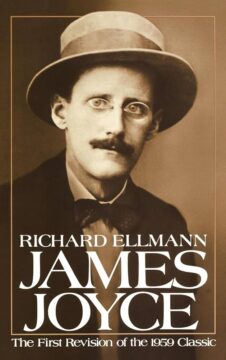 Does the accuracy vital to biography preclude art? Is this a limited, documentary genre or might imaginative truth co-exist with factual truth? Can biography lend itself to narrative, selection, even subjectivity? The writer Ann Wroe, reconceiving the obituary, believes that the soul is not to be found in lists of achievements but in fleeting intimate moments – “that unreachable thing”. It’s not unlike the “epiphanies” distilled by Joyce in Dubliners.
One of Ellmann’s Oxford colleagues, Bernard Richards, recalls that, in the 1980s, when he asked Ellmann how he was getting on with his biography of Oscar Wilde, “he said something like ‘I am up to 1882.’” How studiedly chronological this is. The line withholds a figure in the carpet (a defining pattern to be discerned in the oeuvre of a great writer, a challenge put forward by Henry James in his tale, “The Figure in the Carpet”). I say “withholds” because Ellmann did, at one stage, contemplate a shorter biography and assured his editor that he had a “coherent” idea of Joyce. The editor vetoed this and Ellmann complied.
more here.
Enjoying the content on 3QD? Help keep us going by donating now.
Sunday, June 8, 2025
Storyteller
Raymond Geuss in Sidecar:
Alasdair MacIntyre, who died on 21 May 2025 at the age of 96, never got the memo informing him that Descartes was the father of modern philosophy. He never thought that imagining the disembodied subject abstracted from its social context was a good starting point for anything, or that epistemology had philosophical priority, or that a principal task of philosophy was to defend the validity of our knowledge against sceptical doubt or to argue that some ‘ethical demands’ were ‘obligatory’. He certainly never received the notification issued at the start of the 20th century that henceforth philosophy would be essentially devoted to the analysis of language, the construction of formal arguments and the solution of logical puzzles. In contrast to all this his thought had a kind of archaic substantiality. He was one of the very few anglophone philosophers of the past two hundred years whom one could imagine emerging from the pages of Plutarch or Diogenes Laertius.
There are a number of reasons for this. He was, of course, erudite, highly intelligent and argumentatively incisive, but more importantly he instantiated an unusual form of the unity of thought and life. He had a remarkable ability to learn and willingness to change his position. At various times in his life he was a Marxist, a practising analytic philosopher, an Aristotelian, a Presbyterian, an Anglican, and eventually a Roman Catholic and Thomist-Aristotelian. At times he seemed close to psychoanalysis; he wrote knowledgeably about Hegel, Kierkegaard, Hume, Edith Stein, various figures of the Scottish Enlightenment and a number of theologians. In the case of almost any other philosopher, one might think it a sign of flightiness, but actually it was a mark of intellectual integrity.
More here.
Enjoying the content on 3QD? Help keep us going by donating now.
Offshoring the Planet
Connor O’Brien in Phenomenal World:
The 29th Conference of the Parties to the UNFCCC (COP29) was the much-anticipated “finance COP.” Negotiators were tasked with replacing the previous $100 billion target with a more ambitious New Collective Quantified Goal on Climate Finance (NCQG). After tense last-minute discussions, the developed countries eventually committed to “taking the lead” on providing “at least [$]300 billion per year by 2035,” out of a $1.3 trillion total.
While nominally tripling the previous $100 billion target for developed country financing, the new goal incorporates funding from “a wide variety of sources.” When combined with the effects of inflation, this makes the NCQG at best marginally higher than the previous target, a reality that has generated withering criticism from activists and climate vulnerable states in the global South.
The return of US President Donald Trump has cast further doubt on the credibility of the NCQG. Having already withdrawn again from the Paris Agreement and announced a 90-day USAID spending freeze, the Trump Administration will likely redirect much if not all of the US’s planned multi-billion dollar annual climate finance contributions in the coming years, creating a sudden funding shortfall that will be difficult to fill.
Global South states have already begun to look elsewhere to meet their financing needs.
More here.
Enjoying the content on 3QD? Help keep us going by donating now.
Our Spreadsheet Overlords
Leif Weatherby in The Ideas Letter:
As a new surge of AGI talk has taken over the airwaves in the third year of LLMs, a deeply revealing form of Actually Existing AI speaks against the hype: Elon Musk’s Department of Governmental Efficiency, a sloppy, violent-yet-banal attack on the codebase and massive personal data dragnet of the federal government. While we wait for AGI—and while we’re distracted by endless, ungrounded debates about it—the reality of modern AI is parading in plain sight in the form of the most boring constitutional crisis imaginable. Rather than machine intelligence, AI is an avant-garde form of digital bureaucracy, one that deepens our culture’s dependence on the spreadsheet.
The discourse is providing cover for this disastrous attack. Kevin Roose, a tech columnist for the New York Times, recently explained why he’s “feeling the AGI.” (Unfortunately, Roose’s reasons seem to boil down to, “I live in San Francisco.”) Similarly, Ezra Klein, of the paper’s Opinion pages, thinks the government knows AGI is coming. And the statistician Nate Silver suggests we have to “come to grips with AI.” The internet ethnographer and journalist Max Read has dubbed this surge of AI believers the “AI backlash backlash,” a reaction to the anti-tech skepticism we’ve seen over the past few years. The position, according to Read, is that AI “is quite powerful and useful, and even if you hate that, lots of money and resources are being expended on it, so it’s important to take it seriously rather than dismissing it out of hand.” That’s a far cry from the derisive characterization of Large Language Models (LLMs) like ChatGPT as “stochastic parrots” (which remix and repeat human language) or “fancy autocomplete.” These systems are far more capable—and more dangerous—than the skeptics make them out to be. Dispelling the myth of their intelligence does not excuse us from paying close attention to their power.
More here.
Enjoying the content on 3QD? Help keep us going by donating now.
Current Affairs Is Jordan Peterson Just Making It Up as He Goes?
Luke Savage in The Walrus:
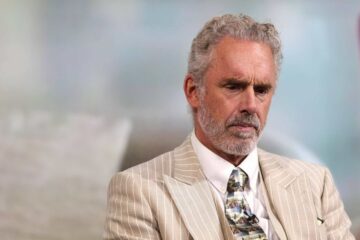 Jordan Peterson’s marketability has always been a bit surprising given his weirdness. He speaks exclusively in a glottal cadence that sounds like Kermit the Frog after a night of heavy drinking. He calls hostile interlocutors “bucko.” He breaks down in tears when discussing children’s cartoons and has occasionally been known to dress like the Joker. But these days, the reactionary right is miserably bereft of real intellectuals, and a decade or so ago, Peterson stepped into this void and was rewarded with global success.
That success, improbably, comes from a unique fusion of obscurantism and conservative pomposity. There’s a certain genre of left-coded writing, for example, that’s rightly derided for its convolution, even meaninglessness. Perhaps the most common hallmark of this style is the incessant bracketing of words in scare quotes, a tactic that often allows the author (or “author”) to assert ideas or concepts while remaining aloof and evasive about what it is they’re actually saying. Sometimes, there are random capitalizations as well, or particular sentences are italicized for no discernible reason. In this genre, everything—right down to the very act of writing itself—plays out in linguistic abstraction, and at a convenient remove from anything tangible or concrete.
More there.
Enjoying the content on 3QD? Help keep us going by donating now.
Audra McDonald’s ‘Gypsy’ Showstopper Is a Revelation
Ben Brantley in The New York Times:
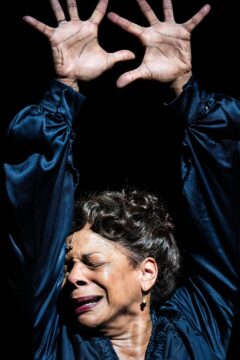 Eight times a week at the Majestic Theater in Manhattan, the entire, harrowing arc of a classic tragedy is delivered in 4½ minutes that are as exhilarating as they are upsetting. All the textbook components of tragedy according to Aristotle are vigorously at work here: self-delusion and self-knowledge, pity and terror, and the sense that what is happening is somehow both unexpected and inevitable.
And all of this — right down to that climactic, rushing release called catharsis — is provided, near the end of a delectably tuneful show, by a lone woman performing a single song in what is generally regarded as the cheeriest of theatrical forms, the American musical. Yet by that number’s conclusion, Audra McDonald, the Tony-nominated star of George C. Wolfe’s Broadway revival of “Gypsy,” has the flayed-skinless appearance of a figure in a Francis Bacon portrait.
More here.
Enjoying the content on 3QD? Help keep us going by donating now.
Alice Notley (1945 – 2025) Poet
Enjoying the content on 3QD? Help keep us going by donating now.
Alasdair MacIntyre (1929 – 2025) Philosopher
Enjoying the content on 3QD? Help keep us going by donating now.
Sunday Poem
Ocean waves crashing on the world’s shores emit more PFAS into the air
than the world’s industrial polluters. — The Guardian, April 19, 2024
Forever Chemicals
DuPont coats the ocean.
Stain, rain, grease-resistant PFAS
slick the tide, crash the cliffs,
catch the breeze. Lungs and leaves
vacuum the patented
miracle compounds to drift
in the vascular currents of earth
through radish roots, umbilical cords,
the baleens of whales, the soft
aspirant skin of frogs.
Chemical chains of popcorn bags
ride the rain back to the corn and crows.
Teflon slides from the skillet to the wheat
to its threshers and beetles.
Comfortable in my polyfluoroalkyl-
saturated raincoat, I balance
on salt-polished boulders that rim
the churn of the bay. Waves pull and pound.
The rocks atomize ocean to a gentle mist;
prisms shutter in the blur, gulls glide.
I breathe deeply, feel the spray and all
that it carries precipitate
into the waters of my body.
by Robbin Woolman
from Ecotheo Review
Enjoying the content on 3QD? Help keep us going by donating now.
Paul Durcan (1944 – 2025) Poet
Enjoying the content on 3QD? Help keep us going by donating now.
Friday, June 6, 2025
3 Quarks Daily Is Looking For New Columnists
 Dear Reader,
Here’s your chance to say what you want to the large number of highly educated readers that make up 3QD’s international audience. Several of our regular columnists have had to cut back or even completely quit their columns for 3QD because of other personal and professional commitments and so we are looking for a few new voices. We do not pay, but it is a good chance to draw attention to subjects you are interested in, and to get feedback from us and from our readers.
We would certainly love for our pool of writers to reflect the diversity of our readers in every way, including gender, age, ethnicity, race, sexual orientation, etc., and we encourage people of all kinds to apply. And we like unusual voices and varied viewpoints. So please send us something. What have you got to lose? Click on “Read more” below…
NEW POSTS BELOW
Escape from Los Angeles
Katya Apekina at Alta:
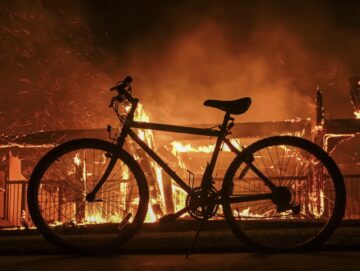 I had read about the Santa Ana winds in a Joan Didion essay but had incorrectly understood them to be a mood-altering phenomenon, something with positive ions that made people feel on edge. It did not occur to me that they were a very real weather event, not just a vibe. That day, January 7, the fires had already started in the Pacific Palisades, which is more than 20 miles from Highland Park, where I live, but even so, I was not overly concerned. At my daughter’s school, they’d kept the kids inside during recess. That seemed excessive—and when my friend texted me some X account, with a crudely circled map, warning about the winds, it sounded overblown. That evening, when I walked to pick my daughter up from her class, there were gusts of wind and palm fronds littering the road. It felt spooky, but also slightly exciting. A weather event! The L.A. version of a snowstorm.
When we got home that evening, the wind picked up and began to shake our old and poorly sealed house. Our sense of excitement tilted. My daughter began to cry. A shingle flew off the roof. From the laundry room window, I could see the red glow of the Eaton Fire in the distance, then the jump of flames.
More here.
Enjoying the content on 3QD? Help keep us going by donating now.
The Core of Fermat’s Last Theorem Just Got Superpowered
Joseph Howlett in Quanta:
 In 1994, an earthquake of a proof shook up the mathematical world. The mathematician Andrew Wiles had finally settled Fermat’s Last Theorem, a central problem in number theory that had remained open for over three centuries. The proof didn’t just enthrall mathematicians — it made the front page of The New York Times(opens a new tab).
But to accomplish it, Wiles (with help from the mathematician Richard Taylor) first had to prove a more subtle intermediate statement — one with implications that extended beyond Fermat’s puzzle.
This intermediate proof involved showing that an important kind of equation called an elliptic curve can always be tied to a completely different mathematical object called a modular form. Wiles and Taylor had essentially unlocked a portal between disparate mathematical realms, revealing that each looks like a distorted mirror image of the other. If mathematicians want to understand something about an elliptic curve, Wiles and Taylor showed, they can move into the world of modular forms, find and study their object’s mirror image, then carry their conclusions back with them.
More here.
Enjoying the content on 3QD? Help keep us going by donating now.
Continuous Thought Machines (CTMs) – The Era of AI Beyond Transformers?
Enjoying the content on 3QD? Help keep us going by donating now.
The End of Silicon Politics
Yascha Mounk at his Substack:
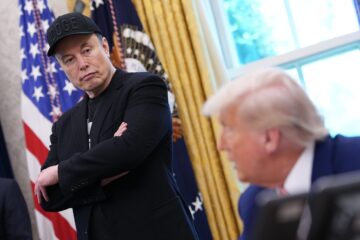 The “HUGEst” political alliance of the century is breaking apart before our eyes in suitably spectacular fashion.
For the last months, the most powerful man in the world, Donald Trump, and the richest man in the world, Elon Musk, were a political item. Musk donated large sums to Trump’s campaign, lavished the newly reelected president with praise on his social network, and neglected his companies to pursue his side quest at the helm of the Department of Government Efficiency (DOGE). In return, Trump gave Musk unprecedented powers over the federal bureaucracy, staged joint press conferences in the Oval Office, and allowed him to lecture the assembled cabinet before rolling cameras. Nothing better symbolized the supposed “vibe shift” in America than the fact that Trump, practically a social pariah when he was first elected to the White House, could upon his return count on the outspoken support of the world’s most famous entrepreneur—and many other leading figures in Silicon Valley.
But it was also clear from the start that the match between Musk and Trump might prove stormy. The egos of both men are evidently outsized, their temperaments famously volatile. It did not take a genius to predict that their supposedly perfect match might prove short-lived, or even that it would end in acrimony. And yet, the speed with which their epic bromance has turned into an explosive feud is astonishing.
More here.
Enjoying the content on 3QD? Help keep us going by donating now.
AI Drug Design with Isomorphic Labs
Enjoying the content on 3QD? Help keep us going by donating now.
Friday Poem
Definitions
Behind the black outline
of a split-trunked tree,
a gray sky meets a gray sea.
It is as if heaven and sea
were one in a gray ease.
Is there no demarcation,
then, between heaven and sea,
no place where one is one
and the other, the other?
Ah, but the bright sun rises
with all its knowing, draws a line,
says, “This is the sea, that heaven,”
and we look about a world thinking
this is me, that is everything else
but remembering that moment
before the sun rose.
……………. Brahma dreams his delicious dreams
……………. between wake and sleep. It is the world
……………. he dreams, and the stars, and all
……………. possibilities – And we the dreams dream
……………. back the dreamer, shutting his eyes
……………. and seating him cross-legged on a lotus.
……………. We dream for him our own heroes
……………. how one, at the end of a hard life of heroing,
……………. is offered heaven, but he says “No,” refusing
……………. to accept that old fracturing into heaven and hell.
Enjoying the content on 3QD? Help keep us going by donating now.