
Zoe Guttenplan at Literary Review:

In the middle of March 1931, Virginia Woolf wrote a polite letter to a woman sixteen years her junior. The recipient, a feminist writer named Winifred Holtby, was embarking on a book-length study of Woolf’s work. ‘I should much prefer that the book should be, as you say written impersonally, from material in the British Museum,’ Woolf wrote. ‘My feeling is that when people are alive, so much personality is bound to creep in, that it is better for the critic to keep aloof as far as possible.’ By the time Holtby’s Virginia Woolf was published in October 1932 it had been pipped to the post by two books, one in German and one in French. But still, hers has the slightly bruised honour of being the first English-language monograph about Woolf.
It was certainly not the last. Woolf studies are, at this point, a cottage industry. As well as the monographs, you will find thousands of articles devoted to her life and work in the biannual Virginia Woolf Miscellany, the triannual Virginia Woolf Bulletin and numerous other journals and anthologies. There is, of course, always more to say; the possibilities for interpretation are endless.
more here.
Enjoying the content on 3QD? Help keep us going by donating now.
 Dear Reader,
 In this droll and timely analysis of extreme wealth, New Yorker staff writer Osnos notes that superyacht demand is outstripping supply. In some countries you have to wait for bread, water or inoculations; in others for giant sea-going vessels. In 1990, there were 66 US billionaires; by
  In 2023, one out of 20 Canadians who died received a physician-assisted death, making Canada the No. 1 provider of medical assistance in dying (MAID) in the world, when measured in total figures. In one province, Quebec, there were more MAID deaths per capita than anywhere else. Canadians, by and large, have been supportive of this trend. A 2022 poll showed that a stunning 86 percent of Canadians supported MAID’s legalization.
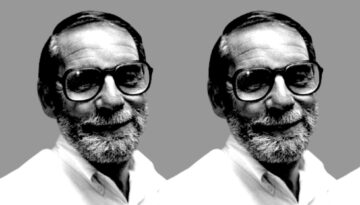 In the spring of 1991, when I was a junior at Princeton, I took John McPhee’s seminar on nonfiction writing. Back then, I was an English major who hoped to become a novelist, and I focused primarily on writing short stories. I had no real interest in nonfiction. I hadn’t published a single word in any campus publication, and I had never considered a career in journalism. But John McPhee’s course was famous for having produced authors, and writing—in the undisciplined, impractical, and insecure dreamworld of a 21-year-old mind—was what I hoped to do someday. So I signed up for the class.
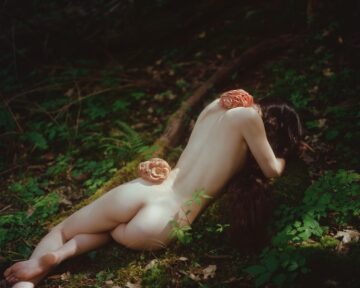 The concept of bringing back the scent of extinct flowers started with Ginkgo Bioworks, a Boston-based biotech company founded by five MIT scientists, with an ethos rooted in the lessons of Jurassic Park: that life finds a way. “A lot of the story of biotechnology for the past two decades has been talking about living things through the metaphor of computers and code,” said Christina Agapakis, an interdisciplinary synthetic biologist and former head of creative at Ginkgo Bioworks. “Living things are coded with DNA. Now, life can be programmable.”
 Several recent books chronicling specifically American Jewish dissent from Zionism, past and present, demonstrate how this relatively recent Zionist “consensus” was manufactured. Geoffrey Levin and Marjorie N. Feld tell stories of once-mainstream dissidents and naysayers purged from the ranks of even straightforwardly liberal American Jewish institutions, demonstrating the force with which unconditional support for Israel had to be constructed from the top down in the immediate postwar era. Looking to the more recent past, Oren Kroll-Zeldin and Peter Beinart examine efforts—in Beinart’s case, his own—to break through that heavily policed consensus since the turn of the century.
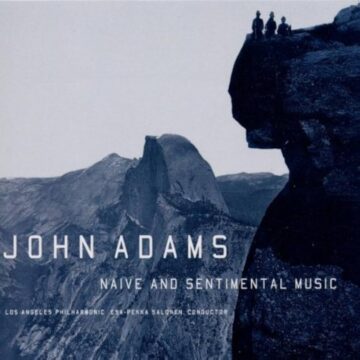 Unlike the other usual contenders for the title of greatest living American composer, who rose up out of lofts and art galleries (Glass, Reich) or Hollywood recording studios (John Williams), Adams is a denizen of the concert hall and the opera house—the restless maximalism of his greatest works is at its best live, heard with undivided attention. And unlike the atonal modernism he rejected, his music has a certain populist quality, a fundamental legibility to broad audiences. But keeping track of the rapidly shifting moods and subversions and extensions of musical convention may be an acquired taste: It can seem that the innovations that made his reputation have simultaneously restricted his renown largely to the confines that the classical music world has created for itself.
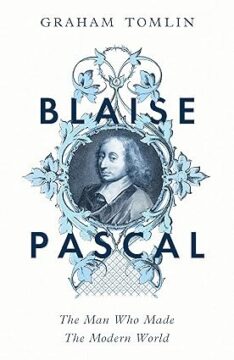 What does it mean to be modern? The answer was largely determined rather early in the modern era by three thinkers who, as luck would have it, not only came from the same place and spoke the same language but were also near contemporaries. When René Descartes was born in 1596, Michel de Montaigne had only been dead for four years. Blaise Pascal, the third of them, was born in 1623, when Descartes was not even thirty and yet to make a name for himself. In 1647, Pascal and Descartes, the young scientific prodigy and the celebrated founder of modern rationalism, would meet in person, but the encounter didn’t go very well. Descartes didn’t seem particularly impressed by Pascal, while Pascal must have found Descartes a touch too patronising. To ensure the survival of their mutual admiration, certain people should perhaps steer clear of each other.
 In 2025, in accordance with Moore’s Law, we’ll see an acceleration in the rate of change as we move closer to a world of true abundance. Here are eight areas where we’ll see extraordinary transformation in the next decade:
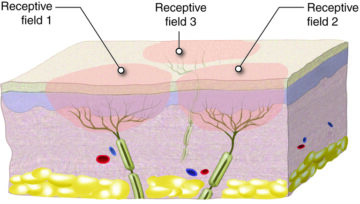 Pain might flicker, flash, prickle, drill, lancinate, pinch, cramp, tug, scald, sear, or itch. It might be blinding, or gruelling, or annoying, and it might, additionally, radiate, squeeze, or tear with an intensity that is mild, distressing, or excruciating. Yet understanding someone else’s pain is like understanding another person’s dream. The dreamer searches out the right words to communicate it; the words are always insufficient and imprecise. In 1971, the psychologist Ronald Melzack developed a vocabulary for pain, to make communication less cloudy. His McGill Pain Questionnaire, versions of which are still in use today, comprises seventy-eight words, divided into twenty groups, with an additional five words to describe intensity and nine to describe pain’s relationship to time, from transient to intermittent to constant. Not included in the M.P.Q. is the language that Friedrich Nietzsche used in describing the migraines that afflicted him: “I have given a name to my pain and call it ‘dog.’ It is just as faithful, just as obtrusive and shameless, just as entertaining, just as clever as any other dog.”
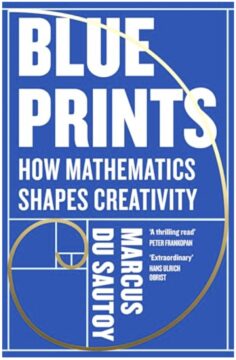 In the first movement of his piece, Messiaen wanted to create the strange sense of time ending. He achieved this in the most stunning manner. Time depends on things repeating, so he needed to produce a structure where you never truly hear the moment of repetition. While the clarinet imitates a blackbird and the violin a nightingale, the piano part plays a 17-note syncopated rhythm that just repeats itself over and over. But the chord sequence that the pianist plays, set to this rhythm sequence, consists of 29 chords, which are again repeated over and over. Such repeating patterns might lead to boredom and predictability, but not in this case. Because Messiaen’s choice of numbers—17 and 29—means that something rather magical… or mathematical, occurs. The numbers he chose are prime numbers, and their mutual indivisibility means that the rhythm and harmony that Messiaen has set up never get back in sync once the piece is in motion.
 The goal of understanding how inert molecules gave rise to life is one step closer, according to researchers who have created a system of RNA molecules that can partly replicate itself. They say it should one day