
Ruchi Kumar in Undark:
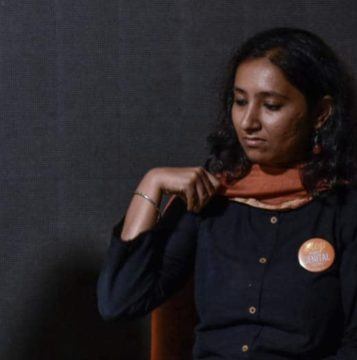 Arefa Johari was 7 years old when she was taken by her mother to a decrepit building in the back alleys of Bhendi Bazaar, an old market area in Mumbai. The overcrowded bazaar is largely populated by members of the Dawoodi Bohra community, a minority Shia Muslim group that accounts for around 2 million of India’s population of well over 1 billion people.
Once inside, the mother and daughter were greeted by an old woman. “My mother had told me before we went there that something would happen to me down there but I don’t remember thinking it was anything to worry” about, she recalls, “and so I did not panic at first.”
The woman took Johari and lifted her frock while her mother held her down on a mattress on the floor; minutes later her clitoral hood had been cut, in accordance with the ancient tradition of khafz, or female genital cutting (FGC). “I was in a lot of pain and I remember crying inconsolably,” says Johari, a journalist and an anti-FGC activist who is now 34 years old.
More here.
 Flash forward to the present day, as the art of cinema is being systematically devalued, sidelined, demeaned, and reduced to its lowest common denominator, “content.”
 Dalton is one
  Elizabeth Shakman Hurd and Nadia Marzouki in Boston Review:
 Hannah Levintova in Mother Jones:
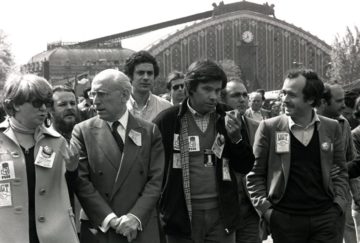 Maya Adereth interviews Felipe González in Phenomenal World:
 Sam Moyn in The New Republic:
 In spring thoughts traditionally turn to travelling, and so to
  For generations, Anna Karenina and Emma Bovary have loomed as the nonpareils of self-loathing literary heroines. For Anna, guilt over having abandoned her husband and child, paired with a jealous nature, compels her to destroy the love she shares with Count Vronsky — and head for the train tracks. For Emma, dumped by a conscience-free bachelor with whom she has an extramarital affair — and unable to repay the debts she accrues on account of her shopping addiction — a spoonful of arsenic ultimately beckons. Lately, however, Tolstoy and Flaubert have had stiff competition on the self-harm front, thanks to women novelists intent on exploring their female characters’ propensity to act out their unhappiness on their bodies.
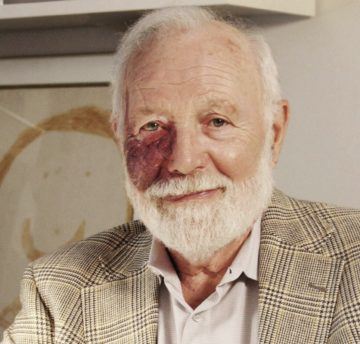 The mathematics community lost a titan with the passing last month of Isadore “Is” Singer. Born in Detroit in 1924, Is was a visionary, transcending divisions between fields of mathematics as well as those between mathematics and quantum physics. He pursued deep questions and inspired others in his original research, wide-ranging lectures, mentoring of young researchers and advocacy in the public sphere.
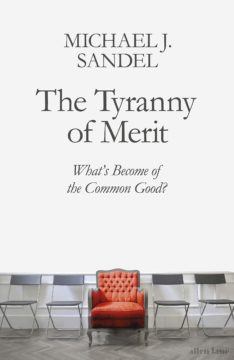 A distinguishing mark of classical political philosophy is its focus on the ruling claims of regimes. Classical philosophers sifted and evaluated the distinctive qualities invoked to legitimate governance by some number of
 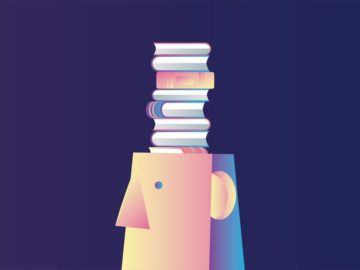 Shortly after 335 B.C., within a newly built library tucked just east of Athens’ limestone city walls, a free-thinking Greek polymath by the name of Aristotle gathered up an armful of old theater scripts. As he pored over their delicate papyrus in the amber flicker of a sesame lamp, he was struck by a revolutionary idea: What if literature was an invention for making us happier and healthier? The idea made intuitive sense; when people felt bored, or unhappy, or at a loss for meaning, they frequently turned to plays or poetry. And afterwards, they often reported feeling better. But what could be the secret to literature’s feel-better power? What hidden nuts-and-bolts conveyed its psychological benefits?