
Erin McElroy, Meredith Whittaker, and Nicole E. Weber in Public Books:
 Throughout the pandemic, new surveillance systems—used by landlords, educational institutions, and employers—have converged, capturing new forms of data and exerting new forms of control in domestic spaces. COVID-19 prompted bosses and schools to accelerate the deployment of surveillance and tracking systems. As the pandemic drags on, many are still monitoring and assessing remote learners and workers in their most intimate environments. Landlords, meanwhile, took the pandemic as a time to promise “touchless” convenience and increased control over the homes of their tenants, rushing to install tracking systems in renters’ homes. Whatever the marketing promises, ultimately landlords’, bosses’, and schools’ intrusion of surveillance technologies into the home extends the carceral state into domestic spaces. In doing so, it also reveals the mutability of surveillance and assessment technologies, and the way the same systems can play many roles, while ultimately serving the powerful.
Abolitionist organizers and scholars have long demonstrated the ways in which the carceral state exists well beyond prisons, jails, and police. As Michelle Alexander reminds us in her foreword to the excellent book Prison by Any Other Name, “‘Mass incarceration’ should be understood to encompass all versions of racial and social control wherever they can be found, including prisons, jails, schools, forced ‘treatment’ centers, and immigrant detention centers, as well as homes and neighborhoods converted to digital prisons.”
More here.
 On a recent afternoon, the comedian Jaboukie Young-White walked into Syndicated, a bar and movie theatre in Bushwick. He had bleach-blond hair and the beginnings of a mustache, and he wore workout clothes. “I like to exercise, but ‘I want to look plump and juicy’ isn’t enough motivation,” he said. “I need more of a narrative.” He had reserved a spot in a Muay Thai class nearby, but the class had been cancelled because of a sudden rainstorm. The gym’s owner texted him a video, and Young-White held up his phone: floor mats covered in gushing water. “Life during climate change, I guess,” he said, sliding into a booth. Two movie projectors beamed images onto a wall—“Fitzcarraldo,” the Werner Herzog film, next to “Whenever, Wherever,” the Shakira video. “Every bar should have this,” Young-White said. “If you’re on a first date and things get super awkward, you can at least look up and comment on something together, instead of each disappearing into your phones.”
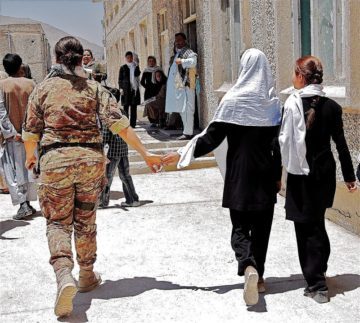 The case at hand that prevents me from an unqualified rooting for the category of “experience,” is the exemplary case of Malala Yousafzai of Pakistan, who has traversed the distance from female “experience” to feminist “expertise”, and who, like others before (and since) that have made that journey from the “margins” to the “center” of imperial power, has now switched from being a “voice of the oppressed” to becoming an “expert” who can speak to us and teach us about those authentic “other” women in the global south—in this case, Afghan women– to whom her prior proximity (“experience”)– renders her an “expert” on today. From experience to expertise then, is a pretty straightforward line, following the predictable path forged also by white feminism in thrall and service to imperial designs past and present. This is the path that was announced with great fanfare shortly after 9/11 by First Lady Laura Bush and enthusiastically supported by the Feminist Majority Foundation, that would “save brown women from brown men” by going in to the “backward” country of Afghanistan overrun by crazy “Moslem” men, in the process unleashing a 20-year war on the population that had had nothing to do with 9/11. The initial military intervention was then followed up over the next two decades with countless “development” schemes that enriched a few at the expense of the many, and when the cost of this unending war became unpopular with the citizenry “back home” in the USA over time—we left the hapless “natives” that included those very women we had been so concerned with “saving,” at the mercy of anarchy and chaos.
 Aditi Sahasrabuddhe in Phenomenal World (Photo by
  Gernot Wagner in Bloomberg (Photo by
  Liza Batkin in the NY Review of Books:
 Early in Werner Herzog’s 1974 documentary The Great Ecstasy of the Woodcarver Steiner, we find its subject, a champion “ski-flier,” in the studio where he works as an amateur woodcarver. Brushing his hand over a tree stump, Walter Steiner describes the forms his chisel will release: “I saw this bowl here, the way the shape recedes, it’s as if an explosion had happened, and the force cannot escape properly and is caught up everywhere.” Trapped force is not to be the film’s subject. Rather, its subject is fear—or, as Steiner calls it, “respect for the conditions.” From the ski-jump at Planica, Slovenia, he leaps out of his own imagination and into Herzog’s. Steiner’s coyness serves his strangely sober ecstasy. His afterimage haunts another work of creative documentation, composed at roughly the same time, some five hundred kilometers to the northeast. The Gentle Barbarian, Czech novelist Bohumil Hrabal’s memoir of his friendship with the painter and printmaker Vladimír Boudnik, depicts life as a more reckless leap of faith—one that lands not in the hands of God, but in a tightening rope.
 “It’s impossible to read about Simone de Beauvoir’s life without thinking of your own,” the biographer Hazel Rowley wrote in her foreword to the English translation of Beauvoir’s “Memoirs of a Dutiful Daughter.” How did the image of this turbaned Frenchwoman in a severe, 1940s-style suit, sitting beside Jean-Paul Sartre at a table in the Cafe de Flore or La Coupole and writing all day long, become the avatar of a generation?
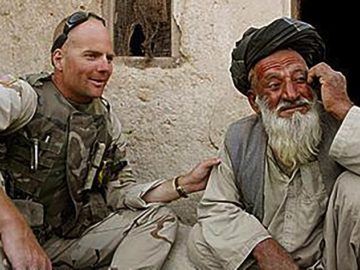 AFGHANISTAN MAY NOT BE A NATION
 At one point last year, high schooler Rasha Alqahtani had finals coming up and 35 Zoom calls booked. To manage her busy schedule, she had duplicate calendars—one on Google Calendar, the other printed and placed behind her laptop, so that even a power outage wouldn’t derail her. The now-18-year-old from Riyadh, Saudi Arabia, had laser-like focus on an extracurricular passion project: Creating a video-game tool to help diagnose teenagers with generalized anxiety disorder.
 Resolving the great cosmological debate of the mid-20th century was not on their agenda. Yet in 1964, astrophysicists Arno A. Penzias and Robert W. “Bob” Wilson unexpectedly discovered a radio hiss that turned out to be relic radiation from the early universe. Much to their surprise, their finding, after being interpreted and published the following year, helped settle a long-standing argument about time and space. The Big Bang theory postulated the universe had been created with an initial burst of matter and energy, whereas the steady-state theory—its main rival—described no primordial eruption but rather a slow, continuous creation of material that remains ongoing. The Penzias-Wilson discovery of background radiation tipped the scale toward the Big Bang, away from the steady-state.
 “You can’t put the genie back in the bottle.” Those of us eager to get rid of nuclear weapons hear this a lot and at first glance it seems true; common sense suggests that neither genies nor nuclear weapons are readily rebottled. But this “common sense” is uncommonly wrong. Technologies have appeared throughout human history and just as the great majority of plant and animal species have eventually gone extinct, ditto for the great majority of technological genies. Only rarely have they been forcibly restrained or erased; nearly always they have simply been abandoned once people recognized they were inefficient, unsafe, outmoded, or sometimes just plain silly.