
Ritchie Robertson at Literary Review:
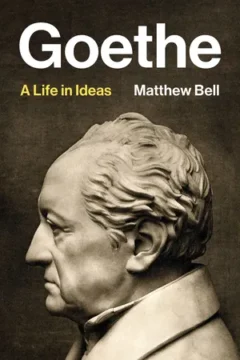 Goethe’s philosophical coordinates came initially from Rousseau and Spinoza, two thinkers who appealed to and fortified his own disposition. Rousseau’s concept of amour de soi, the urge for self–preservation, appears in Goethe as the need for individual authenticity. The opposing force, Rousseau’s amour propre, becomes the dead weight of social conventions suppressing whatever is distinctive, original and creative. Hence Goethe’s protagonists are powerful, charismatic personalities who experience society as a ‘prison’, the metaphor used by Werther and Faust. For some, such as Werther, the only way out is death. Others, such as Faust, preserve their essential character, but the struggle to do so leaves victims in its wake. Werther himself, unable to conquer his love for the married Lotte, leaves her and her husband devastated by his suicide. Faust’s egotism inflicts tragedy on his lover Gretchen. Goethe is honest about the cost to others of preserving one’s own authenticity.
Disliking the arid Lutheranism of his upbringing, Goethe found a more congenial religious outlook in the Dutch-Jewish philosopher Spinoza, who was often unjustly reviled as an atheist. Spinoza offered him a God who was identical with the world.
more here.
Enjoying the content on 3QD? Help keep us going by donating now.
 A human cell is a Rube Goldberg machine like no other, full of biological chain reactions that make the difference between life and death. Understanding these delicate relationships and how they go wrong in disease is one of the central fascinations of biology. A single mistake in a gene can bend the protein it makes into the wrong shape. A misshapen protein can’t do its job. And for want of that protein, the organism–you–may start to fall apart.
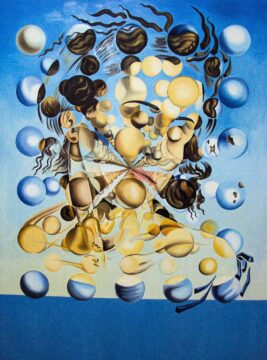 The pillow is cold against your cheek. Your upstairs neighbor creaks across the ceiling. You close your eyes; shadows and light dance across your vision. A cat sniffs at a piece of cheese. Dots fall into a lake. All this feels very normal and fine, even though you don’t own a cat and you’re nowhere near a lake. You’ve started your journey into sleep, the cryptic state that you and most other animals need in some form
 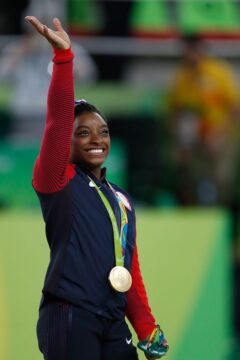 Sports writing can be brilliant; it is one of the most exciting forms, full of suspense and rich with lore. Yet most sports reporting winds up formulaic and pedestrian. This is an arena of high drama and individual challenge, but for the performer, the interest is in the training and the doing, not the words the rest of us try to surround it with. Reporters lean hard on interviews with athletes, yet they only turn chatty when they retire from their sport. While competing, they are intense and focused, utterly uninterested in coming up with quotable sound bites. They are not running for public office. They are running for speed, or swimming, or doing floor routines.
 In the nineteenth century, the invention of anesthesia was considered a gift from God. But post-operative pain relief has continued to rely on opioids, derivatives of opium, the addictive substance employed since
  Political judgment takes place within political time. And political time is less a matter of chronology than of genre. What kind of moment are we living through? Is our system of government undergoing a cyclical swing, an existential transformation, or something in between? Nine months into the second Trump administration, Americans confront three very different answers to these questions.
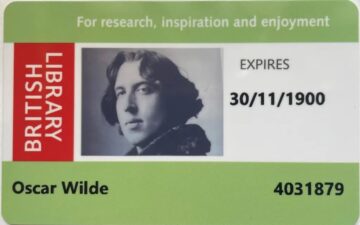 The British Library has honoured late Irish writer Oscar Wilde by reissuing a reader’s card in his name, 130 years after his original was revoked following his conviction for “gross indecency”.
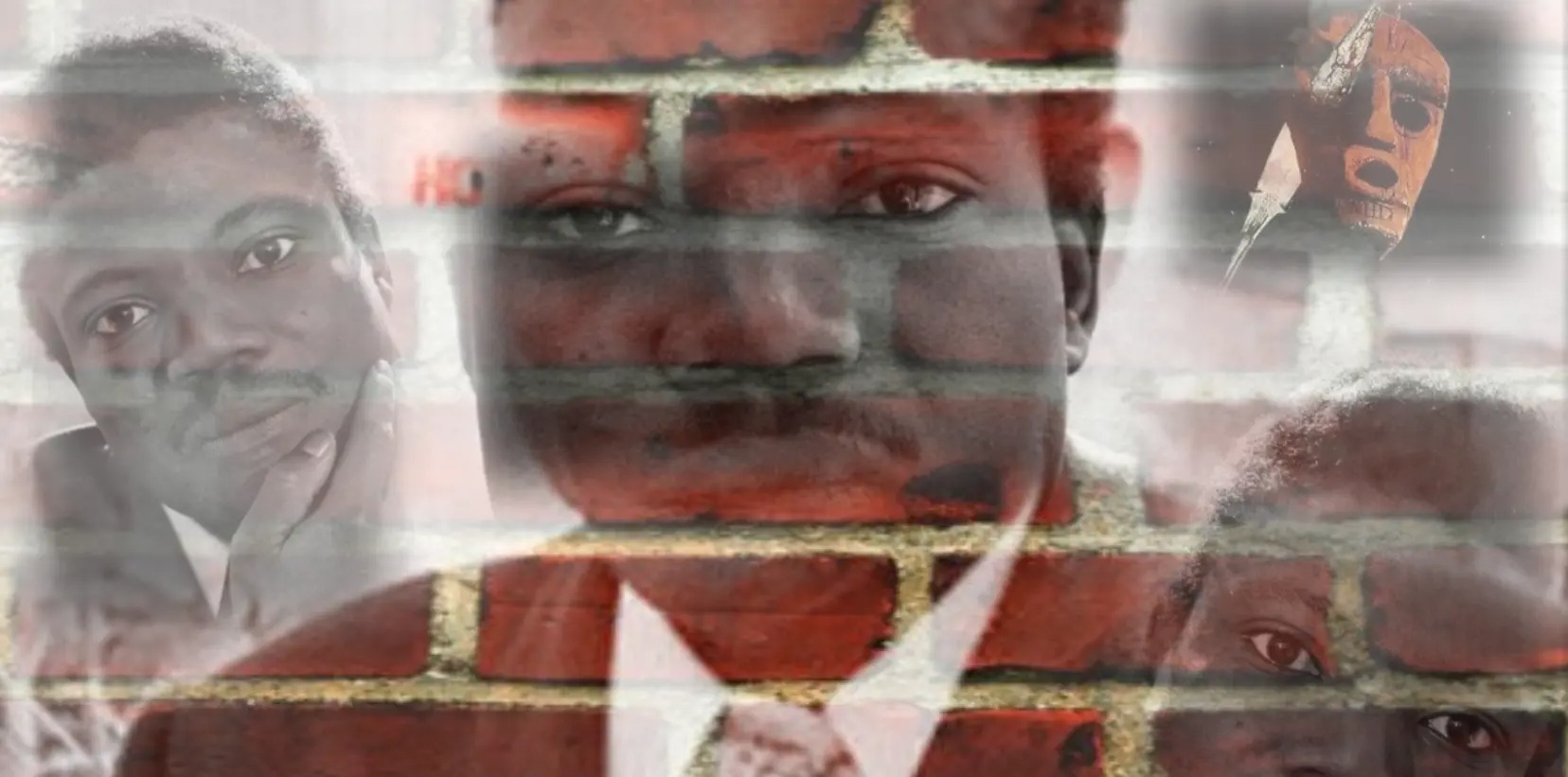 The first time I read Yambo Ouologuem’s novel, Bound to Violence, I was shocked by the fury and seeming lack of restraint with which he wrote the story. Yet at the same time, his inventive style struck a chord with me, although I could not immediately explain why. I discovered the novel by chance at an antiquarian bookshop in Eindhoven, where I was living after my arrival in the Netherlands as a refugee fleeing the First Gulf War in Kuwait. The novel was tucked among books that had nothing to do with Africa, lined up alphabetically in a row as could be expected in bookstores or libraries. It was at that antiquarian bookshop that I encountered this book written by a man with a name that sounded Nigerian at first. The cover of the English translation was eye-catching: it was black with an image of a carved wooden mask impaled by a spear. The subtitle was noteworthy and revealing: A savage, panoramic novel of Black Africa.
 The project of understanding how the brain creates thoughts and feelings has progressed in fits and starts, leading some to despair that the so-called “mind-body” problem is fundamentally unanswerable. How can nonphysical ideas reside in physical brains? Yet, George Lakoff and Srini Narayanan claim in their new book The Neural Mind: How Brains Think, we now have a working theory.