
Noah Smith at Noahpinion:
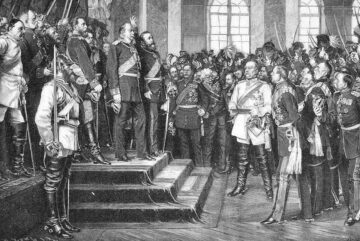 A few years ago, it looked as if the U.S. and China might battle over global hegemony and preeminence. But this looks less likely now, thanks to America’s own behavior. Under Trump 2.0, the U.S. has alienated many of the key allies it would have needed in order to match China’s market size and manufacturing acumen, leaving America standing alone against a country four times its size. Tariffs have hobbled America’s already tottering manufacturing sector. Just a few months after Trump’s inauguration, the idea of a democratic world led by the United States standing up to challenge China’s rise now seems more than a little far-fetched. Meanwhile, China continues to bully and overpower Trump in trade negotiations.
This basically leaves China as the world’s preeminent power by default. The likeliest outcome is that this will be a “Chinese century” — though it won’t look quite like the “American century” did, because China will use its power and influence very differently than the U.S. did.
More here.
Enjoying the content on 3QD? Help keep us going by donating now.
 In 2000 TIME’s editors sat down to
  We all have those family recipes that get passed down from generation to generation. From chocolate chip cookies to grandma’s secret spaghetti sauce, these recipes connect us to our past and our loved ones. But some of these family recipes are a little more unique than the rest — like the tradition of using ants to make yogurt.
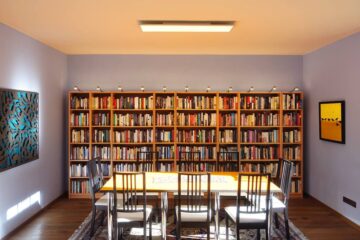 The finalists for this year’s National Book Awards have been announced. Among the 25 nominees are novelists
 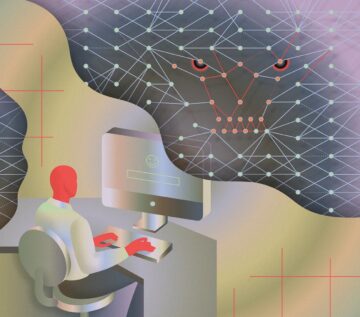 Are AIs capable of murder?
 Matthew Egbert
 “E
“E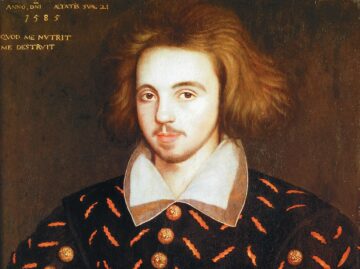 He was a radical,
 W
W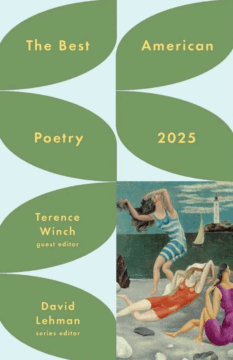 Lehman the poet-journalist was now series editor of a popular anthology, a prestige role that bred more prestige roles: judging the National Book Award for poetry, editing The Oxford Anthology of American Poetry, and a 22-year position teaching creative writing at The New School. By handing over annual guest editorship of The Best American Poetry to prominent poets such as Ashbery, Yusef Komunyakaa, Edward Hirsch, and Louise Glück, Lehman aligned the anthology series with a broad spectrum of influential and prize-winning poets whose “ecumenical” taste—Lehman’s favored descriptor for his guest editors’ disposition—became aligned with his own.
 I had a visceral distaste for the country’s imperial hegemony and its support of oppressive regimes all over the world in the name of fighting the Cold War. The ongoing Vietnam War was an obvious irritant. At the same time, I knew that in the world of new ideas, entrepreneurial innovations and academic excellence, American pre-eminence was undeniable.