
Jenny Morber in Undark:
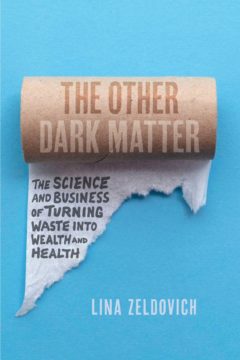 IN OSAKA, JAPAN, in the early-1700s, neighboring villages fought over rights to city residents’ excrement. Much of Japan’s soil, sandy and poor in nutrients, produced feeble crops and supported few animals, so farmers depended on human fertilizer to grow food. And they were willing to pay for it. Often in exchange for a fee paid to each household, farmers collected what was called night soil at regular intervals to fashion into fertile compost. Poop was precious. Defecating at a friend’s house was considered an act of generosity — a gift. Landlords earned extra income by retaining collection rights from tenants: Often the bigger the household, the lower the rent. As the city of Osaka grew, so did the value of residents’ waste, until prices climbed to such extremes in the early 1700s that some desperate farmers resorted to stealing it, despite potential prison time.
Roughly a hundred years later, London’s River Thames was choked with human and animal waste, emitting noxious methane, ammonia, and the rotten egg smell of hydrogen sulfide. Seemingly more sewage than water, the river’s banks swelled with refuse, interfering with marine navigation and making life miserable for many Londoners. Finally compelled to act, city authorities contracted boats to carry the sludge out to sea and dump it — at the approximate cost of a million pounds, or more than $170 million in today’s U.S. dollars.
Why are these stories of human excrement so different? The key, according to science journalist Lina Zeldovich in “The Other Dark Matter: The Science and Business of Turning Waste into Wealth and Health,” is that one culture regarded poop as trash, the other as treasure.
More here.
 In advanced economies, earnings for those with less education often stagnated despite gains in overall labor productivity. Since 1979, for example, US production workers’ compensation has risen by
 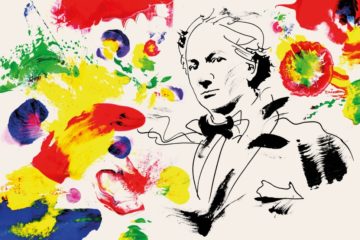 There have been many English Baudelaires through the 150 years since his death, two dozen reasonably ample selected poems, and a dozen or so Les Fleurs du mal (a new one arrives next month, translated by
  Religion and sincerity go hand in hand, and neither one is particularly associated with Andy Warhol, whose name is synonymous with ironic, detached irreverence. But you don’t have to dig very deep in Warhol’s biography or catalog to find plenty of both. Warhol was Byzantine Catholic, a denomination combining aspects of both Western and Eastern rites. He went to church with his mother almost every Sunday until her death in 1974 and attended regularly in the years after. One of his last diary entries, two months before his death, records that he “went to the Church of Heavenly Rest to pass out Interviews and feed the poor.” It’s impossible to know for sure where the limit of irony lies with an artist like Warhol; maybe he went to Church as a bit. But his deep superstitions and his fear of dying, at least, seem to have been very real, even before he was nearly assassinated.
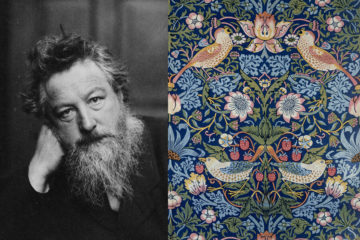 Behind the exquisite floral wallpaper lurks a social reformer. British designer William Morris (1834-96) is today best known for his lush, garden-inspired patterns for wall coverings, but his lifework encompassed far more than mere decoration. He sought nothing less than to overturn what he considered the deleterious effects of industrialization on Victorian society. And his artistic influence continues today, not only at London’s Victoria and Albert Museum, an institution he helped shape, but also as inspiration to contemporary artists.
 Underground creepy crawly state. Bosom malignancy. Sun oriented force. These might sound like expressions from a work of fiction, but they are actually strange translations, pulled from the scholarly literature, of scientific terms — ant colony, breast cancer and solar energy, respectively. Guillaume Cabanac, a computer scientist at the University of Toulouse, France, spots such bizarre phrases in academic papers every day.
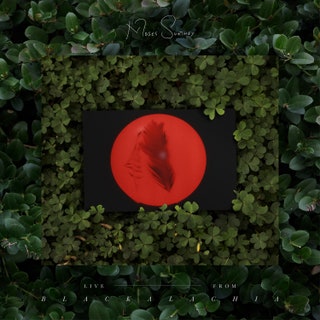 About 30 minutes into his new concert film Blackalachia,
 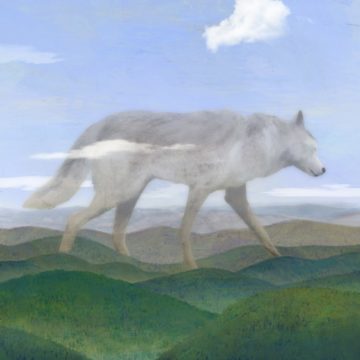 Of course, he was looking for love. Aren’t we all? And he seemed to be looking for it in all the right places—namely, the southern coastal counties of California, where he was, literally, the lone wolf, with seemingly no male competitors at all. In fact, OR-93 (2019-2021) was the first gray wolf to appear in the region for two or three hundred years. The absence of rivals was good news for him, but the rest of the equation was hopeless, because there were apparently no female counterparts for him to encounter there, either—no one to meet and mate with. To be honest, OR-93’s journey from his birthplace, in Oregon, to California was reproductively doomed from the start. He could have crossed party lines with a wayward labradoodle or a lusty mountain
 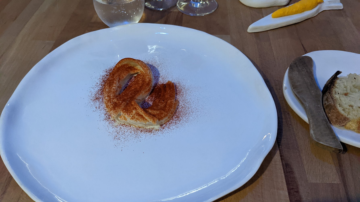 There is something to be said about a truly disastrous meal, a meal forever indelible in your memory because it’s so uniquely bad, it can only be deemed an achievement. The sort of meal where everyone involved was definitely trying to do something; it’s just not entirely clear what.
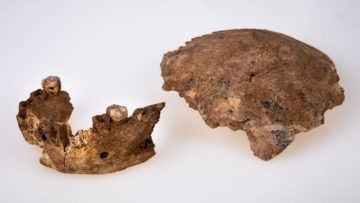 A long-standing argument that Homo sapiens originated in East Africa before moving elsewhere and replacing Eurasian Homo species such as Neandertals has come under increasing fire over the last decade. Research this year supported an alternative scenario in which H. sapiens evolved across vast geographic expanses, first within Africa and later outside it.
 India and Pakistan have an impressive record of cooperation and peace initiatives. Virtually every bilateral problem they had before 1964 – except
  A NASA spacecraft has entered a previously unexplored region of the Solar System — the Sun’s outer atmosphere, or corona. The long-awaited milestone, which happened in April but was announced on 14 December, is a major accomplishment for the Parker Solar Probe, a craft that is flying closer to the Sun than any mission in history. “We have finally arrived,” said Nicola Fox, director of NASA’s heliophysics division, located at the agency’s headquarters in Washington DC. “Humanity has touched the Sun.”
 “A happy family,” so
 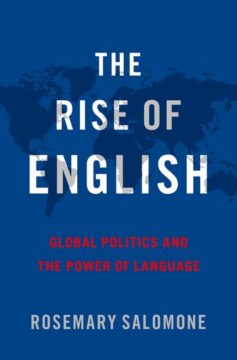 For much of the previous millennium, a pidgin language was used around the Mediterranean for trading, diplomatic, and military purposes. Based originally on Italian and Occitano-Romance languages, it had indirect ties to the Germanic Franks and thus gained the term lingua franca.