
Efi Chalikopoulou in Vox:
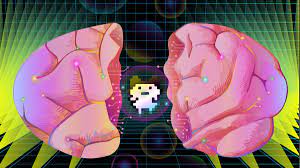 The smooth, plastic egg fits in your palm. Brightly colored shell. Gray screen the size of a postage stamp. Below that, three buttons. Pull a thin plastic tab on the side, and the screen lights up. An 8-bit egg appears onscreen. It quivers and rolls and shakes until, finally, your Tamagotchi is born. Inside your head, the squishy, enigmatic organ known as the brain begins firing — not only to process the visual and sensory stimuli, but to generate curiosity in this new object. In fact, the spark of this fixation likely began before you even held this toy, when you heard friends feverishly speak about it and saw it in the clutches of popular kids at school.
Obsession is more than a cultural phenomenon — it’s part of our brain chemistry, and part of what it means to be human. For hundreds of thousands of years, we evolved in environments of scarcity, where social structures were required for survival, and seeking and curiosity were imperative. In the modern era, the same brain chemistry that lured us to the sweetness of fruit and alerted us to the presence of danger now draws us to fads like the Tamagotchi.
“People are born stupid,” says Paul Silvia, a psychologist at the University of North Carolina Greensboro and author of Exploring the Psychology of Interest. Many newborn animals already have instincts about their environment and quickly gain mobility. Sea turtles, for example, emerge from eggs ready to seek the sea. Human babies, meanwhile, are notably helpless. “We can’t really move, we can’t feed ourselves, we don’t have a lot of innate behaviors,” Silvia says. “But there’s an epic learning period that happens. You can be born knowing how to take care of yourself, or you could be born knowing how to learn.” That’s where interest comes in.
More here.
 In a paper published in Synthese (#53) in 1982, ‘Contemporary Philosophy of Mind’, Richard Rorty wrote an enthusiastic account of the revolutionary ‘Ryle-Dennett tradition’. Was I really as radical a revolutionary as he said I was? I responded mischievously, perhaps rudely:
 My breakthrough infection started with a scratchy throat just a few days before Thanksgiving. Because I’m vaccinated, and had just tested negative for COVID-19 two days earlier, I initially brushed off the symptoms as merely a cold. Just to be sure, I got checked again a few days later. Positive. The result felt like a betrayal after 18 months of reporting on the pandemic. And as I walked home from the testing center, I realized that I had no clue what to do next.
 We know by now that authoritarian populists have handled the Covid-19 pandemic badly. Both Donald Trump and Jair Bolsonaro presided over spiraling death rates, fueled by a disregard for medical science and neglect of public health imperatives.
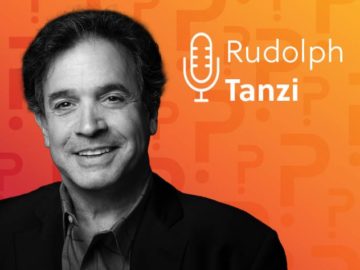 Harvard Medical School professor of neurology Rudolph Tanzi discusses how lifestyle choices can help maintain brain health during a person’s lifespan. Topics include Alzheimer’s disease and other kinds of dementia, the role of genetics and environment in health, and the importance of sleep, exercise, and diet in controlling neuroinflammation.
 I have a childhood memory of looking in the bathroom mirror, and for the first time realizing that my experience at that precise moment—the experience of being me—would at some point come to an end, and that “I” would die. I must have been about 8 or 9 years old, and like all early memories this one too is unreliable. But perhaps it was at this moment that I also realized that if my consciousness could end, then it must depend in some way on the stuff I was made of—on the physical materiality of my body and my brain. It seems to me that I’ve been grappling with this mystery, in one way or another, ever since.
 Only two of the following three cultures are, as far as we know, real. In 2022, perhaps, I will reveal which of them I made up.
 The preliminary data about omicron and vaccines is
  French far-right pundit Éric Zemmour recently launched his presidential campaign with a
  On December 15, 2011, Comet Lovejoy plunged through the sun’s corona
  I
I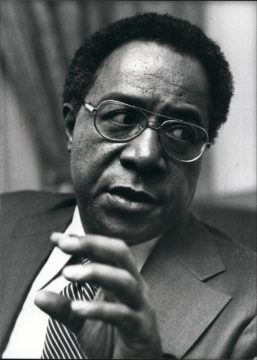 In 1959, long before his books “The Autobiography of Malcolm X” and “Roots” made him famous, an aspiring writer named Alex Haley, fresh out of the Coast Guard, wrote to six prominent Black writers in Greenwich Village for pointers on how to break into publishing. Only James Baldwin replied, showing up at Haley’s place unannounced one afternoon and chatting with him. Haley was eternally grateful for such generous encouragement from the distinguished author.
 Raphaële Chappe in Late Light:
 Herman Mark Schwartz in American Affairs Journal: