
Tony Messenger in Literary Hub:
 Nearly every state in the country has a statute—often called a “board bill” or “pay-to-stay” bill—that charges people for time served. In Missouri and Oklahoma—and in states on both coasts and in the Deep South—these pay-to-stay bills follow defendants arrested initially for small offenses like petty theft or falling behind in child support. Nearly 80 percent of these defendants live below the federal poverty line, meaning they make less than $12,880 a year if they are single, or $21,960 if they are a family of three.
They are the working poor: getting by on minimum wage jobs at the local dollar store; seasonal construction workers who get roofing jobs after tornado season; or, like Bergen, they are unemployed, unable to escape the combination of drug offenses and a criminal justice system that follows them everywhere. In some places, like Rapid City, South Dakota, the charges for jail time are small, $6 a day; in other places, like Riverside County, California, they have been as high as $142 a day. For people of little means, these court debts are an albatross they cannot escape or ignore.
More here.
 2021 is the 6th year we’re approaching experts and asking them to recommend the best books published in their field, whether it’s history or historical fiction, science or science fiction, math or
  The family has been an infinite well of inspiration for photographers for as long as the medium has existed. From Larry Sultan’s Pictures From Home to LaToya Ruby Frazier’s The Notion of Family, the family unit has proved a conduit for explorations of belonging, identity, strife, place, connection, injustice and more. Photographers have both worked behind the camera and stepped into the frame in order to capture the most universal of subjects, the complications and connections to those we love.
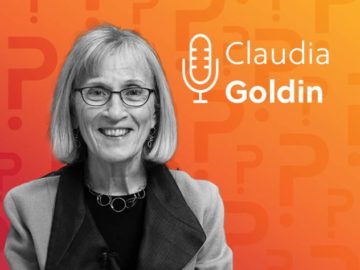 Claudia Goldin, Henry Lee professor of economics, shares the reason why working mothers still earn less and advance less often in their careers than men: time. Even with antidiscrimination laws and unbiased managers, certain professions pay employees disproportionately more for long hours and weekends, passing over women who need that time for family care. Goldin also discusses how COVID-19’s flexible work policies may help close the gender earnings gap.
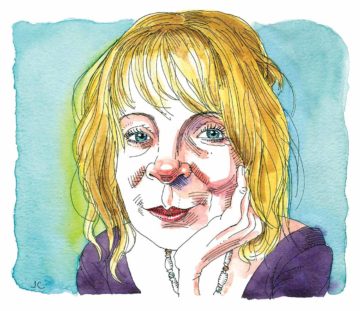 Cora Currier in The Nation:
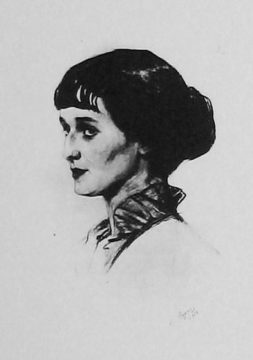 In the L.A. Review of Books:
 Henry Farrell and Glen Weyl in Boston Review:
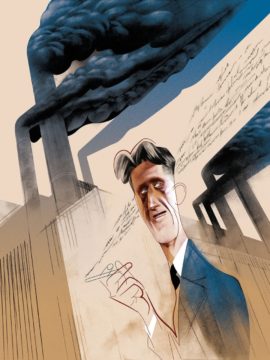 Ian McEwan in New Statesman:
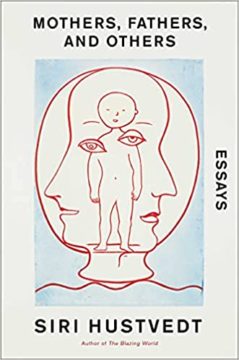 When Hustvedt returns to the idea of what’s missing, her writing takes off. In “Both-And,” an essay on Bourgeois, she offers the concept of intercorporeality from French philosopher Maurice Merleau-Ponty: “that human relations take place between and among bodies, that we perceive and understand others in embodied ways that are not conscious.” What could be more loaded than the mother’s body, a body that is not one, but two? A body that is no longer hers alone? “The artist sees the object unfold, a thing that rises out of you, is related to you, but is not you either,” Hustvedt writes about Bourgeois’ work. But this easily applies to birth and mothering.
 One Friday begins on a Friday in April 2006, when the forty-seven-year-old Antrim, having just had a spat with his girlfriend, is clinging to the fire escape of his four-story apartment building in Brooklyn, considering jumping to his death. (Although one wonders if falling from this height might have resulted in serious injury rather than death.) “I didn’t know why I had to fall from the roof,” he writes, “why that was mine to do.” He goes on to tell us that depression is a “misleading term,” that he prefers to call his depression “suicide” because he sees it “as a long illness, an illness with origins in trauma and isolation” rather than “the death, the fall from a height or the trigger pulled.” Although Antrim offers this explanation as an original take on an enigmatic condition, I found it befuddling rather than clarifying: suicide is sudden and immediate while depression is a long and often recurrent illness. There is no getting around it: the former is a decision, however impulsive and catastrophic; the latter is a passively endured condition, the result of our chemistry and psychological vulnerabilities.
 Donald Trump, however, will not say this. He has spent the year since he lost insisting that he won. His supporters believe the same.
 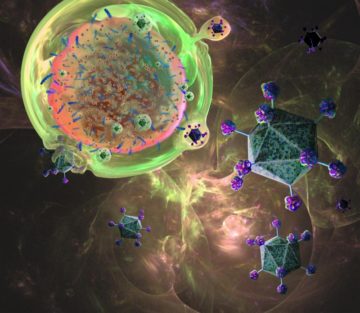 It seemed like a very promising cancer immunotherapy lead. CHO Pharma, in Taiwan, had discovered that it was possible to target solid tumours with an antibody against a cell-surface glycolipid called SSEA-4.
 The detonation of the