Hamid Dabashi at Al Jazeera:
 “Arabs” are not real people in these works of fiction. Arrakis in Dune are not Iraqis in their homeland. They are figurative, metaphoric and metonymic. They are a mere synecdoche for a literary historiography of American Orientalism. They are tropes – mockups that are there for the white narrator to tell his triumphant story.
The world at large will fall into a trap if we start arguing with these fictive white interlocutors, and telling them we are really not what they think we are. It is not just a losing battle. It is a wrong battle. This is not where the real battle-line is.
You do not fight Hollywood with critical argument. You fight Hollywood with Akira Kurosawa, Satyajit Ray, Abbas Kiarostami, Elia Suleiman, Nuri Bilge Ceylan, Moufida Tlatli, Ousmane Sembène, Yasujirō Ozu, Guillermo del Toro, Mai Masri, ad gloriam. You do not battle misrepresentation. You signal, celebrate, and polish representations that are works of art.
 H
H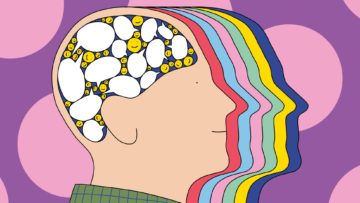 A friend of mine
 Adam Shatz in the LRB’s blog:
 Ho-fung Hung in Phenomenal World:
 The future author of “Strangers on a Train,” the Ripley series and many other novels was learning to mediate between her intense appetite for work — few writers, these diaries make clear, had a stronger sense of vocation — and her need to lose herself in art, gin, music and warm bodies, most of them belonging to women.
 I didn’t choose “Roadrunner” because its recording timeline and its image of a person literally circulating through the night allowed me to discuss these things. I chose it because it’s magic. I have felt its magic for a long time but never had a good story about it. And because I couldn’t figure out a path to a book about “Tell Me Something Good,” a song at least as magical. That book goes “Something something—wait! Did you know that Chaka Khan got the name ‘Chaka’ when she joined the Black Panther Party for Self-Defense in Chicago?” And I am not sure I know how to tell that story in a way that does justice to Chaka, and Rufus, and the BPPSD, and Chairman Fred. So there I was with “Roadrunner.” And once I set out along Route 128, there was no way for me not to situate it within what is for me the true metanarrative of the U.S. present: the catastrophic trajectory of capitalism.
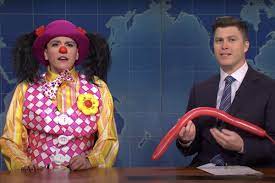 There’s an idea, particularly popular with some comedians, that the very point of comedy is to say the unsayable, to push boundaries and envelopes by articulating uncomfortable truths.
  Imagine you are in a meadow picking flowers. You know that some flowers are safe, while others have a bee inside that will sting you. How would you react to this environment and, more importantly, how would your brain react? This is the scene in a virtual-reality environment used by researchers to understand the impact anxiety has on the brain and how brain regions interact with one another to shape behavior.
 The Polish poet Czesław Miłosz dubbed Dante “a patron saint of all poets in exile” and, as an exile himself for much of his life, likely could relate to both the Florentine’s proud defiance and his urge to seek some measure of solace in the constancy of the natural world. When, in 1960, Miłosz moved to the United States, accepting a teaching position at UC Berkeley, nature was very much on his mind. He was already living in exile, having defected to France nearly a decade earlier, but he had not escaped the haze of history that hung heavily over postwar Europe. The past was integral to Miłosz’s writing throughout his career, especially the horror he witnessed so viscerally in wartime Warsaw, but in order to continue to describe it “in such a manner that it is preserved in all its old tangle of good and evil, of despair and hope,” he had to soar above it, as he put it in 1980, after winning the Nobel Prize for Literature.
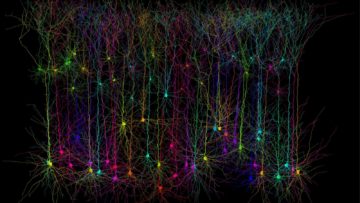 A mouse finds itself in a box it’s seen before; inside, its white walls are bright and clean. Then, a door opens. On the other side, a dark chamber awaits. The mouse should be afraid. Stepping into the shadows means certain shock — 50 hertz to the paws, a zap the animal was unfortunate enough to have experienced just the day before. But when the door slides open this time, there is no freezing, no added caution. The mouse walks right in.