
Abhijit Banerjee in The Print:
 Many people have told me that they cannot cook to save their lives. I don’t believe them. A lot of them can build a dresser out of an IKEA box – despite the fact that the instructions read like they were written by a wall-eyed robot whose first language was Esperanto, while writing code in C++ or programming a television set to switch between the news and a soccer match. How could it be possible that they are not able to follow a simple set of instructions?
Most culinary disasters, of which there are many, come from either underconfidence or overconfidence, and usually both. What undermines confidence is in part the memory of past disasters, cakes that leaked dough, meat that tasted like old leather, fish that suddenly melted into the stew, combined with the mysterious language that most cookbooks adopt.
My favourite example is from a Bengali cookbook that I owned when I first moved to the United States, which tells you, blandly, to wait till the onions have a nice colour. What is a nice colour, I would wonder, watching the onions go from translucent white to a rich golden, a reddish brown, a darker brown and finally a charred black. When should I have stopped?
More here.
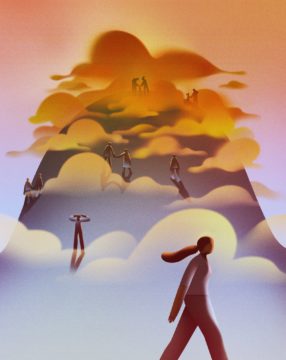 Before she married her husband, Kiersten Little considered him ideal father material. “We were always under the mentality of, ‘Oh yeah, when you get married, you have kids,” she said. “It was this expected thing.” Expected, that is, until the couple took an eight-month road trip after Ms. Little got her master’s degree in public health at the University of North Carolina in Chapel Hill, N.C. “When we were out west — California, Oregon, Washington, Idaho — we were driving through areas where the whole forest was dead, trees knocked over,” Ms. Little said. “We went through southern Louisiana, which was hit by two hurricanes last year, and whole towns were leveled, with massive trees pulled up by their roots.” Now 30 and two years into her marriage, Ms. Little feels “the burden of knowledge,” she said. The couple sees mounting disaster when reading the latest
 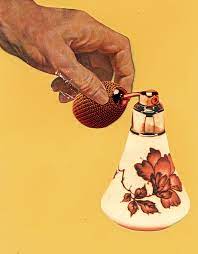 Like many of the great perfumers, Jean Carles was a son of Grasse, a country town in the hills north of Cannes, on the French Riviera. Grasse, once a state unto itself, sits in a natural amphitheater of south-facing limestone cliffs, at the head of a valley of meadows sloping gently to the sea. The combined effect of this geography and the dulcet Mediterranean climate is a harvest of roses, jasmine, and bitter-orange blossoms that is exceptionally fragrant, and for hundreds of years the town has been known as the capital of the perfume trade. When Carles began his training, early in the twentieth century, a priesthood of Grassois perfumers presided over the industry. These so-called nez, or noses, were regarded with an awe of the sort that attaches, perhaps especially in France, to artistic genius. They were vessels of divine talent, their creations as wondrously perfect as the flowers of Grasse.
 P
P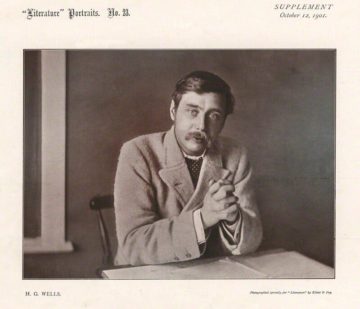 “There was a period when he was turning out 7,000 words a day,” writes Tomalin. “He kept working at what seems an impossible rate, producing stories so varied one might easily think they came from a team of writers.” Few writers will equal his worldwide impact on letters. With Jules Verne and the publisher Hugo Gernsback, he invented the genre of science fiction. A crater on the moon’s far side is named after him. Nominated four times for the Nobel Prize in Literature, Wells, the futurist, foresaw the coming of aircraft, tanks, the sexual revolution, the atomic bomb, and created the classic templates for every story that has been written about alien invasion (his inspiration for “The War of the Worlds,” says Tomalin, was “Tasmania, and the disaster the arrival of the Europeans had been for its people, who were annihilated”) and time travel (he was the first to imagine such travel made possible by a machine).
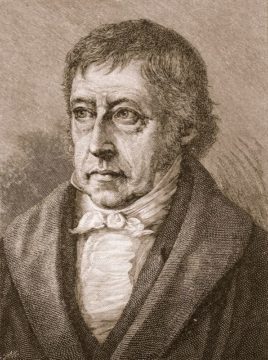 Willem deVries in Aeon:
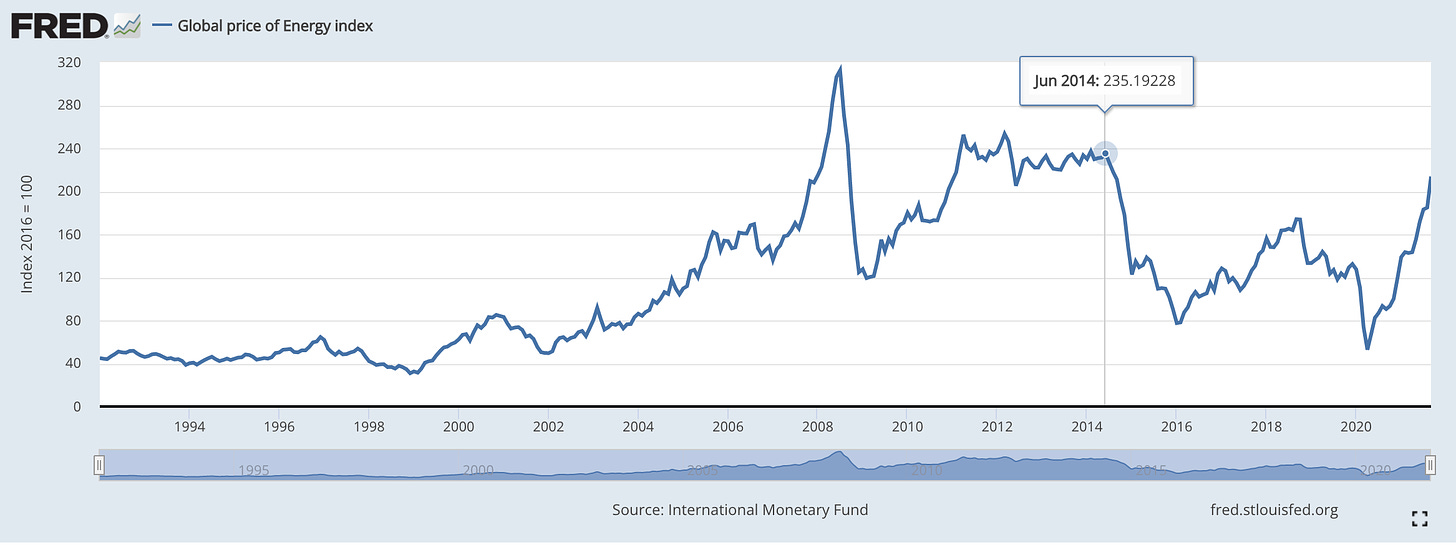 Cedric Durand and Adam Tooze debate if and how the current shortfall in energy supply is directly connected to climate policy. First,
 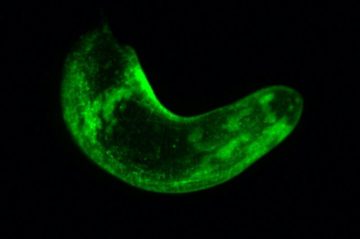 IN 1961, OSAMU SHIMOMURA AND
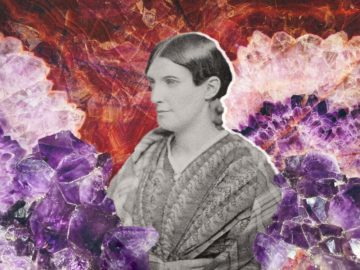 On Christmas Day in 1839, 17-year-old
  The pursuit of authenticity in fashion has taken more than a few interesting turns in the modern world. Consider its role in the political project of President Mobutu Sese Seko of Zaire, who during the early 1970s imposed a series of cultural reforms known as the retour à l’authenticité (return to authenticity) designed to rid the nation of European influences. Cities named after Europeans and colonial officials were given African names: Leopoldville became Kinshasa; Stanleyville, named after the Welsh explorer who established European rule, became Kisangani. Mobutu’s government encouraged citizens to change their Christian names and threatened any parent giving a child a Western name with five years’ imprisonment.
 Any attempt to describe the universe as a totality inevitably involves self-reference. This isn’t something that one often confronts in physics. Most day-to-day physics is modelling other systems: cells, gases, planets. We maintain a separation of subject and object, or of investigator and system being investigated. And even though cosmology is explicitly devoted to the study of the universe as a whole, it is customary in cosmology to maintain the imaginative fiction that we – the people modelling the universe – are looking at it from the outside. We adopt, that is to say, the God’s Eye View.